
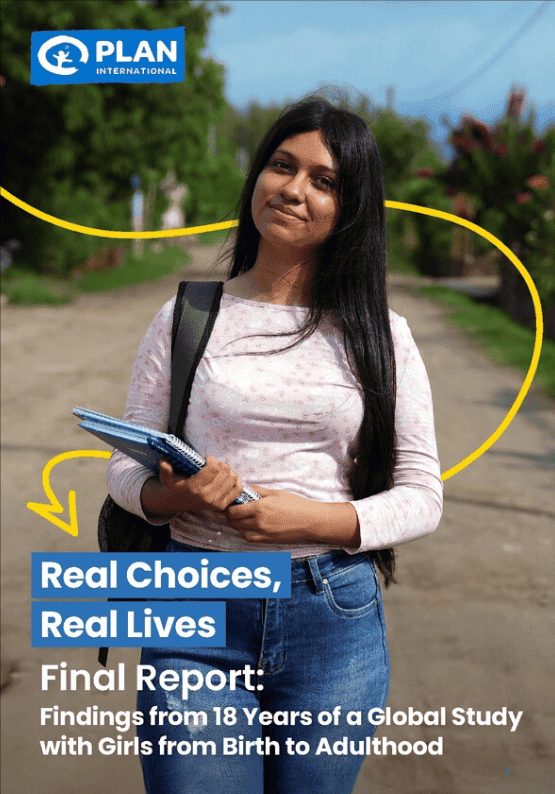
For 18 years, Plan International followed 142 girls in nine countries from birth in 2006 to age 18 in 2024.
This final report shares what the girls told us about education, safety, health, unpaid care work, climate change, leadership and their hopes for the future.
It is one of the only long-term global studies to track the same group of girls from birth to adulthood. Their experiences offer rare insight into how gender norms, poverty, violence and climate pressures shape girls’ lives over time.
What we learned
Girls are staying in school longer than their mothers and setting higher goals for themselves. Many are challenging traditional expectations around marriage, work and leadership.
But progress toward gender equality is uneven and fragile.
Violence against girls remains widespread. Poverty continues to shape daily life. Climate change is increasing pressure on families and communities. In many places, backlash against girls’ rights is growing.
Adolescence emerged as a critical turning point. This is often when freedoms shrink, unpaid care work increases and girls face pressure to leave school or marry.
When girls are supported to stay in school, protected from violence and included in decisions that affect their lives, they thrive.
In their own words
Girls’ voices are at the heart of this report. Their experiences and recommendations shape the findings and point to what needs to change.
“I want to be so many things. Maybe a psychologist, a doctor, a teacher or an accountant.”
Yulitza, 16, Peru
Explore the findings
The full report covers:
- Education and school completion
- Resisting gender norms
- Unpaid care work and time poverty
- Health and wellbeing
- Sexual and reproductive health
- Child, early and forced marriages and unions
- Violence and protection
- Climate change and food insecurity
- Agency, leadership and participation
- Aspirations and pathways to decent work