When disasters strike, the children most at risk are often the first overlooked. Among them are children with disabilities — an estimated 240 million worldwide, many in countries already vulnerable to crisis. In emergencies, inaccessible shelters, schools and services cut them off from safety, learning and care.
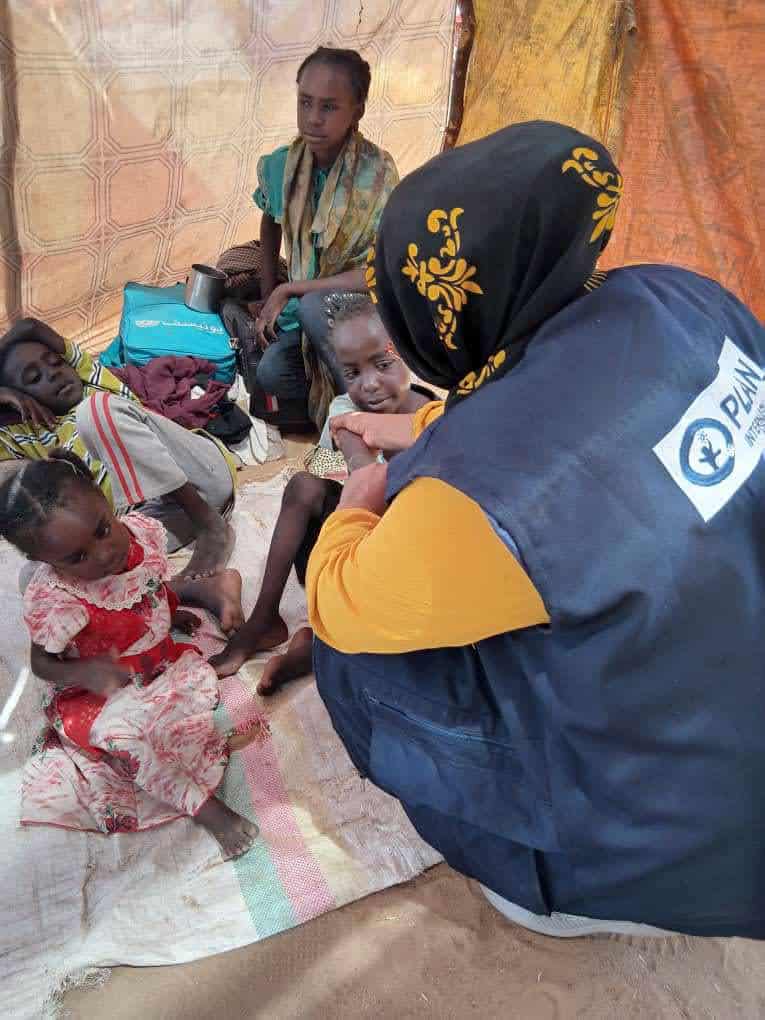
In Sudan, where ongoing conflict has displaced more than 10 million people, these barriers are magnified. Thousands of schools have been damaged or destroyed, and children with disabilities face even greater challenges accessing education and protection. Many have lost assistive devices during displacement — items like wheelchairs, crutches, hearing aids, white canes, Braille kits and adaptive learning tools that enable them to move, communicate and learn independently. Others are excluded simply because data systems don’t capture disability, leaving their needs invisible in emergency planning.
Plan International’s teams in Sudan are working to change that. Across our education in emergencies response, inclusion begins at the earliest stage — from identifying children with disabilities to ensuring that learning spaces, teaching materials and protection services are accessible for everyone.
These barriers play out across education, water, sanitation and hygiene, and protection systems — and they become even more visible in crises like Sudan.
1. Education: Globally, 251 million children and youth are out of school. Children with disabilities are among those most affected, facing even greater barriers to learning — especially in times of conflict. In Sudan, damaged school buildings, overcrowded classrooms and the loss of assistive devices mean many children simply cannot return to learning.
2. Water, sanitation and hygiene: Only 31% of schools worldwide have trash cans for period products in girls’ toilets. For girls with disabilities, inadequate facilities multiply barriers. In displacement camps, basic WASH services are rarely accessible — latrines are too narrow for wheelchairs, and water points are far from reach.
3. Protection: In emergencies, children with disabilities face heightened risks of violence, neglect and exploitation, yet few protection systems are designed with their needs in mind. Without accessible facilities or trained caregivers, some are left alone in shelters, miss distributions of food or relief items or face abuse because they can’t communicate what’s happening. Families often lack information or support, leaving children isolated and unaccounted for.
Sudan has made important policy commitments to disability inclusion. The National Strategy for Persons with Disabilities was introduced in 2005, followed by the Persons with Disabilities Rights Act in 2017 — a significant step aligned with the UN Convention on the Rights of Persons with Disabilities, which Sudan ratified in 2009. Yet, like many well-intentioned frameworks, it remains chronically underfunded and unevenly implemented, leaving children with disabilities still struggling to access basic services during crises.
Exclusion in emergencies is not only a rights issue. It undermines the effectiveness of the entire response. When systems aren’t designed for every child, they fail to protect those who need them most.
“A lot are arriving in the camps injured, with gunshot wounds and exhausted from carrying their loved ones for days. It’s been hardest for women, children and people with disabilities.” — Plan International staff member in Sudan.
What inclusion looks like in practice
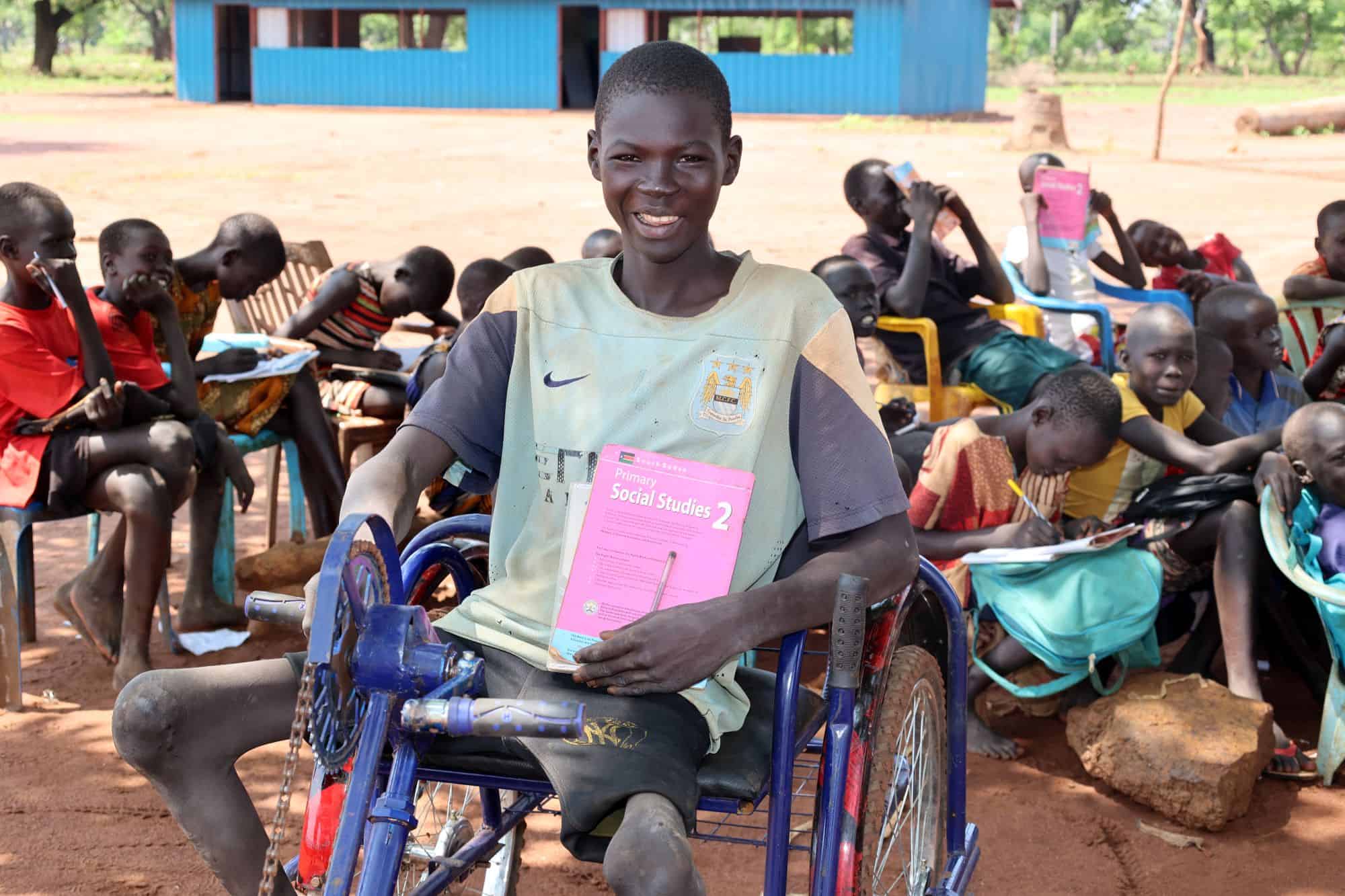
1. Adapted learning: Plan trains teachers to identify and support children with different learning needs, and provides assistive devices and alternative materials — such as large-print books, Braille kits and visual learning aids — so children with disabilities can continue their education. In some camps, community volunteers help escort children to learning centers — a small act that makes a big difference in attendance.
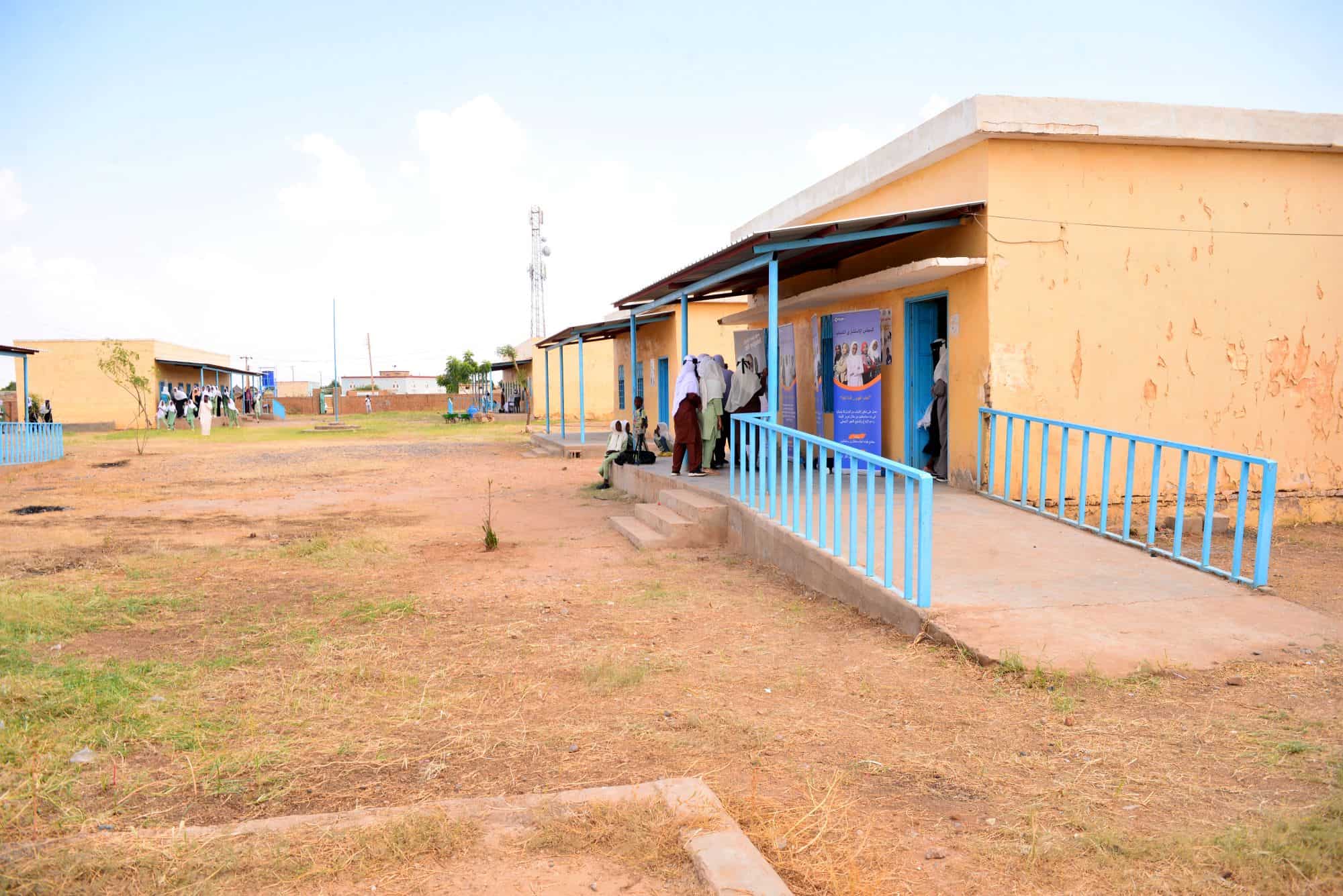
2. Accessible safe spaces: Working with partners, Plan redesigned temporary learning and play spaces to ensure children with disabilities can participate safely. Ramps, wider doorways and low desks allowed children who use mobility aids — such as wheelchairs, crutches or walkers — to join their peers rather than watch from the sidelines.
3. Inclusive WASH: Emergency WASH facilities are adapted with handrails, accessible toilets and nearby water points so children with mobility challenges can use them with dignity. Feedback from families helps to refine these designs over time.
— Check accessibility: Ensure venues, materials and communications are usable (Braille, large print and sign language).
— Adapt tools: Replace written surveys with drawing, role play, picture cards or visual scales.
— Prioritize safety: Use age-appropriate consent processes, involve caregivers and avoid retraumatizing.
— Close the loop: Share results back in accessible formats so children see their input reflected.
In Sudan, Plan’s education teams work with child clubs that include members with disabilities to review temporary learning spaces and flag accessibility issues. Their feedback shapes improvements like lowering whiteboards, rearranging seating and adjusting the layout of toilets for easier use.
These consultations often reveal issues practitioners miss. A child with cerebral palsy flagged that an “accessible” toilet door was too heavy to open. A child with hearing loss explained that emergency announcements were only oral. Listening directly to children makes systems stronger.
Disability inclusion in emergencies may not be a standalone portfolio for every organization, but it’s a test of whether we’re serious about leaving no one behind. For every child excluded from a classroom, unsafe in a shelter or silenced in consultation, the cost is not only personal — it’s systemic.
The experience of Plan’s teams in Sudan shows that inclusion is not a luxury or an afterthought. It’s the foundation of effective, equitable humanitarian action.
Emergencies cannot be inclusive after the fact. Disability inclusion must be built in from day one.
Which examples of disability inclusion in emergencies have inspired your work, and what lessons can we learn from them?
Hayder Hamadnalla wrote this article. Hayder is the project manager for female genital mutilation and child, early and forced marriage (FGM/CEFM) and head of the Gedarif sub-office at Plan International Sudan. For more information on Plan’s work in Sudan, please contact Hayder at hayder.hamadnalla@plan-international.org.
Every three seconds, a girl is married. Her education often ends that very day.
The impact of child marriage on girls’ education is immediate and long-lasting. It’s especially severe in regions like Sub-Saharan Africa, South Asia and Latin America, where the practice remains common and deeply rooted in tradition and poverty.
Plan International’s 2025 State of the World’s Girls report, Let Me Be a Child, Not a Wife, offers one of the most comprehensive global examinations of how marriage before age 18 disrupts learning, limits opportunity and reinforces cycles of inequality.
The report draws on interviews with over 250 girls who were married as children across 15 countries. It also includes a survey of 244 youth activists and an analysis of national legal systems. This creates a rare and powerful look at what happens when child marriage shuts the door on education — and how policy and programs can open those doors back up.
What happens to girls’ education after marriage?
The numbers are staggering: 251 million children and youth are out of school worldwide, and nearly half are girls. In countries like Bangladesh, Nepal, Ethiopia, Nigeria, Guatemala and Togo, the link between child marriage and school dropout is not only clear — it’s urgent.
Findings from the report, echoed in CNN’s As Equals series, confirm what youth advocates have long warned: child marriage is one of the primary reasons girls leave school prematurely.
These effects aren’t limited to formal marriages. Informal unions can carry the same educational and social consequences, including early pregnancy, stigma and pressure to drop out of school — even though they’re rarely documented in official statistics.
Consider this:
1. 63% of married girls are not in school, working or enrolled in skills training.
2. 35% dropped out of school specifically because of marriage.
3. Fewer than 1 in 5 married girls remained in school. Many of them faced stigma or pressure from family members to stay at home.
“Most community members don’t support married girls to attend school. They think if girls are getting married, they have to stay home, give birth and care for their husband and children.”
— Guedi, 24, Ethiopia
The consequences go far beyond academics. Without education, girls lose access to meaningful jobs, leadership roles and decision-making power. Over time, entire families and communities bear the cost of that loss.
Three systemic reasons married girls drop out of school
While each story is unique, three recurring structural issues explain why child marriage so often cuts education short:
1. Loopholes in the law
In nearly two-thirds of the countries studied, the law sets 18 as the minimum age for marriage. Yet exceptions — based on parental or judicial consent — create legal grey areas that enable the practice to continue. These loopholes undermine enforcement and weaken the systems meant to protect girls.
2. Poverty as pressure
For many families, the decision is financial. Informal unions — where girls live with a partner without legal recognition — can carry the same educational and social consequences, including early pregnancy, stigma and pressure to drop out of school.
Nearly half of the girls interviewed said poverty played a central role in their marriage. Without scholarships, stipends or financial incentives to keep girls in school, marriage may seem like the only path to survival.
3. Social norms that erase futures
Cultural expectations also play a role. Once a girl is married, education is often seen as irrelevant — or worse, inappropriate. One youth activist put it plainly:
“Once a girl is married, her future is seen as closed, even if she still wants to learn.”
— Youth Activist
These social pressures are often magnified by the school environment. Only 39% of schools provide menstrual health education. Just 31% offer safe, private sanitation facilities. For adolescent girls — especially those who are married or parenting — these missing services make staying in school even harder.
And even where laws are strong, families bypass them through informal unions — non-legally recognized partnerships where girls live with a spouse-like partner. These arrangements offer no legal protection, are harder to monitor and are becoming more common in regions where marriage laws have tightened.
Girls speak out: What they lose and what they demand
The voices in the report are sobering — and galvanizing.
“Getting married before the age of 18 is not right. It disrupts education. Within a year or two of marriage, a child is born. At that time, I am still a child myself. How can I, being a child, raise another child?”
— Farhana, 21, Bangladesh
“I wasn’t allowed to study or progress in life. I was deprived of everything. But I won’t let that happen to my daughter.”
— Juna, 24, Nepal
“If you are married, you can no longer continue school unless your husband tells you to continue. And you have to wake up and do the housework before going to school.”
— Dagan, 17, Togo
These girls are not just recounting personal hardship. They’re also advocating for systems to change. They remind us why education isn’t just a right — it’s a lever for reclaiming futures that others tried to close off.
Beyond the classroom: What child marriage costs us all
The loss of education due to child marriage is not just a personal tragedy. It’s a development crisis.
Plan’s research confirms what economists have long known: girls see education as a route to income, independence and security. Global studies suggest that each additional year of schooling can boost future earnings by around 10%.
If all girls completed secondary school, global child marriage rates could drop by two-thirds.
The economic cost of lost education runs into the billions. The social cost — lost leadership, weaker development and deepened inequality — is just as profound.
What works: Lessons for program and policy design
Access to education must be built into child marriage prevention strategies
Stopping child marriage is not enough. Programs must help married girls return to school — with flexible schedules, accelerated learning, and tailored support for parenting girls.
Reach the most vulnerable first
Girls in rural, low-income or displaced communities face the highest risks. Interventions must include child care, safe transport, mobile schools and community-based education centers.
Legal change must come with investment
Changing the law is only part of the solution. Without real investment in schools and systems, girls will not have true choices.
Five ways technical peers can act now
Here’s how professionals across sectors can contribute to change:
1. Build re-entry programs with flexible schedules, child care and mental health support.
2. Offer financial incentives like stipends, school meals and transportation.
3. Train educators to support married and parenting girls with care, not judgment.
4. Track not just enrollment, but also attendance, progression and re-entry.
5. Fund and elevate girl-led organizations working to shift harmful norms.
Protect education, protect futures
The message from the 2025 report is clear and urgent: Every three seconds, a girl is married. Each time it happens, her chance to learn, earn and lead may be lost.
But this isn’t inevitable.
For practitioners in education, gender equity or youth development, this is a rallying cry — not only to prevent child marriage, but to rebuild opportunity for girls who’ve already been impacted.
Education is the strongest defense against child marriage and the most powerful tool for reclaiming a future.
Frequently asked questions
Why is child marriage linked to school dropout?
Child marriage often results in girls being pulled out of school due to family expectations, pregnancy and societal norms that discourage married girls from continuing education.
Can married girls return to school?
Yes, but they face many barriers including stigma, lack of child care, inflexible school systems and unsupportive environments.
What legal gaps enable child marriage to continue?
Many countries set 18 as the minimum marriage age but allow exceptions with parental or judicial consent, undermining the law’s effectiveness.
What are informal unions, and how do they affect girls’ education?
Informal unions are relationships where girls live with a partner without legal marriage. They typically result in similar outcomes as child marriage — including school dropout, limited legal protection and reduced opportunities.
What role does poverty play in early marriage?
Poverty is a major factor. Families may see marriage as a way to reduce costs or gain security.
How does child marriage affect economic development?
It reduces girls’ education and future earnings, weakening overall productivity and reinforcing poverty cycles.
What can policymakers do to reduce child marriage?
Close legal loopholes, fund education re-entry programs, support families financially, and promote gender equity in schools.
By Carlos Romero, business development manager at Plan International USA. To learn more about Plan’s work, get in touch:
From rising development and humanitarian needs to shrinking aid budgets, the development sector is under pressure. For organizations working at the intersection of education, protection, economic stability and gender equality, the stakes couldn’t be higher.
At Plan International, we’ve been asking ourselves tough questions: How do we adapt to a volatile funding landscape without compromising quality or equity? How do we stay accountable to communities while transforming how we deliver?
This blog shares what we’re learning from Latin America and the Caribbean and how our teams are applying those lessons in real time.
The development landscape is changing
Foreign assistance continues to decline. Foundation funding is harder to access. At the same time, the needs of children — especially girls — are growing more complex and urgent. Climate shocks, economic instability, displacement and violence continue to disrupt education, compromise community safety, strain families and increase risks for youth.
We’ve had to face a hard truth: Yesterday’s tools don’t meet today’s challenges. So we’re evolving — not just to survive, but to stay resilient and focused on what matters most.
How Plan International is adapting development models
Smarter, more efficient delivery
We’re investing in community-led approaches, reshaping partnerships and designing delivery models that reduce costs while expanding reach. This includes combining services across sectors, simplifying internal structures and collaborating more effectively with local actors. By using unrestricted resources alongside co-investments from new partners, we’re reducing duplication and staying agile in complex environments.
Decisions grounded in evidence
We use real-time insights from program implementation to refine our approaches and respond to evolving local contexts. Learning from what works — and where we need to improve — helps us adjust strategies without compromising outcomes.
Co-creating with local and regional partners
We build solutions with youth- and women-led organizations, government institutions and the private sector. In many cases, this means aligning program design with market realities, so that our work supports sustainable systems and long-term impact.
“I believe that both governmental and non-governmental organizations are striving to adapt to the evolving landscape of international cooperation by taking more proactive rather than reactive approaches.
This shift requires greater collaboration among organizations, with an emphasis on joint actions and, above all, a commitment to community-based organizations. These local actors not only operate with lower overhead costs but also achieve high impact in their interventions.
At the same time, many organizations have diversified their financing sources. This has enabled them to update their operational models and organizational structures, making them more resilient and better equipped to respond to current challenges.”
— Luis Fernando Morataya, employment and entrepreneurship advisor, Plan International Guatemala
From strategy to impact: What adaptation looks like in practice
These shifts are shaping real outcomes across Latin America and the Caribbean. Our teams are applying new approaches to:
— Invest in locally led solutions
— Align programs with real labor market needs
— Partner across sectors to strengthen systems
— Use evidence to adjust programs in real time
Real-world case studies: Community-led development in action
Guatemala: Income growth through EMPLEA-T
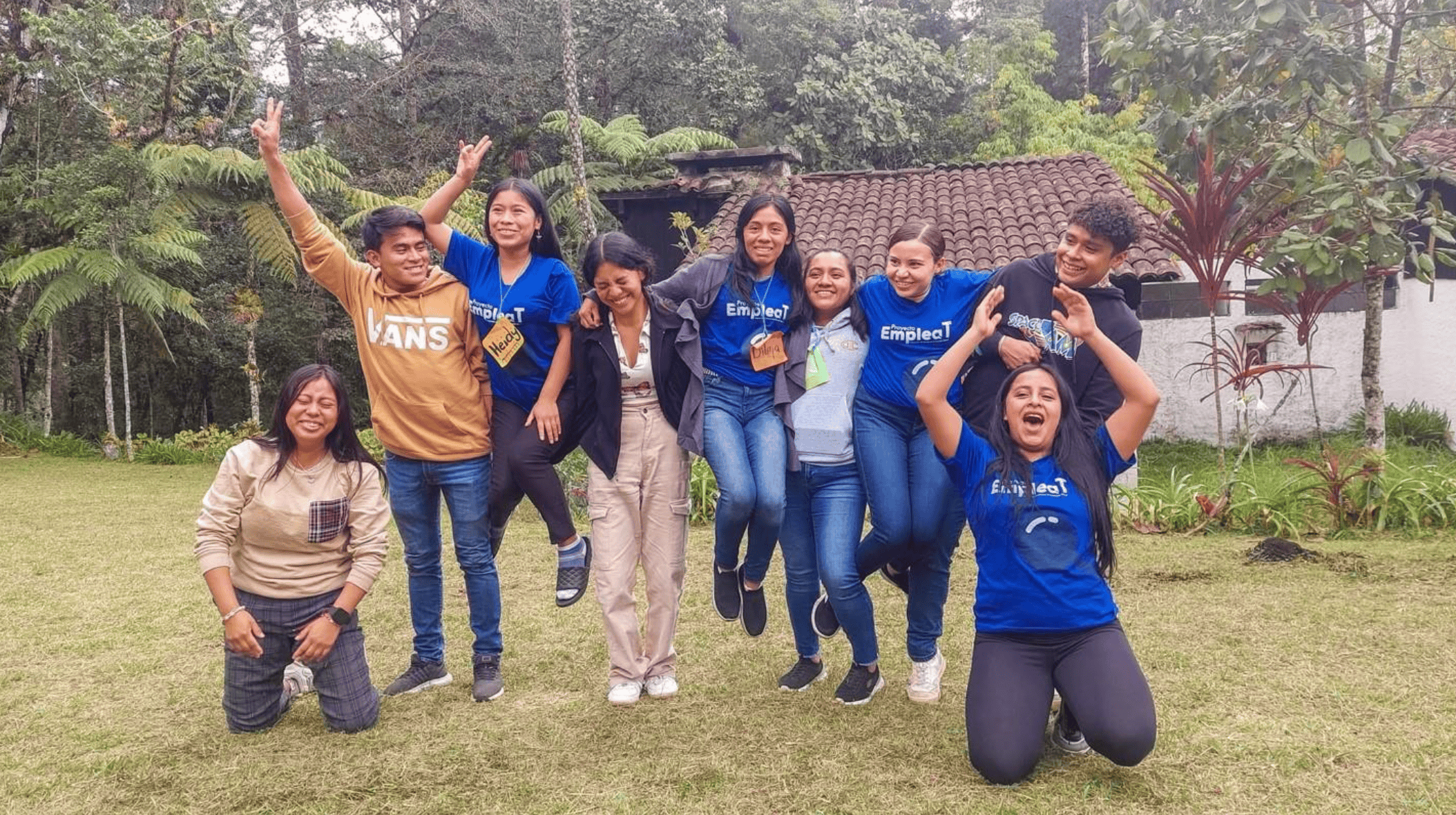
Objective: Integrate youth into the labor market by strengthening their technical skills for innovative, sustainable enterprises.
What we achieved: Participating youth increased their net monthly income by over 200% after job readiness training.
Objective: Equip vulnerable youth, especially young women, with market-relevant skills.
What we achieved: In partnership with the American Chamber of Commerce in El Salvador, we co-designed job training and mentorship aligned with real job demand.
Bolivia: Rapid response to 2024 floods
Objective: Provide emergency food, water and sanitation aid to flood-affected communities.
What we achieved: Over 4,300 families received aid through a coordinated response with national and local actors.
Peru: Expanding access to preventive health
Objective: Reduce disease risk from climate emergencies in Loreto, Peru.
What we achieved: Reached 20,000+ people in vulnerable areas by strengthening local health systems.
Key lessons from adapting development programs
“Lo que coseches mañana será fruto de lo que siembres hoy.” — Spanish proverb
This proverb reflects the long-term, community-rooted approach that drives our work. We’re learning that:
— Innovation thrives in deeper collaboration with local actors.
— Adaptive programs deliver greater impact.
— Impact grows when communities co-own the solution.
This moment calls for bold collaboration and shared accountability to navigate the growing complexity of development work.
Joining forces for sustainable development impact
We invite peer organizations, funders and partners to join us in reimagining how we deliver impact — not just with new tools, but with new mindsets.
Until we are all equal.
By Amanda Newlove and Ashley Weber
The Youth Advisory Board is a group of young people from the U.S. who vocalize youth priorities by serving as ambassadors to Plan International. Each year, they organize their largest deliverable — the Youth Leadership Academy.
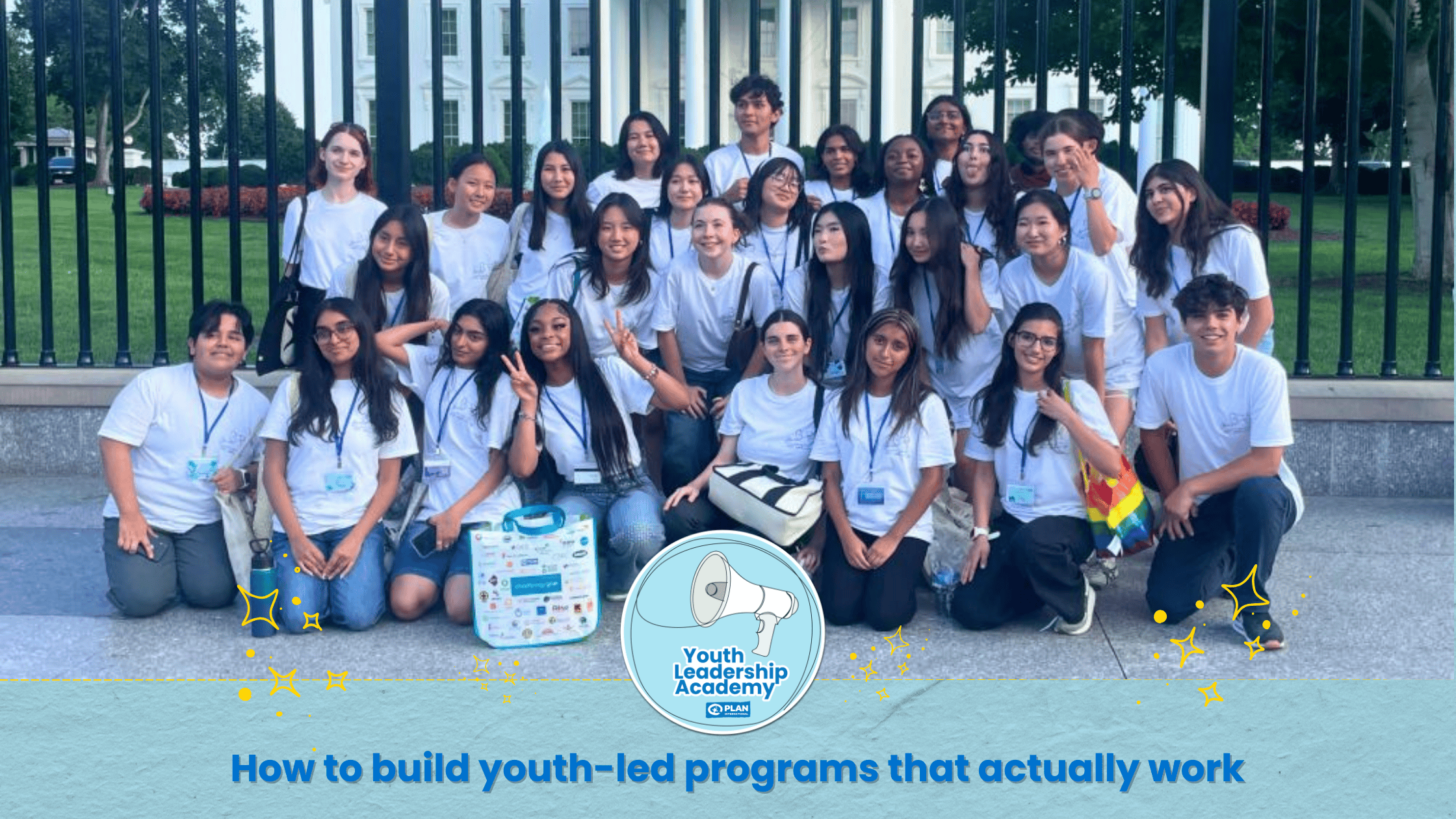
The Youth Leadership Academy (YLA) is a yearlong program focused on providing leadership and advocacy tools to young activists through training and mentorship to create change locally and globally. Designed by and for youth, the program brings together participants from across the U.S. to meet and learn from inspiring activists, influencers and experts.
The five-day residential academy in Washington, D.C., held each July, kicks off a year of project-based leadership. During the weeklong intensive, participants learn about networking, fundraising, advocacy, and leadership. They explore how their talents can drive change in their communities. Afterward, they’re paired with a mentor from Plan’s Youth Advisory Board to support their leadership journey.
So, how do you build a program that’s truly youth-led — not just youth-involved? Here’s how Plan centered choice, safety, information, and voice to make the YLA a model for meaningful youth engagement.
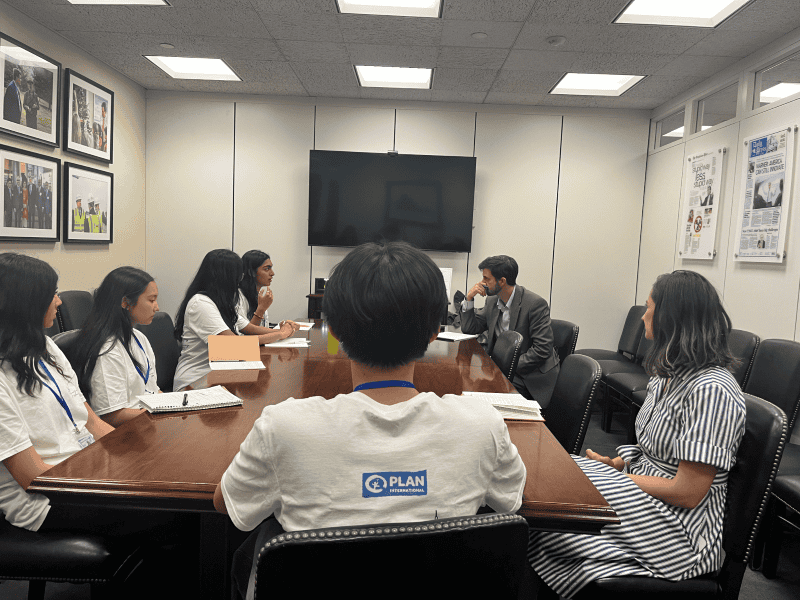
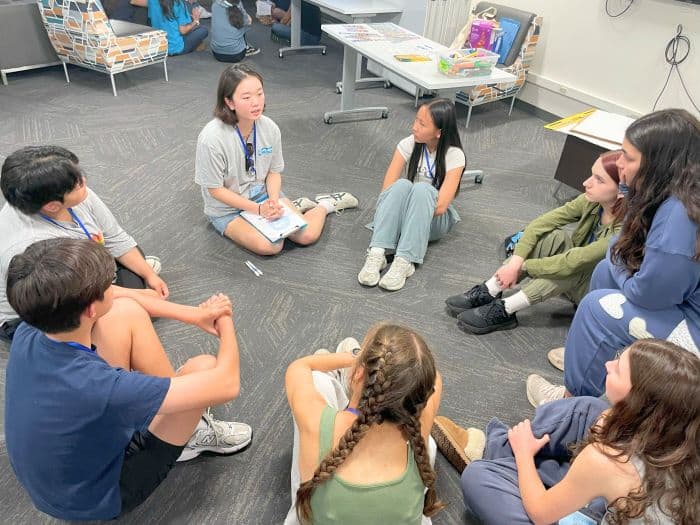
Youth Leadership Academy participants meet with congressional staff during D.C. Day to share their perspectives.
Empowering youth through choice
Youth Advisory Board members chose how they wanted to contribute — whether through curriculum design, recruitment, coordination or creative storytelling.
Participation in the YLA was based on an application process, putting “choice” at the center. Youth chose to attend — and before each session during the in-person academy, facilitators shared what would be discussed and gave participants space to opt out if needed. Choice remained embedded throughout the experience.
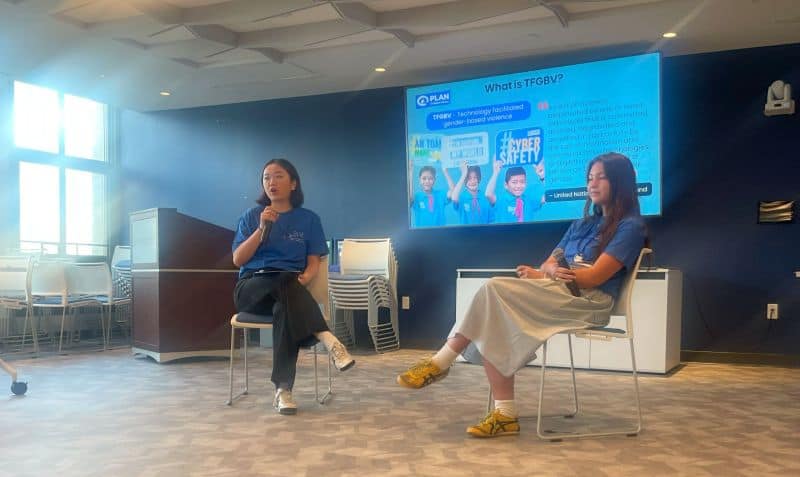
Youth Advisory Board members led sessions on leadership, advocacy and storytelling.
Creating safe spaces
Planning for the YLA began with risk assessments for both virtual and in-person settings. These weren’t one-time tasks — they were ongoing tools, used throughout planning and implementation.
Key steps included:
— Identifying the types of potential risks and who they might impact
— Evaluating likelihood and impact
— Implementing mitigation strategies
— Assigning clear responsibilities
This was a cross-team effort, shared with youth creators, facilitators and chaperones. Everyone involved needed to understand the risks and how to manage them. A safe environment is essential for youth to thrive.
Creating safe and supportive spaces is central to Plan USA’s youth-led model.
Keeping youth informed
Plan ensured that YAB members had access to all the information they needed to lead effectively. This included reviewing agendas, outcomes and feedback from previous academies to guide 2025 planning.
YLA participants also received youth-friendly materials and program details. Plan transformed Excel-based schedules into fun, easy-to-read graphics, and held youth-only pre-YLA webinars with engaging presentations to build excitement and set expectations.
Even digital platforms were tailored to youth preferences — for example, switching from Slack to GroupMe for more accessibility.
Centering youth voices
Plan prioritized collective youth power by creating space for the YAB to set the agenda, design the curriculum, and build out materials from start to finish.
Staff deferred to youth decision-making throughout. When staff decisions were needed, they ensured YAB members understood why and how their input shaped the final outcome.
A sample schedule from the 2025 Youth Leadership Academy shows the mix of deep-dive sessions, leadership training and group activities.
When youth lead, everyone wins
Plan was intentional about making the 2025 Youth Leadership Academy a truly youth-led initiative — one that honored the skills, perspectives and leadership of young people to create something that belonged to them.
We invite you to support youth-led efforts and amplify young voices — because when youth lead, everyone benefits.
“Where I come from, things can get really competitive. I feel like oftentimes I get in the headspace where I don’t feel comfortable being myself. I love it here because I get to be myself. I get to be vulnerable with people. People can feel safe around me. I just love talking to people about what they’re passionate about, like their leadership projects. Hearing everyone’s ideas and what everyone has to say, it’s so inspiring. This environment is so amazing, and I’m having the best time ever. I’m so honored to be here.”
— Tanya, YLA participant
Amanda Newlove and Ashley Weber co-authored this article.
Amanda Newlove is the senior manager of safeguarding, risk and internal compliance at Plan International USA.
Ashley Weber is a senior program coordinator working with Plan’s Youth Advisory Board on youth leadership initiatives.
When young people have skills, confidence and supportive environments, they thrive. They graduate. They start businesses. They drive innovation and contribute to healthier, more prosperous communities.
But what happens when girls grow up believing that public spaces aren’t meant for them? When they internalize fear, limit their movements and step back from opportunity?
Plan International’s Real Choices, Real Lives study reveals how deeply rooted gender norms around violence and protection shape girls’ behavior — and how those behaviors have a lifelong effect on their access to education, skills and decent work.
How social norms limit girls’ access to education and work
Too often, youth employment challenges are framed in technical terms — skills gaps, lack of opportunity or underemployment. But adolescent girls face significant barriers before they even enter secondary or vocational school, with lifelong impacts.
Plan’s longitudinal study, which followed 142 girls across nine countries from birth to age 18, revealed how harmful social norms are internalized during adolescence. The findings are sobering:
91% of girls reported experiencing violence, starting as early as age 11.
By ages 14–15, 68% believed male violence was “just the way things are.”
By 18, 67% believed it was their personal responsibility to protect themselves — even if that meant limiting their movement, dress or activities.
These beliefs shape behavior. When girls feel unsafe or solely responsible for their protection, they often withdraw by skipping school, avoiding training opportunities or disengaging from everyday spaces. In losing access to these spaces, girls lose critical opportunities to develop the life and employment skills they need for the future.
“We are told to be careful, to protect ourselves, but no one is telling boys not to hurt us.” — Girl, 17, Brazil
The connection between girls’ safety and skills-building
Skills-building doesn’t happen in a vacuum. If girls don’t feel safe, they miss out on training programs, apprenticeships and other economic opportunities.
And the issue isn’t limited to physical safety.
As digital platforms become essential for education, employment and connection, online environments must also be safe. Plan’s Building Digital Resilience report — developed in partnership with CNN’s As Equals series — found that fear of harassment and gender-based abuse online is pushing girls offline. Many avoid sharing opinions, joining forums or using learning platforms due to threats, stalking or trolling.
This exclusion from digital spaces directly affects their ability to build skills, networks and confidence in a digital economy.
Tackling these barriers requires more than training — it demands a shift in how programs are designed and delivered.
What program implementers can do to shift norms and boost economic outcomes
The data is clear: Adolescence is a critical window to act. When we address social norms during this formative time, we can positively shape girls’ safety, agency and long-term economic participation.
Recommendations for technical practitioners and donors:
Pair skills and livelihoods programming with gender norms transformation. Combine financial literacy or vocational training with sessions that unpack social expectations and beliefs.
Engage caregivers and communities. Girls’ mobility and access to opportunities are often shaped by parents or extended family. Norm change must extend beyond the classroom.
Design for safe access. Consider transit, location and public space safety in every program — in urban, rural or conflict-prone areas.
Follow girls’ lead. Young people know what they need to be successful. Support mentorship groups, youth clubs or collectives where leadership and technical skills grow together.
Across multiple countries, programs that integrate psychosocial safety, self-belief and work readiness are showing real impact.
In 20 cities globally, Plan’s Safer Cities for Girls program has worked to build safer, more inclusive urban environments for adolescent girls (ages 13–18). The program focuses on three goals:
Increasing safety and access to public spaces.
Expanding meaningful participation in urban governance.
Enabling autonomous mobility for girls.
A midline evaluation in Kenya, Ethiopia, Uganda and Zimbabwe found 53% of participants were engaged in decent work, an 18% increase from baseline.
In Guatemala, the Connection to Success project supports young women’s economic futures by combining:
Entrepreneurship and vocational training
Access to internships and startup funding
Shifting community attitudes and expectations around gender
Among the program’s second cohort, 54% of participants improved their well-being through increased earned income (defined as the percentage of youth who can fully cover a minimum set of basic necessities).
“Boys can be taught to stop being aggressive.” — Girl, Real Choices, Real Lives study
Why safety must come first in youth economic empowerment
Too many girls grow up believing that their lives must be small to be safe. This belief, formed early, undermines their ability to develop skills, join the workforce and achieve economic independence.
But the Real Choices, Real Lives study also shows hope: By age 18, most girls involved in the study were vocal in their belief that they deserve the same freedoms as boys. They’re calling on adults to listen to their voices and include them in decisions that affect their safety and protection. Girls are questioning the norms they inherited. They’re demanding safer, more equitable futures.
It’s time for the systems around them to catch up.
Economic empowerment begins with belief.
Belief that girls are capable, that the world can be safe and that adolescence isn’t the end of possibility — but the beginning.
Stay updated on Plan International’s technical work by
In disaster-prone Indonesia, girls and marginalized children face unique risks when emergencies hit. Maulinna Utaminingsih, a humanitarian expert with Plan International, shares what an inclusive, ethical response really looks like – and how it can change lives.
When I first joined Plan Indonesia’s emergency response team in 2010, I wasn’t sure where the journey would take me. What I knew was quite simple though: I wanted to help people the right way, the dignified way, without causing further harm.
Over time, what started as a calling has become a lifelong commitment. From water, sanitation and hygiene (WASH) and education in emergencies to child protection, I’ve worked in different regions and in different roles, from leading disaster response efforts to training others. The more I work closely with disaster-affected communities, the more I understand just how critical it is that humanitarian response be rapid, inclusive, and above all, protection-sensitive. At the heart of our work is one clear priority: making sure that children, especially girls, those with disabilities, and those from the most marginalized communities, are not left behind.
When distribution is unequal
Indonesia faces disasters every year, from earthquakes and floods to landslides and volcanic eruptions. These events ripple through every part of life, disrupting health services, education, livelihoods, and public safety. But while the response efforts are often well-intentioned, I’ve seen firsthand how they can fall short of fundamental humanitarian principles. Too often, there is a lack of understanding about what an effective and ethical emergency response really looks like. I’ve heard people say that ‘aid distribution is unequal,’ and it’s true.
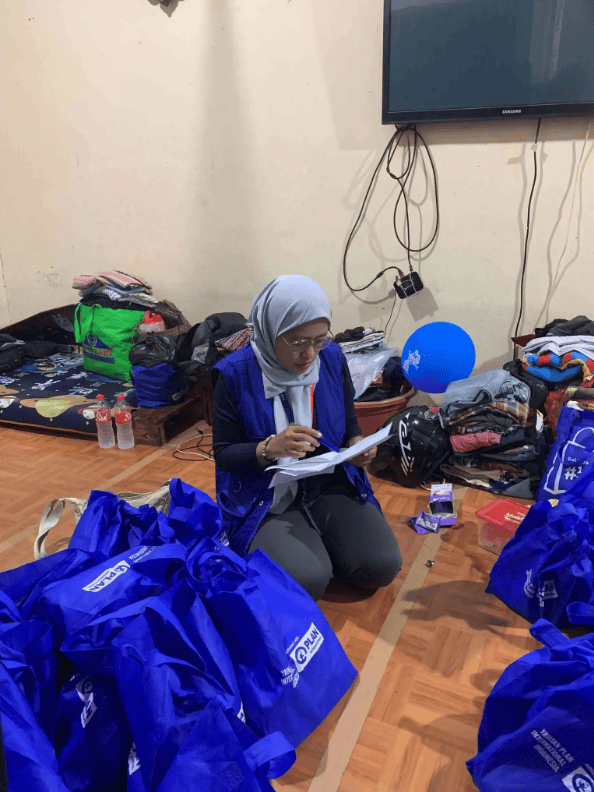
Often, aid is distributed unevenly, sometimes requiring documents that survivors have lost in the chaos. Donations can pile up but remain undelivered due to a lack of personnel or planning. Sometimes, well-meaning people bypass formal channels altogether, creating uncoordinated distributions that result in some families receiving multiple school bags — in one case, a single child received 13 school bags — while others go without basic essentials. One young woman I met told me she didn’t feel comfortable asking for sanitary pads at a relief center because every volunteer was male. It’s a small detail that speaks volumes. Without a gender-sensitive approach, we risk silencing the needs of half the population.
Children, too, face unique struggles. Some are embarrassed to return to school without uniforms or supplies. Others are bullied for wearing different clothes or transferring into unfamiliar schools. The emotional impact of a disaster doesn’t end with physical safety; it remains in shame, disruption, and the loss of routine.
Involving people in shaping the help they receive
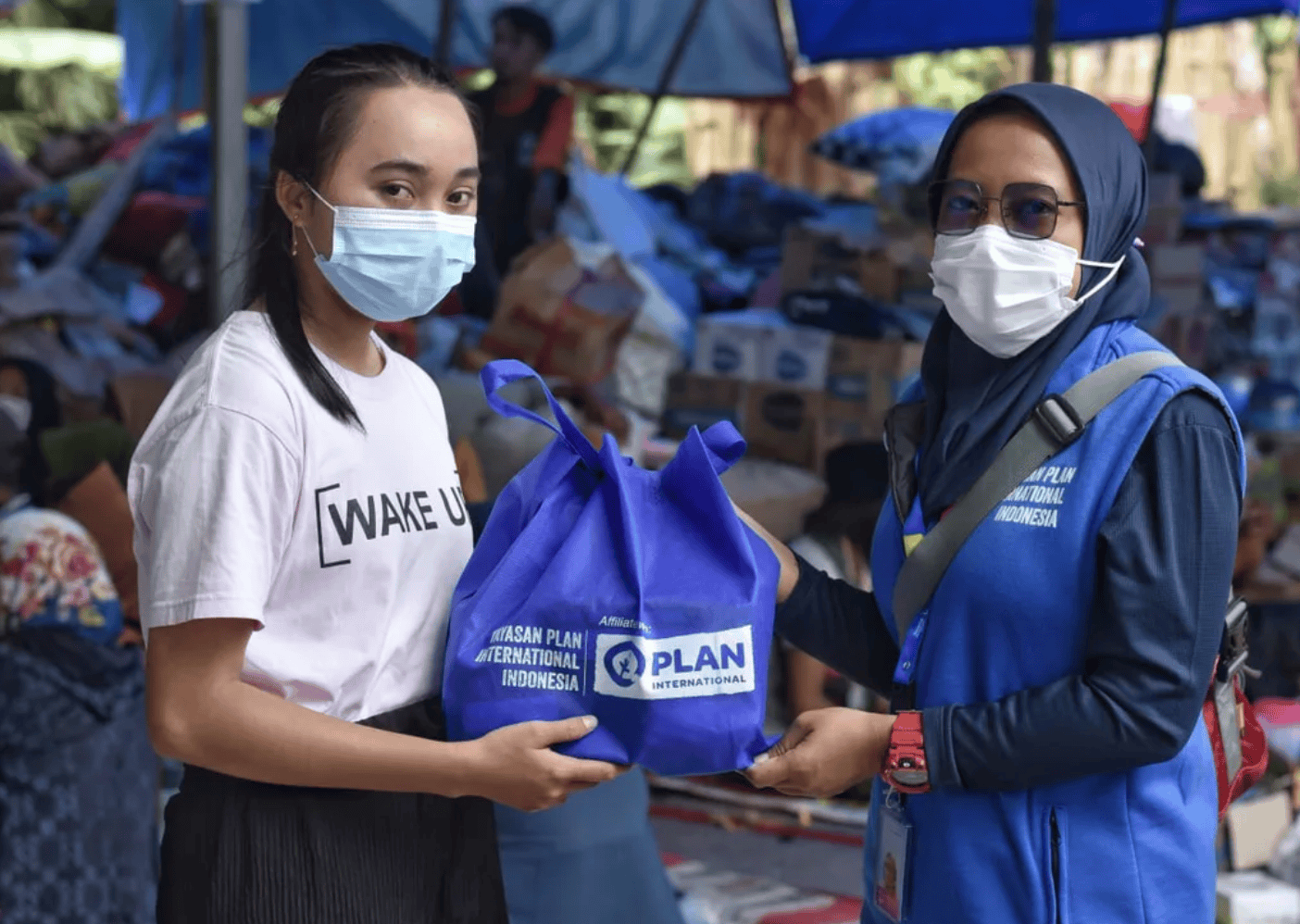
That’s why our work at Plan Indonesia is focused not just on response, but on building systems that protect, include, and empower people and communities. We’ve distributed hygiene kits containing items like underwear that are often forgotten, but critically needed. We’ve trained teachers on how to continue education in emergencies. These small but meaningful steps are making a big difference.
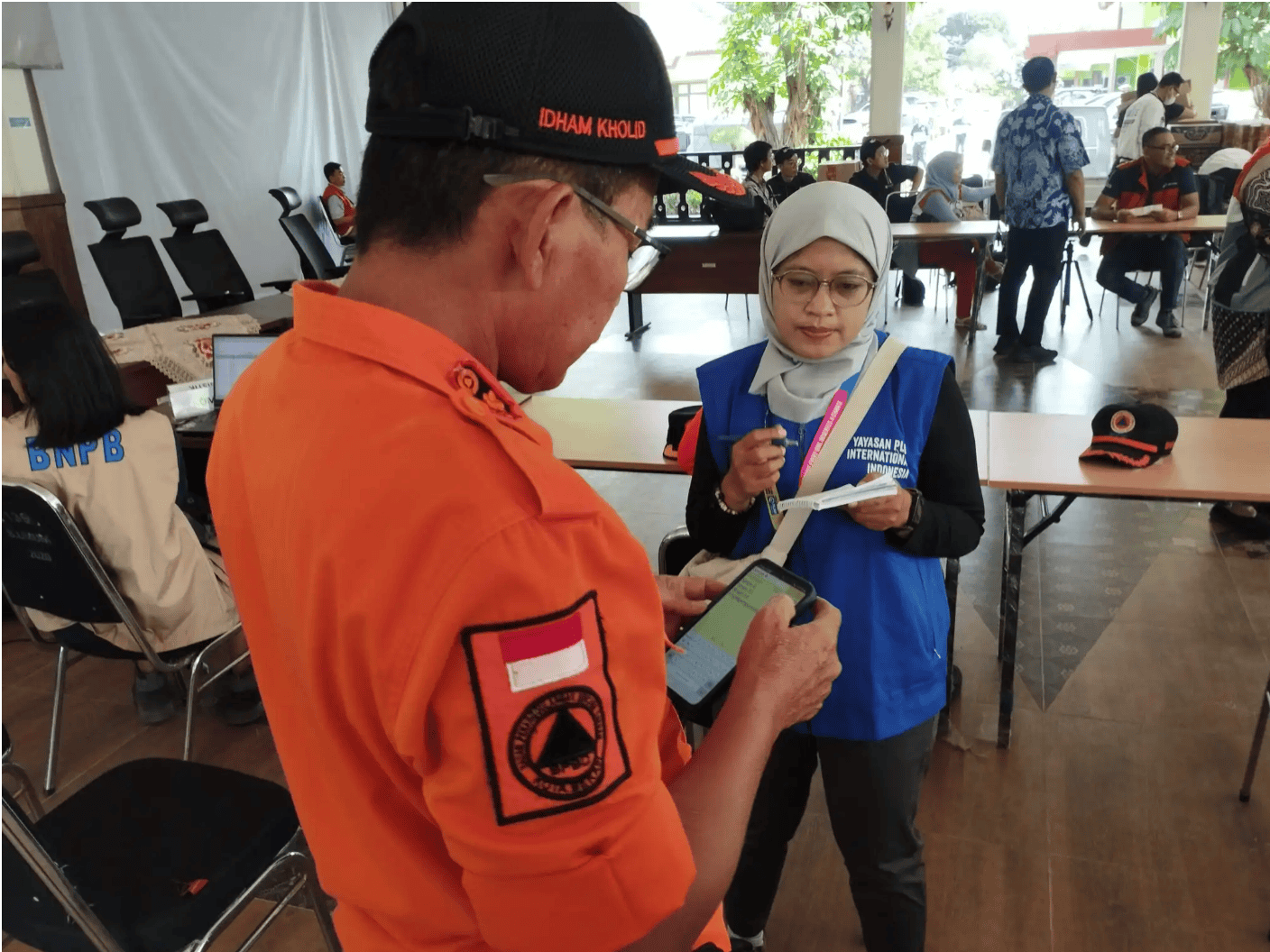
In every response, we also set up feedback mechanisms with support from local government and youth volunteers. These systems have become an important bridge, allowing affected communities to ask questions, make suggestions, or quite simply be heard and be seen. People were grateful that their concerns were met with real answers, and for many, it was the first time they felt included in shaping the help they received.
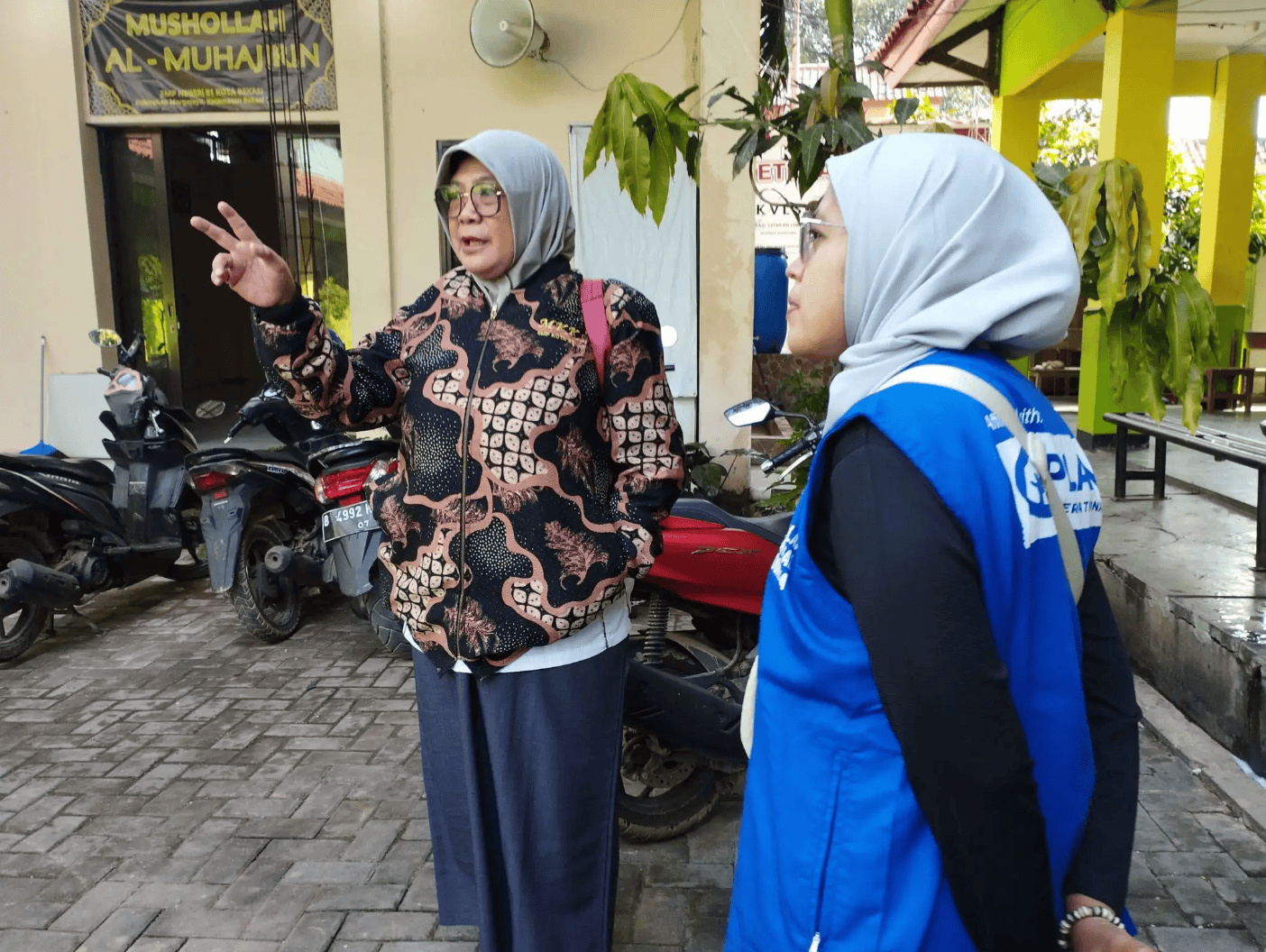
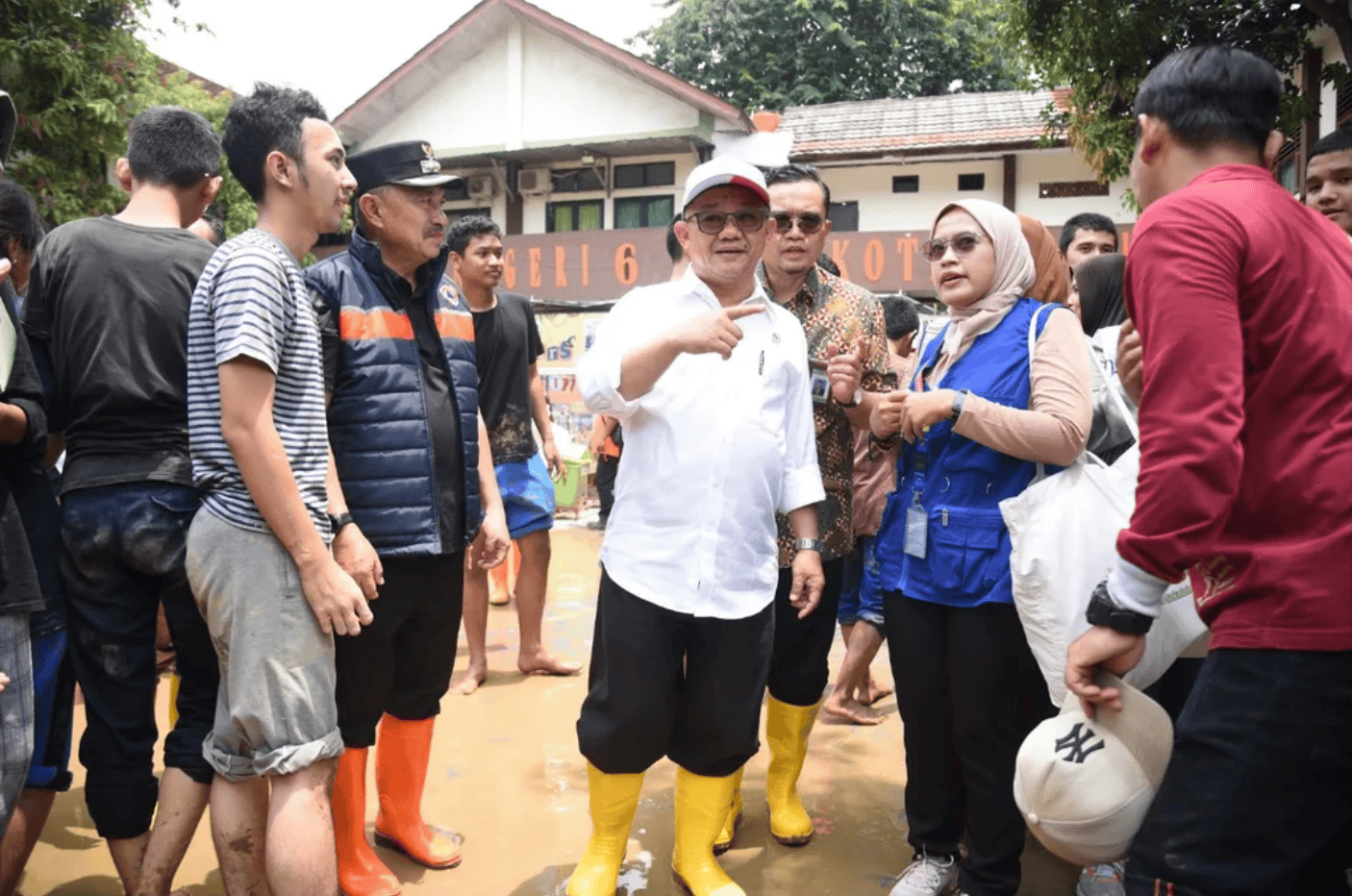
Maulinna coordinating the rapid needs assessment after the Bekasi flood.
Education can’t be overlooked
Still, there is much more to do. My biggest concern is that education continues to be overlooked in the early days of a disaster. Schools are often used as evacuation shelters, and the learning process is put on hold. But for children, school is more than just a classroom; it’s stability, safety and a space to recover emotionally.
If I could make one change, it would be to ensure that every school in Indonesia — not just on paper, but in practice — is prepared for disaster. That means drills, not just documents, and community participation, not just policies, and it means making sure that infrastructure is truly safe so schools can remain open even when everything else shuts down.
My message to donors and global partners is simple: invest in training. Support teachers, youth and education authorities across all regions so that when disaster strikes, the response is fast, inclusive, and appropriate. We can reach a future where no child is harmed at school, and no day of learning is lost.
What gives me hope is the belief that children deserve to feel safe, even in times of crisis. We are not doing this alone, either. Collaboration with government, schools, and local communities is precious and a work in progress. I believe that if we engage young people now, we’re not just helping in the moment; we’re building a more resilient, more prepared generation for the future.
When we think of displacement, we often focus on the destination — the border crossed, the asylum granted. But what about the children who never make it across — or those left waiting indefinitely in unfamiliar cities, without protection or support?
This World Refugee Day, Plan International is spotlighting the children left in limbo at Mexico’s northern border. A new report by Plan and Save the Children — Unaccompanied Children: Risks and Violence Along the Migration Route Through Mexico — shares the stories of 155 children and caregivers navigating three of the country’s most high-risk border cities: Ciudad Juárez, Reynosa and Tijuana.
The data highlight significant gaps in the protection and support available to migrant children. These children are exposed to multiple forms of violence and often lack access to the assistance they need. Mental health services and education systems are struggling to meet their needs, leaving many without critical support. This report underscores the need to strengthen care for migrant children — not only at border crossings, but also within the systems intended to ensure their well-being.
A journey defined by risk
For most children, migrating through Mexico isn’t something they choose — it’s something they’re forced into. Forced internal displacement and the transit of foreign populations through high-risk zones have become defining features of this corridor. The majority of children interviewed — ages 7 to 16 — came from Colombia, Guatemala, Haiti, Honduras, Mexico, Venezuela and even Afghanistan.
In Ciudad Juárez, nearly two-thirds of children began their journey accompanied by a parent or guardian. But by the time they reached Mexico’s northern border, only one-third remained with them. This separation significantly increases children’s risk of gender-based violence, trafficking and recruitment by organized groups — a pattern echoed across multiple case narratives in the report.
“The testimonials from our research reveal a heartbreaking reality: children are being separated from their families during their journey through Mexico, leaving them vulnerable to trafficking, violence and recruitment by organized crime groups. These children endure months of delays that keep them apart from their families, face discrimination in education and experience isolation within a system that fails to uphold their fundamental rights. This protection crisis demands immediate and coordinated action from all parties involved.”
— Carmen Elena Alemán, Plan International Americas Regional Director
When protection systems fail
The threats don’t end at the border. In Reynosa, one in three interviewed girls had lived in displacement shelters for over six months — often in overcrowded, high-risk areas where going outside means risking kidnapping or extortion.
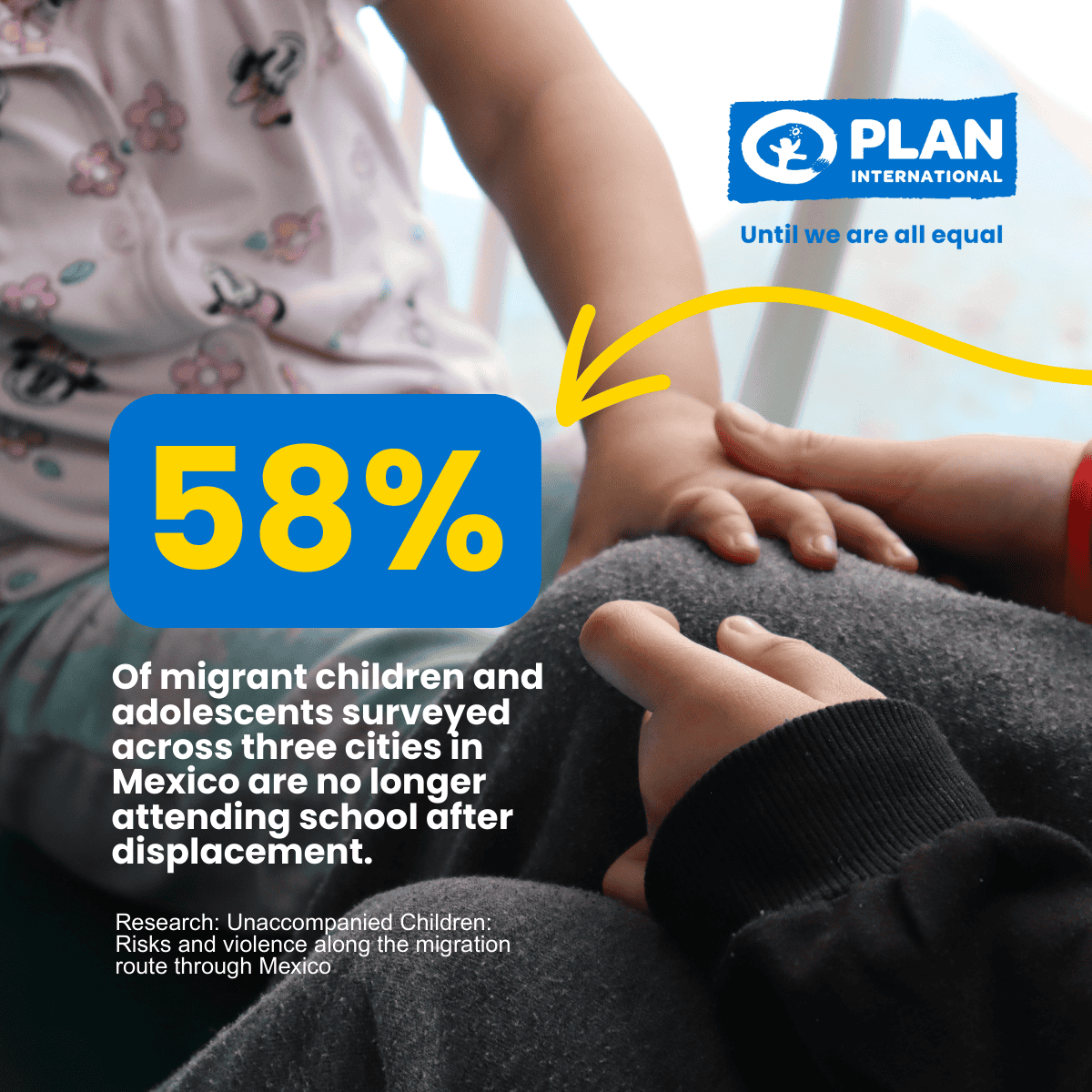
Education, a critical anchor in children’s lives, is often one of the first things to be lost. In the three cities analyzed, while more than 70% of children surveyed had been enrolled in school before migrating, 58% were no longer attending classes at the time of the interview. Children are often kept out of school by a mix of bureaucracy, missing documents, overcrowded classrooms and xenophobia from host communities. Inconsistent shelter policies and social discrimination only deepen the barriers to learning.
“The mothers, fathers and caregivers of the Mexican population do not want their children to live with children on the move,” one interviewee said, reflecting widespread social discrimination.
The silent burden: mental health
The emotional weight of displacement is often the hardest to see — and the easiest to overlook. Many children struggle to understand why they were separated from caregivers or why they remain in prolonged uncertainty. Some describe learning how to spot predators or protect younger siblings in situations no child should face alone.
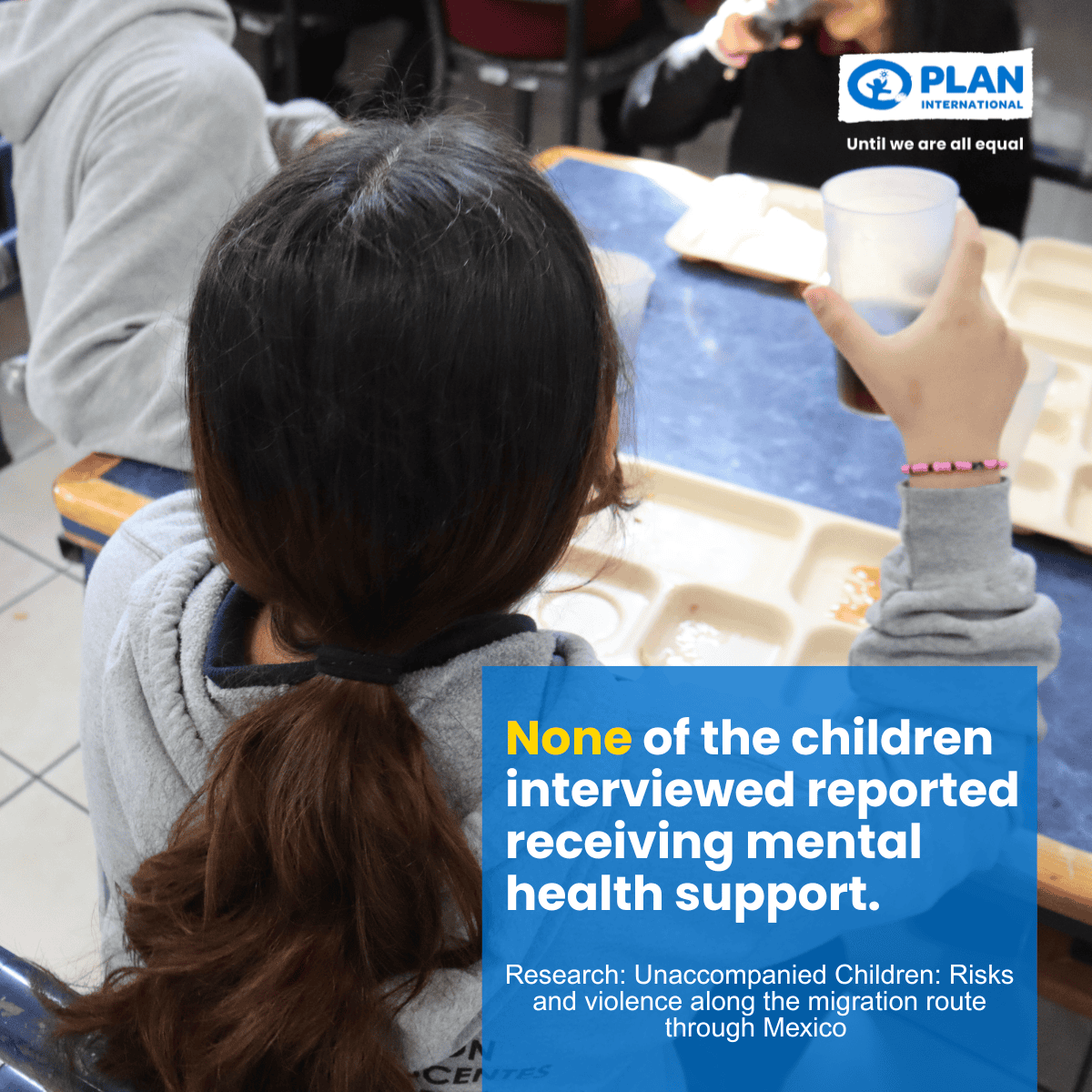
Despite the evident trauma, access to formal mental health support is nearly nonexistent. Cuts to international funding have forced the withdrawal of psychosocial programs, leaving children without even a basic outlet for care.
“What we’re witnessing is a mental health crisis that requires urgent attention. Children in our programs describe living with constant fear and uncertainty — some tell our staff to ‘be careful who you talk to’ even in safe spaces. We’re seeing parents focused on immediate survival needs, often saying ‘when we reach our destination, then I’ll focus on my child’s emotional needs,’ but these children need support now. We’re working with our partners to address these gaps, but the need far exceeds current capacity.”
— Arturo Estrada, Interim Country Director of Plan International Mexico
What the research is calling for
The findings from this report reinforce a critical truth: migrant children are not being adequately seen, heard or protected. The evidence points to an urgent need for coordinated, multi-sectoral action that responds to the rights, needs and lived realities of children on the move.
Based on the research, the report calls for:
— Immediate, trauma-informed mental health support — services must be accessible, culturally sensitive and designed specifically for children and adolescents, especially those who are unaccompanied.
— Protection systems that respond to the gendered risks girls and young women face — including the prevention of gender-based violence, trafficking and exploitation in shelters and transit zones.
— Uninterrupted access to education — flexible enrollment policies, language support and safer school pathways are urgently needed, even within temporary displacement.
— Safe, dignified shelter options — facilities must prioritize children’s well-being, offer safe recreational and learning spaces, and include family tracing and reunification services.
— Institutional strengthening and interagency coordination — especially at the municipal level, where high staff turnover and fragmented systems continue to impede continuity and accountability.
At Plan, we implement humanitarian emergency response actions in Mexico along both the southern and northern borders, where we support shelters by providing care services, mental health support and school reintegration programs.
In 2024, the organization served more than 54,000 people, including 21,000 girls and young women who received humanitarian assistance through the creation of safe spaces, access to education, emotional wellbeing support and other services. We have also worked hand-in-hand with various state institutions and local organizations to prioritize differentiated care for children.
Toward a more protective future
Children on the move are not just crossing borders. They are navigating broken systems that often render them invisible. But their vulnerability is not inevitable. With the right investments, policies and political will, migration can be met with protection — not peril.
As we mark World Refugee Day, this report stands as a timely reminder: The right to protection goes beyond survival. It means acknowledging children as rights-holders, as participants and as leaders in shaping their futures.
The report offers timely insights for programming, particularly in light of ongoing displacement trends. These findings call for action that child protection actors, governments and donors can adapt across borders.
Read the full report
Stay updated on Plan International’s technical work by
This article was written by Kadiatou Cissé Abbassi, director of education at Plan International USA. For more information on Plan’s work, please reach out to Kate Ezzes, vice president of program development at Plan International USA at Kate.Ezzes@planusa.org.
Education is a fundamental human right that should be accessible to all. Every child deserves the chance to learn, grow and unlock their full potential. Yet millions of girls around the world still face barriers that prevent them from learning.
The cost of denying girls their right to education extends far beyond individual lives — it impacts entire societies. The global economy loses between $15 and $30 trillion in lifetime productivity and earnings due to gaps in education.
This analysis explores why targeted investments in girls’ secondary education are not just ethical but economically essential.
Persistent challenges in girls’ education
Despite major progress in expanding educational access, significant barriers remain. The 2025 Girl Goal report indicates that while the number of out-of-school girls fell by 39% over the last two decades, 122 million girls remain out of school globally:
— High drop-out rates: Many girls still drop out at the primary level or fail to reach secondary education.
— Systemic barriers for secondary education: Those who do access secondary education continue to face:
— Inadequate support systems.
— Early marriage.
— Insufficient water, sanitation and hygiene facilities.
— Safety concerns.
— Restrictive social norms.
— Increased vulnerabilities in crisis contexts:Girls in conflict zones, crisis situations or extreme poverty are denied the right to attend school more often.
The transformative impact of educating girls
Nelson Mandela famously said, “Education is the most powerful tool you can use to change the world.” This remains true — especially when we invest in girls’ education, a key to unlocking countless opportunities. The evidence is clear: when girls receive an education, they gain greater agency, make informed decisions and contribute to their communities and economies in transformative ways.
— Health and well-being: Education leads to better health outcomes, including lower maternal and child mortality rates.
— Social and economic mobility: Girls with access to education delay marriage and childbearing, improving their long-term stability.
— Community and global growth:Education strengthens economies and governance, creating more resilient and self-sufficient societies.
The consequences of failing to invest in girls’ secondary education:
— Reduced lifetime earnings: Girls without secondary education may see their potential earnings cut by up to 50%.
— Higher child marriage rates:12 million girls are married before the age of 18 each year, limiting their opportunities for education and economic independence.
— Increased child mortality: Children born to uneducated mothers are twice as likely to die before the age of 5.
— Economic losses: Educational gaps result in massive economic inefficiencies — limiting workforce development, reducing global competitiveness and cutting into national GDP.
The alternative: Investing in girls for economic growth
The economic impact of investing in girls’ education is undeniable. Plan International’s Girls Learn & Thrive program in Senegal is proving that when girls have the resources to complete school, they gain the skills to thrive in the workforce and contribute to economic development.
Child marriage remains a major barrier to education in Senegal, affecting 30% of girls before 18 and 9% before 15. In regions like Kédougou, early marriage forces many girls to drop out of school. To address this, Girls Learn & Thrive equips girls with the tools to stay in school, transition into employment and achieve financial independence by:
— Connecting girls with career opportunities – 112 girls visited businesses, met female professionals in leadership roles, and explored careers in male-dominated industries.
— Building entrepreneurial skills – 465 youth attended entrepreneurship fairs, where they developed business strategies, gained self-employment guidance and accessed financial resources.
— Strengthening academic performance – 129 girls improved their skills in math, philosophy, English and French through 122 targeted remedial sessions.
— Preparing girls for financial independence – Girls engaged in peer mentorship and vocational training, gained money management skills and launched small businesses, including a bakery.
— Engaging fathers and community leaders – Fathers’ groups led 287 discussions with more than 1,500 participants, including religious leaders and local officials. These sessions challenged social norms, encouraged girls’ education and promoted the delay of child marriage.
— Raising awareness through media advocacy – Girls designed and led radio and social media campaigns, reaching over 50,000 people across Guinea, Mali and Senegal with messages on gender equality and education.
When girls stay in school, economies thrive. Education doesn’t just transform individual lives — it strengthens entire communities, driving long-term economic resilience. Girls who complete secondary education are more likely to enter formal employment, start businesses and reinvest in their families and local economies.
By ensuring access to education, we’re not only preparing girls for brighter futures — we’re strengthening labor markets, fostering entrepreneurship and building more stable and self-sufficient societies. Investing in girls’ education isn’t an act of charity. It’s a proven strategy for economic growth and sustainable development.
Why this matters beyond borders
The success and stability of low- and middle-income countries are critical not only globally but also for the United States. Investing in education strengthens economies, stabilizes societies and creates opportunities that benefit everyone.
— Stability & security: Education reduces conflict and extremism, decreasing the need for U.S. humanitarian and military interventions.
— Migration: Improving conditions in home countries reduces the pressures that drive irregular migration.
When low- and middle-income countries thrive, girls and young women gain greater agency — allowing them to lead, contribute to their communities and shape their futures. This empowerment reduces reliance on foreign aid and strengthens global partnerships.
A call to action: The time to invest is now
Breaking the cycle of poverty and inequality starts with bold action. Investing in girls’ education isn’t just the right thing to do — it’s the smartest investment we can make for a more stable, prosperous world.
To create lasting change, we must take a holistic approach:
— Ensure access to quality education and skills so every girl has the opportunity to learn and thrive.
— Strengthen health services and policies to support girls’ well-being and remove barriers to education.
— Promote positive social norms that empower girls and challenge restrictive gender roles.
— Drive economic empowerment by equipping girls with the skills and opportunities to succeed.
With the right investments, we can give millions of girls the tools to shape their futures, strengthen their communities and drive economic growth. The time to act is now.
Too often, communications is an afterthought in development programs — reducing impact, visibility and funding potential. Here’s why it needs to be part of the plan from the start.
This article was written by Vannette Tolbert, Senior Manager, Communications at Plan International USA. For more information on Plan’s work, please reach out to Vannette at vannette.tolbert@planusa.org.
If you work in development communications, you’ve likely experienced this: A program team or proposal lead rushes in as a project is ending with an urgent request:
“Can we post something about this on LinkedIn?”
“Can we get this published in local news?”
“Can you format this report and make it look polished for donors?”
By then, it’s too late. The program is ending, impact stories weren’t collected, the media strategy wasn’t planned and no budget remains for content creation or dissemination.
The irony? Communications teams are there from day one — we’re just not looped in early enough.
As Paolo Mefalopulos, a development communication expert and former World Bank specialist, explains:
“Communication succeeds when it is an integral part, from the very beginning, of a development programme, playing a full role during the identification of the problems and priorities, as well as during the detailed planning, implementation, and evaluation.”
The quote, from Communicating for Development: Human Change for Survival by Colin Fraser and Sonia Restrepo-Estrada (Tauris, 1998), reinforces a critical point: communications must be integrated from the start to effectively capture and showcase impact. Without a strategy in place, programs miss opportunities to document real change.
This is especially true for before-and-after storytelling, one of the most compelling ways to illustrate impact. When we track progress over time — showing where a person, community or initiative started, how the program helped and what changed — we create powerful narratives that resonate with funders and stakeholders. Without early documentation, these stories are lost, along with the ability to inspire action and investment.
But too often, this opportunity slips away because communications is brought in too late. This reactive approach doesn’t just make our jobs harder — it costs funding, credibility and influence.
The problem: Why communications gets left behind
Too often, communications is seen as a “nice-to-have” rather than a core part of impact and sustainability. The focus is on execution, but without visibility, even the best programs struggle to gain recognition — and future funding.
The result?
Last-minute scrambling for media coverage, often with poor results.
Storytelling that feels inauthentic — more about checking donor reporting boxes than showcasing real impact.
Missed funding and partnership opportunities because success stories weren’t shared effectively.
When communications isn’t built in from the start, organizations lose the chance to engage stakeholders, funders and communities in real time — weakening long-term impact and funding.
Lessons from the field: The cost of leaving comms out
When I worked in the humanitarian sector in Liberia, I made a point of tagging along with program staff, executives and even drivers whenever I could. I wanted to see the fieldwork firsthand and capture the full story — not just isolated snapshots.
I saw women launch businesses, children thrive with school meals and entire communities transform.
But too often, these powerful stories weren’t documented until donors asked for them. By then, it was too late to capture the most meaningful moments.
One example stands out: A women’s savings group in a rural village grew from eight to nearly 100 members, helping women start businesses and send their children to school. But because no one had collected photos, interviews or qualitative data over time, we had no way to showcase the program’s impact when donors requested an update.
After COVID-19 hit, we faced a funding crisis. I pushed to be involved earlier in program planning and proposal writing. That way, we weren’t scrambling for stories at the end — we had a strategy from the start. Not only did it work, but donors were thrilled to have so much visibility across multiple channels. Once the creative momentum built, they even suggested additional outlets within their networks, helping us amplify the reach even further
That’s why communications should be part of program design from the beginning.
The missed opportunity: Storytelling as a driver of impact and investment
Storytelling isn’t just about visibility — it’s about impact. It connects programs with the people who can support and sustain them. And it doesn’t have to be expensive. A thoughtful, low-cost strategy can make all the difference.
The takeaway? Stories don’t just inform — they inspire action.
The fix: A smarter approach to communications strategy
To make the most of communications, we need to integrate it into program design from the start. Here’s how:
1. Embed communications in the budget and proposals:
Communications isn’t just “marketing” — it’s part of program impact.
Donors want to see results, and visibility helps attract more funding.
Include line items for content creation, media engagement and dissemination in proposals.
Example: Instead of scrambling at the end of a project to compile a polished impact report, imagine if a small portion of the budget had been allocated from the start for storytelling. That means dedicated time for gathering stories, taking photos and sharing updates throughout implementation — not just when the final report is due.
2. Plan content and media strategy early:
Authentic storytelling takes time. Last minute efforts fall flat.
Plan media outreach alongside program milestones to capture impact as it happens.
Use a mix of formats — video, photography, social media and traditional media — to ensure reach.
Example: Imagine you’re running a youth employment program. If storytelling is built in from the start, you can follow a few participants over time — documenting their challenges, wins and progress. By the time you report to donors or pitch to media, you have a full, before-and-after story that paints a vivid picture of real impact — not just scattered data points.
3. Use professional creatives:
Development organizations already have skilled content creators — engage them from the start.
Maintain consistency in storytelling across channels and materials.
Invest in high-quality visuals and writing that reflect the program’s impact.
Example: Think about the last time you saw a rushed slideshow with hazy photos and dense text. Now picture a short, well-shot video of a farmer explaining how a climate resilience program changed their livelihood. Which one sticks with you?
4. Think both local and global
Strong storytelling builds local trust and global investment.
Center local voices — not just donor-driven narratives.
Partner with community-based media to expand reach and engagement.
Example: A maternal health program might share real-life birth stories on community radio, making the project feel real and relevant locally. At the same time, digital stories featuring midwives and mothers can be packaged for international donors and policymakers — ensuring visibility at multiple levels.
Bottom line: Make communications an asset, not an afterthought
We can’t just talk about programs — we need to design them with communications in mind.
Investing in storytelling and media strategy amplifies impact, attracts funding and builds long-term success.
It’s time to rethink how we integrate communications into development — starting now.
How is your organization approaching communications in development programs? Let’s continue the conversation.
How evolving donor priorities and political realities are reshaping philanthropy
This article was written by Vila-Sheree Watson, senior director of integrated fundraising at Plan International. For more information on Plan’s work, please contact Vila-Sheree Watson at vila-sheree.watson@planusa.org.
Introduction
The landscape of private fundraising for foreign aid is undergoing a seismic shift. Political instability, economic fluctuations and evolving donor expectations are forcing international NGOs to rethink traditional fundraising models. While institutional funding has always been subject to political cycles, private philanthropy was once seen as a more stable alternative. However, today’s private donors are more discerning, impact-focused and selective in their giving. Not to mention, in this climate of frozen funding, many donor sources are becoming more competitive.
In this article, we explore the data behind these trends, the key challenges facing private fundraising in the aid sector and practical strategies for adapting to this new reality.
A new era for private fundraising
Private fundraising for international aid has long been considered a stable and reliable complement to government and institutional funding. Yet, in today’s rapidly changing political and economic climate, even philanthropy is not immune to disruption. Donors at every level — whether individuals, foundations or corporate partners — are shifting their priorities, asking new questions and demanding more accountability. International NGOs that fail to recognize these changes risk falling behind.
At the heart of this transformation is a growing preference for locally led development. More than ever, private donors are directing their resources toward grassroots organizations in the Global South rather than large, international institutions. A recent Bridgespanstudy found that more than 60% of philanthropic donors are prioritizing initiatives led by local leaders. This shift reflects an increasing belief that aid should be driven by those closest to the challenges being addressed rather than imposed from the outside.
At the same time, donors are looking for clear, measurable impact. The days when supporters would give indefinitely to general operating funds, trusting organizations to allocate resources as they saw fit, are fading. According to the 2023Giving USAreport, nearly three-quarters of high-net-worth donors expect to see quantifiable results before committing to long-term giving. As a result, traditional fundraising models, such as child sponsorship and unrestricted donations, are losing traction. While these approaches once fueled sustained investment in international programs, today’s donors want to fund specific projects with defined outcomes — or at the very least to have the perception of specificity.
Economic uncertainty is also shaping the giving landscape. Inflation and market volatility have tightened many donors’ budgets, making them more selective about where and how they give. In 2022, individual charitable givingin the U.S. declined by 6.4%, with international causes often falling lower on donors’ priority lists compared to domestic concerns. Compounding these financial pressures is a growing scrutiny of overhead costs. While experienced fundraisers understand that effective programs require investment in infrastructure and capacity, many donors remain skeptical of organizations with perceived high administrative costs. This ongoing tension forces fundraisers to strike a delicate balance — ensuring sustainability while meeting donor expectations for efficiency.
The challenges do not stop there. The international development sector is also grappling with a shifting trust dynamic. In recent years, high-profile scandals and criticisms of the aid industry have led to increased skepticism about large NGOs. More than ever, organizations must work to rebuild donor confidence by being transparent about where funds go, how decisions are made and what impact is truly being achieved.
Rethinking private fundraising for the future
Given these realities, it is clear that private fundraising cannot continue as it has in the past. To thrive in this new landscape, international NGOs must rethink their strategies and embrace new approaches.
A more diversified fundraising model will be critical. Organizations that rely too heavily on unrestricted giving or traditional donor pipelines will struggle. Instead, integrating new revenue streams — such as donor-advised funds, impact investing and innovative financing mechanisms — can provide much-needed stability. At the same time, the way organizations communicate with donors must evolve. A broad appeal for general support will no longer suffice. Today’s donors want to see exactly where their money is going and the tangible difference it is making.
Rather than simply asking for donations, fundraisers need to showcase specific interventions — whether it’s providing menstrual health kits for girls or training midwives in rural communities.
Collaboration will also become increasingly important. Instead of positioning themselves as sole implementers, large international NGOs must strengthen partnerships with local organizations, recognizing that shared leadership builds credibility and trust. Donors who might have previously hesitated to support a large INGO may feel more confident contributing if they see that funds are being distributed equitably and that local voices are central to decision-making.
Donor engagement strategies must also evolve. As the cost of acquiring new donors rises, retention and stewardship have never been more important. NGOs that invest in deepening relationships with existing supporters — through personalized updates, transparent reporting and compelling impact stories — will be better positioned to maintain long-term support. In addition, digital fundraising will continue to play a growing role. Social media-driven campaigns, peer-to-peer fundraising and influencer partnerships can help bridge the gap between traditional and modern donor engagement.
A future defined by adaptation
Private fundraising in the foreign aid sector is at a turning point. The old models that have sustained organizations for decades are being challenged, but with change comes opportunity. NGOs that embrace transparency, prioritize impact and foster genuine partnerships will not only survive but thrive in this evolving landscape.
The path forward requires innovation, bold thinking and a willingness to adapt. Fundraisers must recognize that donor expectations have shifted — and that meeting those expectations will require reimagining the way philanthropy works. The organizations that succeed will be those that listen, evolve and ultimately prove that their work is making a real difference in the world.
This article was written by Aisha Bukar Usman, Access to Education Lead for Plan International Nigeria.
With approximately 20 million children out of school, Nigeria is grappling with a significant educational crisis, fueled by poverty, insurgency and displacement. In response to this alarming situation, the Opportunities to Learn activity was launched in 2021, funded by United States Agency for International Development with the International Rescue Committee as the lead organization, working with partners — Plan International, Inclusive Development Partners, Restoration of Hope Initiative and American University of Nigeria.
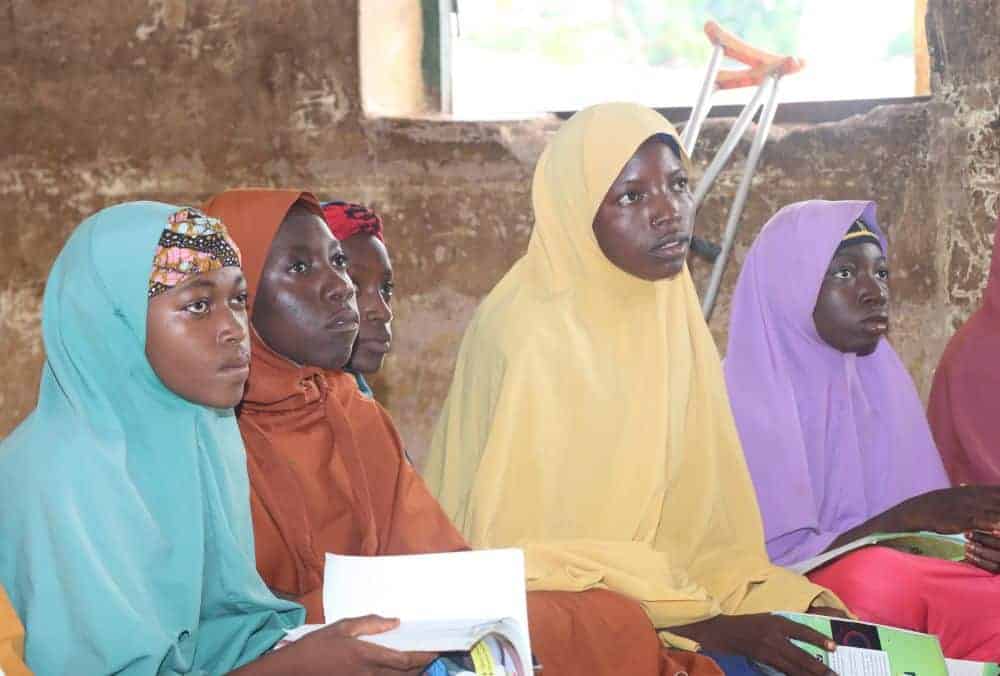
The activity’s mission is to provide quality, safe basic education to out-of-school children and youth aged 10 to 15, using Nigeria’s Accelerated Basic Education Program curriculum. This curriculum was designed to provide foundational skills in literacy and numeracy to enable these children to transition to higher education levels or enter the workforce.
The impact of the OTL activity has been profound. By July 2024, 5,075 OTL activity learners across Borno and Yobe states took the Basic Education Certificate Examination, a significant achievement considering the educational challenges in these locations.
The Basic Education Certificate Examination is a pivotal milestone in a student’s educational journey in Nigeria. Success in the BECE is a prerequisite for transitioning from junior secondary school to senior secondary school. For girls in particular, succeeding in the BECE can have a profound impact on their future prospects, enabling them to pursue their academic and career goals. This, in turn, can lead to improved economic prospects, enhanced life skills and confidence, and a break from the cycles of poverty.
In Yobe state, 641 learners (430 girls and 211 boys) participated in the examination. The Ministry of Education in Yobe state waived the examination fees and allowed learners to write the examinations without the usually compulsory requirement of wearing school uniforms. This is the first time in Nigeria that learners from an accelerated non-formal education pathway wrote the BECE — and the results were inspiring.
All program participants passed the BECE, and the Yobe State Government has offered them entry admissions into government senior secondary schools. This is a testament to the resilience of communities and the importance of targeted educational interventions in crisis-affected regions. Education is undeniably a catalyst for change, especially in regions facing significant socio-economic challenges. The collaborative efforts of the OTL activity’s consortium, government stakeholders and community members have made a significant difference in the lives of thousands of children.
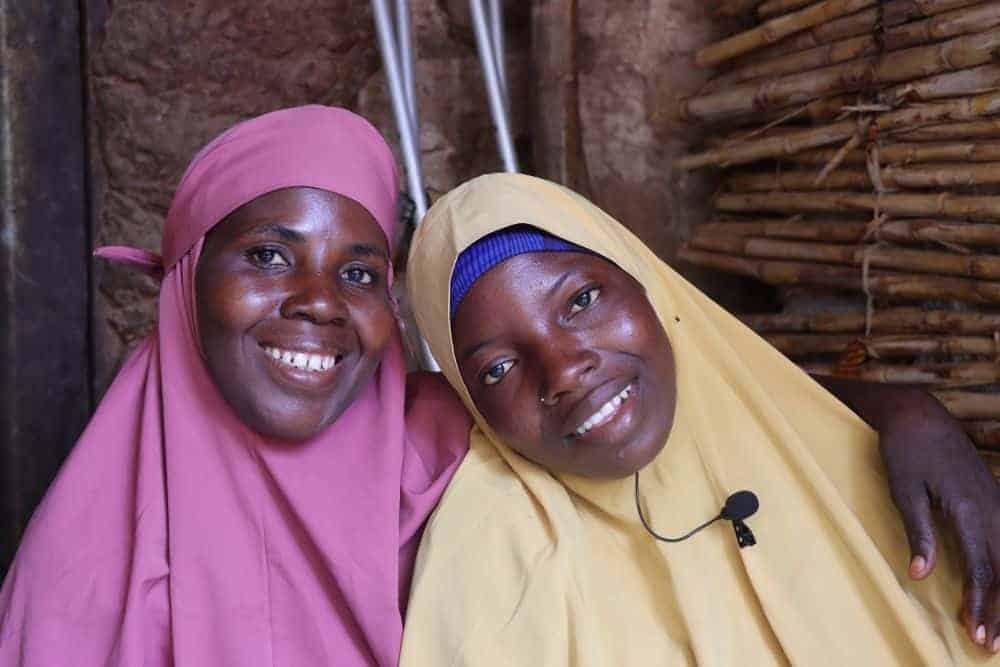
Among the many success stories emerging from this education initiative, Fatima’s story stands out. Before enrolling in this program, Fatima’s life was marked by hardship. She spent her days begging in the streets, a daily routine that left her physically and emotionally exhausted.
At the inception of the OTL activity, Fatima was provided with crutches to aid her mobility, as she had previously relied on a locally made stick to support her mobility to school. This support not only improved her physical mobility but also changed her social interactions.
“My classmates used to mock me, knowing me as the girl who begged on the street, but my teachers helped change their attitude,” Fatima shares. “Now, with my new crutches, I arrive on time, and my classmates respect me for my uniqueness.”
Fatima’s journey is a powerful reminder of how inclusive education can change lives. The OTL activity not only provided her with the tools to succeed academically, but also fostered a supportive learning environment that allowed her to thrive.
“She comes back home excited, singing songs I do not even know the meaning of,” Fatima’s mother says. “I have never gone to school, but I am glad Fatima has the opportunity I didn’t get as a child through OTL.”
Fatima’s story is not just about overcoming personal challenges — it is a testament to the broader impact of educational initiatives. When girls like Fatima have access to quality education, they are able to unlock their full potential and become change-makers in their communities.
“I want to continue with my studies to become a doctor,” Fatima says. “I understand what it means to be in special need and would love to be able to support more people like me in the future.”


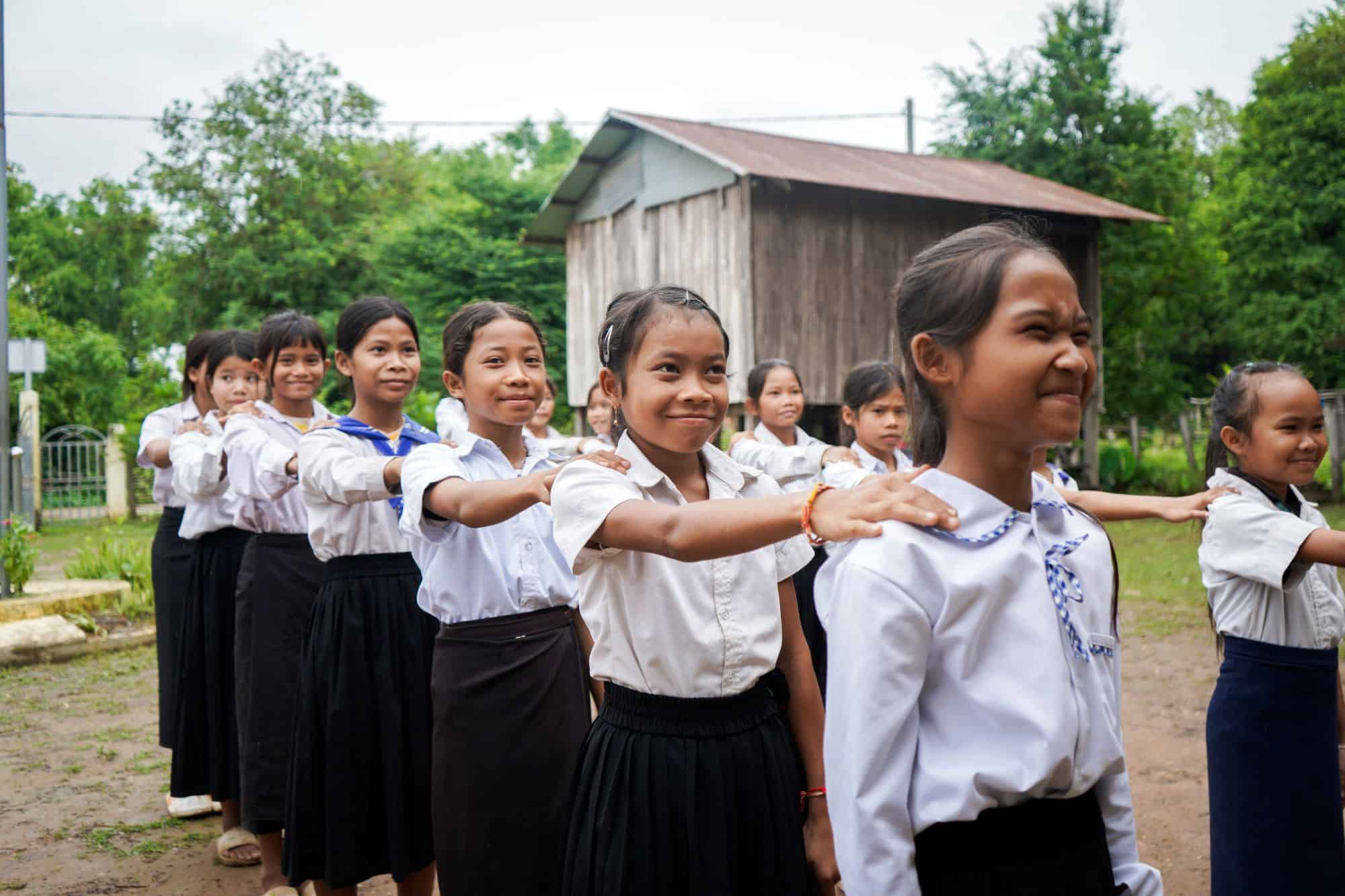
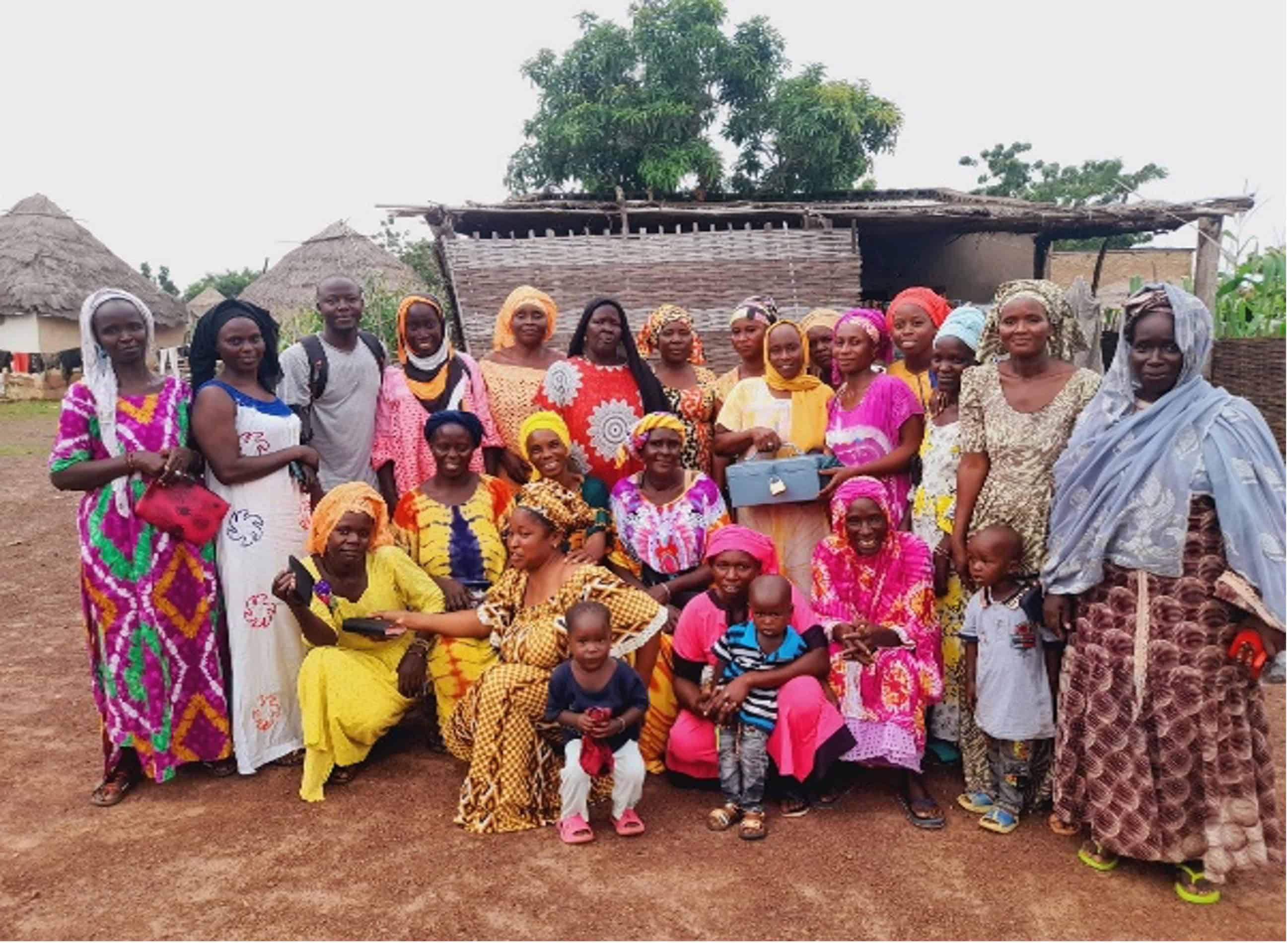 Girls Learn & Thrive participants celebrate their achievements with their community in Senegal. | © Plan International