Three years have passed since the escalation of the war in Ukraine — a conflict that has shattered lives and displaced millions. While the damage to buildings is visible, there are also hidden wounds in children’s minds.
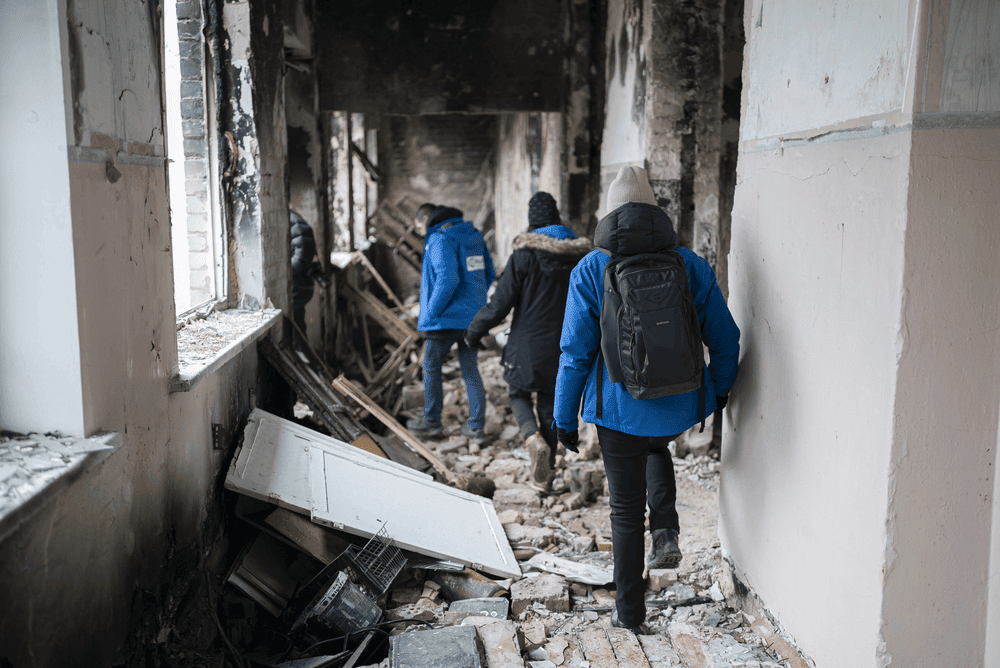
Plan staff walk through the hallways of a school in Ukraine to assess the damage from an explosion. | Albina Vinar, ©Plan International
Since 2022, almost 3 million children from Ukraine have needed humanitarian assistance, with many forced to flee their homes. The impact has been devastating, with many children taking on adult responsibilities, dropping out of school and facing social isolation.
[Read more: Not all scars are visible]
“Disruptions to education mean children are not only missing out on learning – they are losing vital opportunities to socialize, express themselves and process the trauma they are enduring,” Sven Coppens, Plan International’s director of the East and Central Europe Ukraine Humanitarian Crisis Response, says. “This is an emergency for their mental health and future prospects.”
Play isn’t just fun and games; in times of trouble, play can be a powerful way for kids to heal.
“Play is how children make sense of their world,” Penny Wilson, author of The Playwork Primer, says. “Play is how children process their experiences.”
It gives them a safe way to deal with negative emotions and start to feel better. For kids in conflict, play can help them feel a semblance of normalcy. Plan understands this and is creating opportunities for play in Ukraine and the surrounding countries where we work.
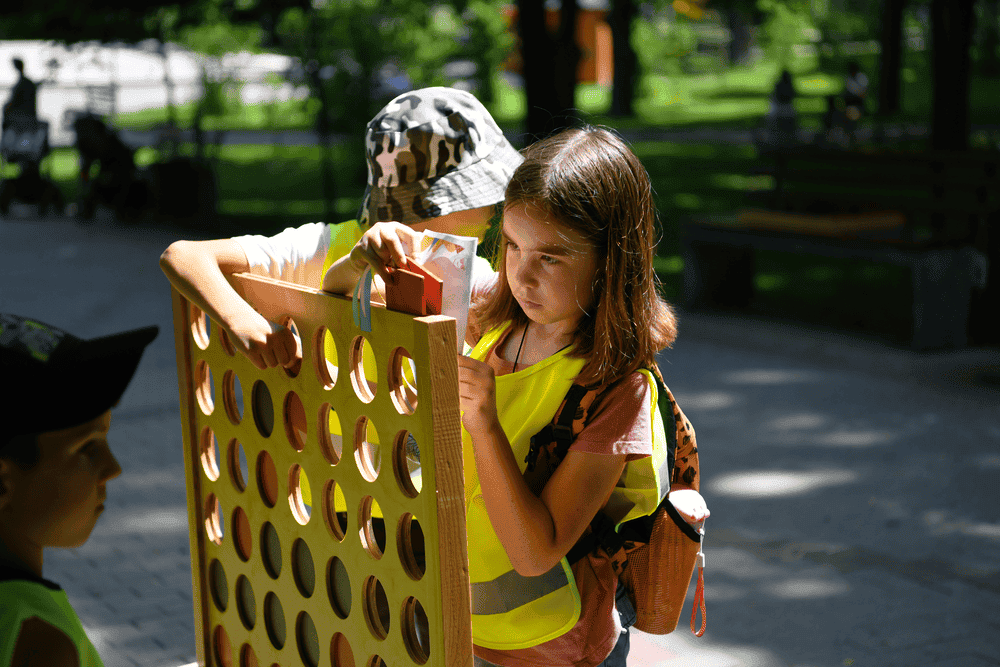
A girl in Moldova plays games at a child-friendly space hosted by Plan and a local partner to mark the first Internatioanl Day of Play in 2024. | ©Plan International
“As a refugee girl, I always struggled to connect with my peers, especially when I was in a different country,” 11-year-old Alina says. “When we play, we can learn different things from each other, and most importantly, we can share what worries or excites us.”
Since 2022, Plan has teamed up with local groups to run different play programs in Ukraine, Moldova, Romania and Poland. One example is the Ludobus, which is run by a local Plan partner organization in Moldova. These mobile play buses bring fun and learning to refugee children.
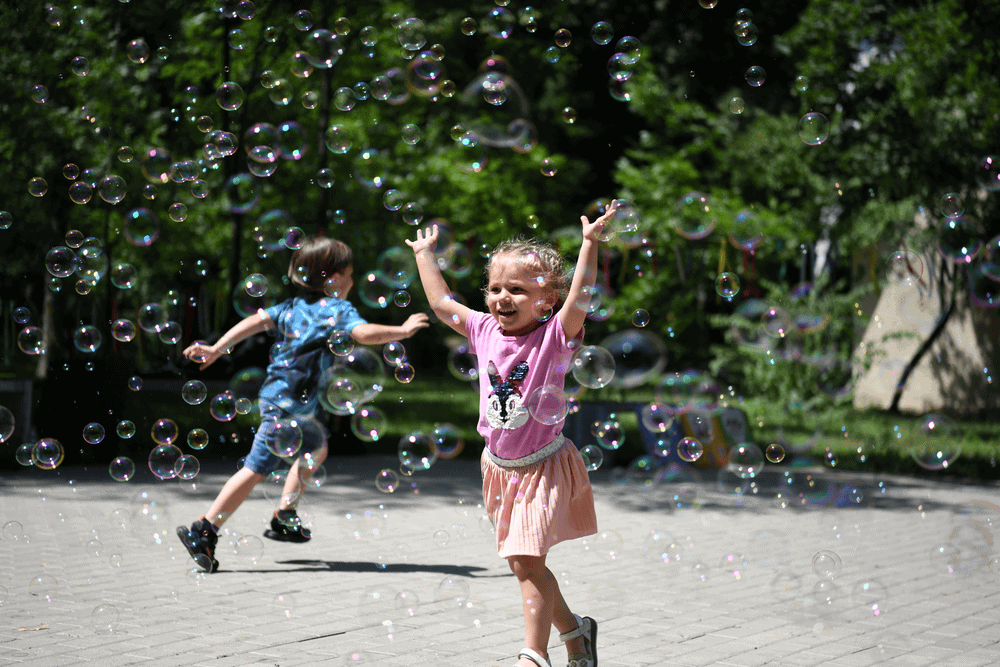
The Ludobus activities brought out more than 200 children and their families to play games, blow bubbles and connect with their community. | ©Plan International
“I come here [to the Ludobus activity] because I feel happy here,” 7-year-old Danya, a refugee boy from southern Ukraine, says. “I dance, I sing and there is music. We play football, but my favorite activity is drawing.”
[Read more: How Plan’s play bus is bringing joy to Ukraine’s children]
Like Danya, other children feel like the Ludobus is a place where they can leave their worries behind.
“When I play, I feel brave, I feel I can do anything,” 9-year-old Boris, who has lived in Moldova for over two years, says. “I love it when the Ludobus comes to visit us. We can all get together with other children and get to know each other.”
As the war continues and more kids are forced to leave their homes, Plan is creating special play places in refugee centers and community spaces. These places are designed to help kids learn and heal through play. They help children become more resilient and support their emotional and social development.
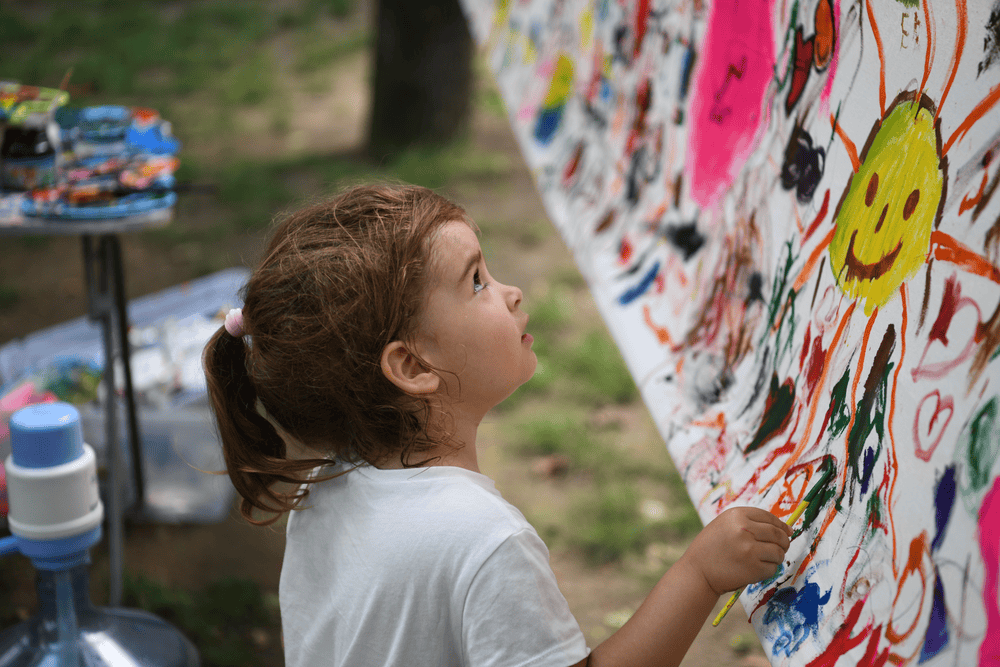
Children painted symbols of hope and togetherness at the Ludobus. | ©Plan Internationa
“At Plan, we prioritize the holistic wellbeing of children and young people affected by the war in Ukraine by integrating play-based learning into our programming,” Lucy Strickland, education in emergencies specialist, says. “Play is so much more than a recreational activity; it’s an integral component that complements education, child protection, mental health and psychosocial support initiatives.”
These safe spaces help kids feel like they belong and give them hope.
People in and around Ukraine still need help, including almost two million children. Supporting education, mental health and protection programs is key to helping them recover. For these children, play is more important than ever; it’s how they heal, how they get their childhood back and how they begin to build a better tomorrow.