Aprille was 13 when a super typhoon changed her life. At 24, she is helping her community prepare for the next one.
International Women’s Day celebrates women who lead. But leadership does not always begin in adulthood.
For Aprille, it started when she was a girl learning about her world.
Aprille is 24 now. She grew up in Salcedo, Eastern Samar, Philippines, a coastal town regularly hit by typhoons. One of eight siblings, with a mother who stayed home and a father who drove a bus, she grew up knowing storms were part of life.
As a child, she joined youth workshops supported by Plan International. She learned how to protect the environment, prepare for disasters and understand her rights. She listened. She asked questions. She paid attention.
She did not yet know how important those lessons would become.
The night everything changed
In November 2013, when Aprille was 13, Typhoon Yolanda, known internationally as Haiyan, struck her community.
“They said it was going to be a super typhoon. But we didn’t take it seriously. We were still playing around.”
— Aprille
By midnight, the winds were roaring. Windows broke. Floodwaters rushed in. Her family took shelter in a local day care center. Aprille held her younger brother tightly as the storm shook the building.
When morning came, their home was gone.
For three months, her family shared a crowded classroom with two other families. There was little privacy. It was uncomfortable and unsanitary. Recovery was slow.
For many girls, disasters like this change the direction of their lives. School becomes harder to afford. Girls take on more chores. Some never return to class.
Aprille went back.
But she went back with a new understanding.
“When Yolanda struck, we realized that what we had learned during training was true. It’s not a joke.”
— Aprille
The lessons she had learned as a girl helped her understand what was happening. She knew the storm was part of a larger climate crisis. She knew young people could do something about it.
That knowledge stayed with her as she grew up.
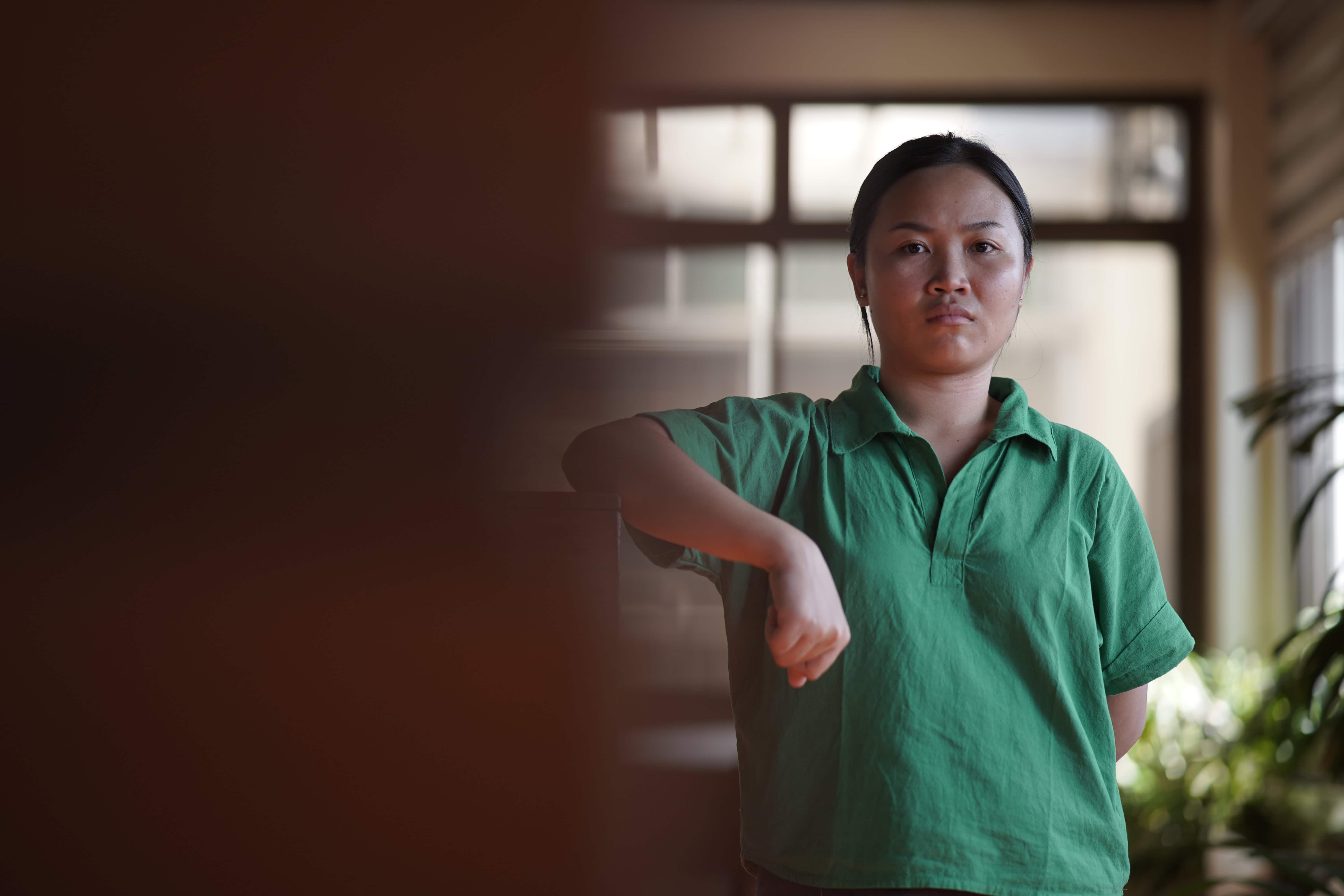
Aprille, 24, is a teacher and climate advocate from Eastern Samar in the Philippines. As a girl, she attended youth trainings on climate change before surviving Typhoon Yolanda at 13. Today, she helps her community prepare for the next storm. | © Plan International / Antevasin Digital Philippines
From student to leader
After the typhoon, Aprille and five other young survivors started a group called Caridad Active Movers for Progress, or CAMP. It is a youth-led group focused on climate awareness and helping their community prepare for disasters.
With support from Plan International’s Small Grant Initiative on Disaster Risk Reduction, they began organizing activities. They led coastal cleanups. They taught other young people about waste management. They worked with local officials. They turned youth events into chances to talk about climate change and safety.
Aprille, who once described herself as shy in primary school, began leading seminars.
“My exposure to different societal issues from a young age, and learning how we can participate in and help our community, ignited my passion.”
— Aprille
Today, she is a teacher. She includes lessons about climate change and youth rights in her classroom. She speaks up about how climate disasters affect children and coastal communities. She calls on leaders and companies to take the climate crisis seriously.
“I want the rest of the world to take this seriously. It’s very serious for us.”
— Aprille
What education makes possible
Aprille’s story reflects what long-term research shows.
An 18-year global study from Plan International followed the same group of girls from birth to adulthood across nine countries. By age 18, nearly two-thirds were completing or had completed secondary school. Fewer were marrying before 18 than in their mothers’ generation. Many were setting goals for college and careers.
Education builds knowledge. It builds confidence. It helps girls see what is possible.
When girls stay in school, they are more likely to get jobs, earn an income and take part in decisions that affect their communities.
That matters.
Communities are stronger when women and young people help shape the future. Families are more secure. Local economies grow. Decisions reflect more voices.
Aprille’s leadership grew out of the education she received as a girl.
Because she learned, she leads.
Because she leads, her community is better prepared for the next storm.
Why International Women’s Day begins with girls
International Women’s Day often highlights women in positions of power.
But her leadership did not begin in adulthood.
It begins in childhood.
It begins in classrooms that stay open after disasters.
It begins in workshops where girls learn about their rights.
It begins when young people are encouraged to speak and take action.
Aprille once sat in a training session as a girl learning about climate change.
Today, she teaches it.
Justice is not only written into laws or debated in conference rooms. Justice is a girl being able to stay in school and have her voice heard. Justice is her growing up with the chance to lead.
This International Women’s Day, we are calling for sustained support for girls’ education so more girls can grow into women who lead.
When girls learn, women lead.
When women lead, communities move forward.
Learn more about Plan International USA’s International Women’s Day initiatives.
We won’t stop until we are all equal.