Older generations of women had very different experiences of managing their periods from teenagers today — but modern girls are still calling for better, cheaper access to sanitary products and continue to face widespread stigma and prejudice surrounding periods.
Here, we delve into conversations between grandmothers, mothers and daughters about menstruation through the ages.
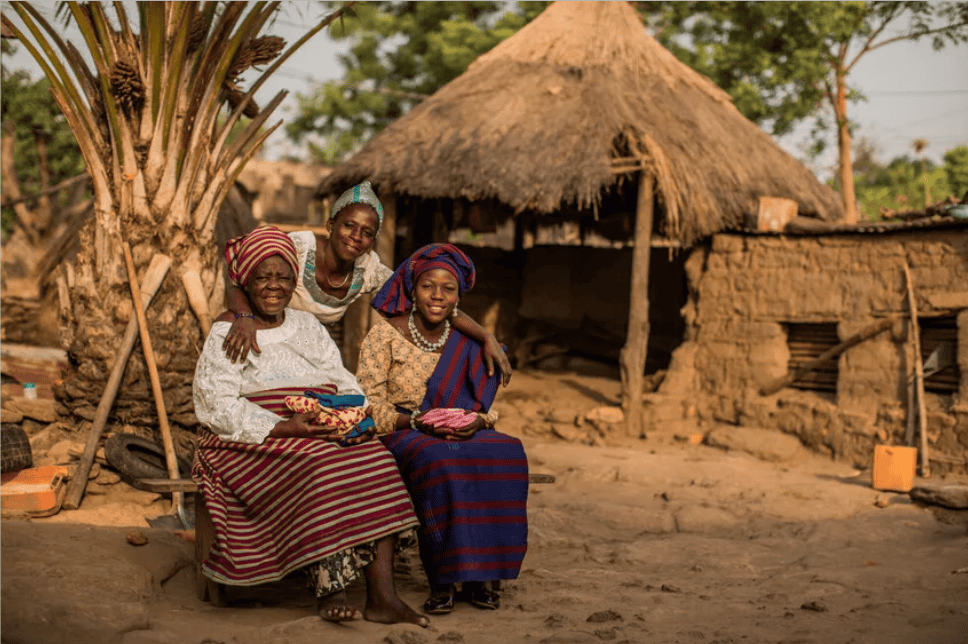
In central Togo, West Africa, teenager Denise, 16, is giving her 72-year-old grandmother, Inna — whom she affectionately calls Dada — a hug.
“To my fellow girls all over the world, including those living in remote communities, I encourage you to stop being ashamed about menstruation. It’s a matter of rights!”
Denise, 16, Togo
Inna has just been telling Denise how girls dealt with periods when she was young.
“On the first day of our period, we had to hide and call our mother or one of our sisters to help in secret. It was forbidden to enter the house. The family had to find a room on the roadside where the menstruating girl had to spend her entire period. Then, the family alerted the whole village. For four days, from morning to night, the village brought food to the girl out of goodwill. In the evenings, girls and boys would visit her and pass the time talking, eating, singing and having fun with her. Some of them spent the night there.”
Such experiences are far from unusual. Also in Togo, grandmother Akoyiki, 80, tells her daughter and granddaughter:
“During her period, the girl could bathe two or three times a day, with the permission of her mother. Like their mothers, girls who were on their periods were not allowed to prepare or serve food to their fathers.”
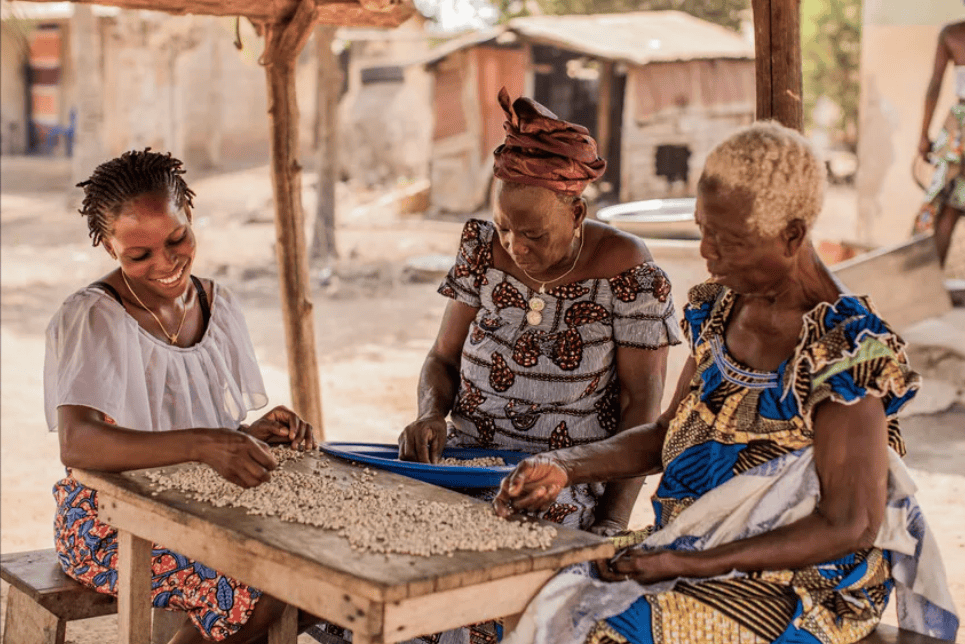
“In our time, a girl on her period could not be seen by or interact with men, except her husband. She was not allowed to go to groups as she pleased,” says her daughter, Gnoussiado, 60.
Granddaughter Assana, 24, gives some hope: “Nowadays, things have changed. We wear pants and bras. Even during our periods, we’re able to do any kind of activities without worrying too much.”
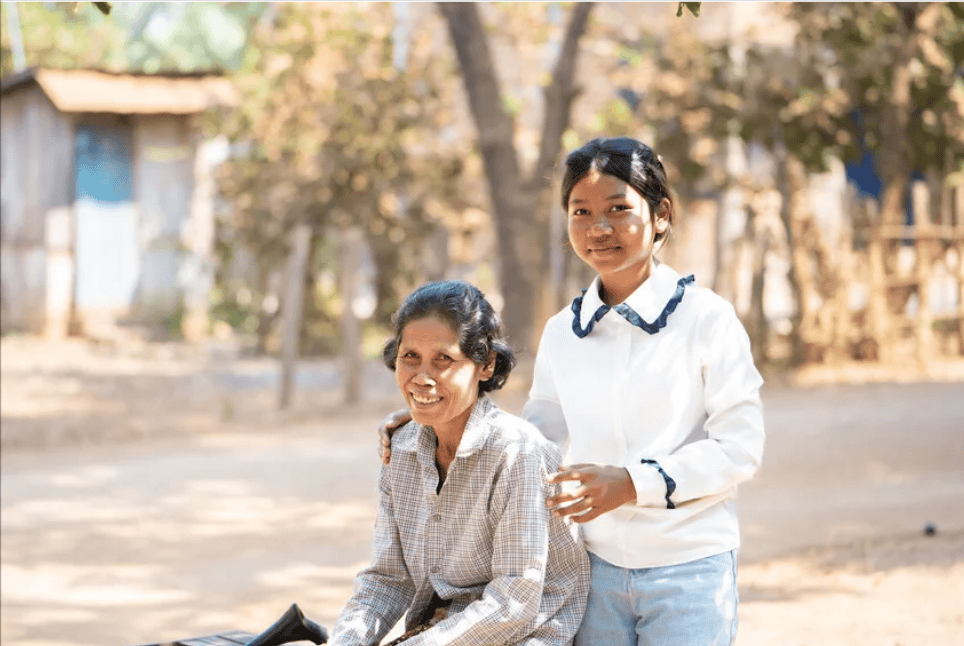
In Cambodia, grandmother Bui Non, 57, tells her granddaughter Seila: “In my generation, we didn’t have sanitary pads, so I cut fabric from a sarong into pieces. I washed them to reuse for only a week. After a week, I buried or burned those fabrics — unlike now, where you can easily buy and use sanitary pads.
When my daughter had her period, I kept telling her to clean herself and use the fabric as a pad. If she felt sick, I would help do skin coining once per period — for this, we rub balm into the chest, back and shoulders until red is seen. This could relieve the pain.”
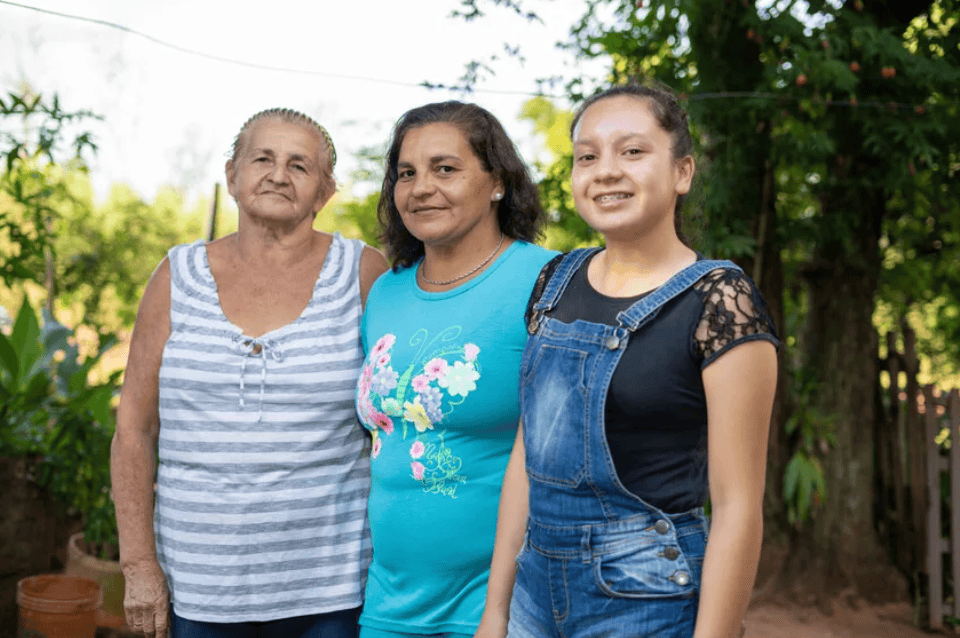
In Paraguay, “we didn’t used to talk about it,” says grandmother Maria, 73. “My mum didn’t say anything. We, in secret, had to deal with it, and there were no sanitary pads or anything. You had to use cloths, wash and iron them.”
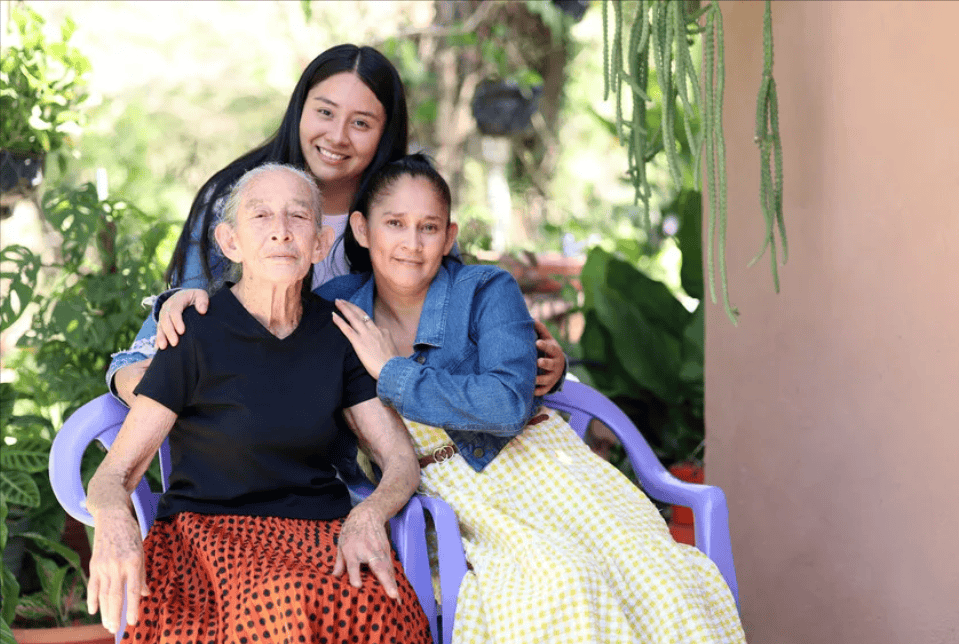
In El Salvador, grandmother Paz, 80, says, “My mum used to tell me that when I was like this, I couldn’t go to the river, because the water would enter through the pores, and that was bad. So what you used to do was to use old clothes, cut them into strips, and fold them. After being used, they were burned.”
“Before, mothers didn’t talk to us about it because they didn’t receive adequate information in their time. We were left with the little we heard at school,” says Ana, chatting with her teenage daughter, Hazel. “Here in the community, there are many girls who don’t have the courage to buy sanitary pads because their mothers don’t talk to them about it, so they’re afraid. They’re ashamed.”
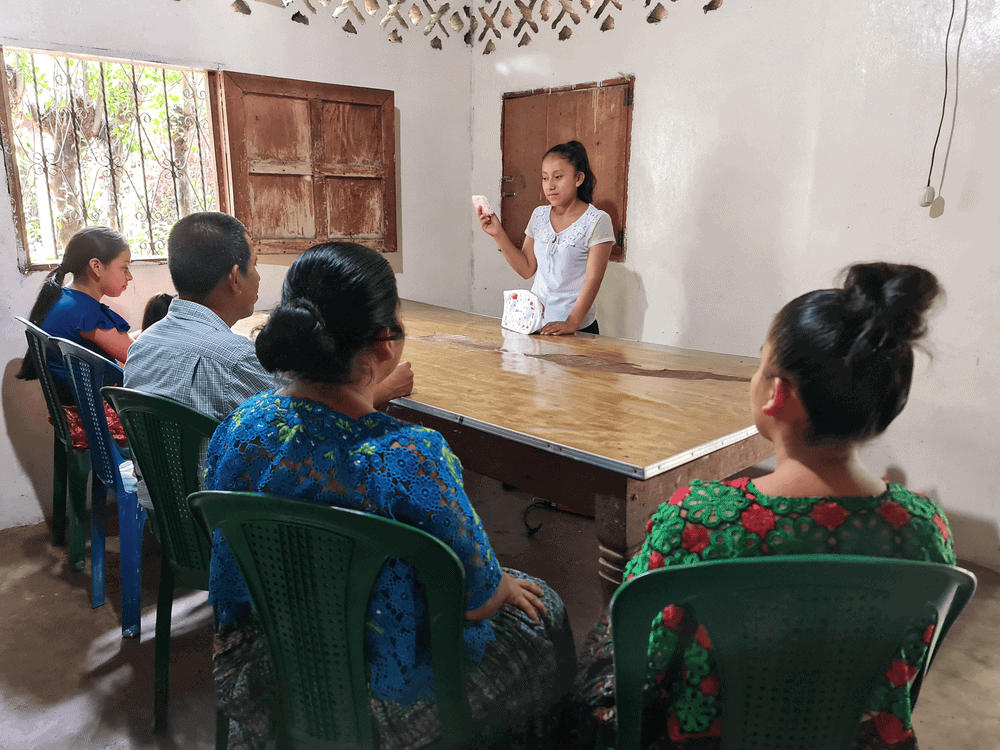
Teenager Hazel takes part in a community project called The Power of Red Butterflies, which aims to break taboos around menstruation. As a result, she has even discussed the topic with her grandfather.
“Talking to my grandfather one day, he told me that in the old days you couldn’t talk about menstruation; it was a taboo topic,” says Hazel. “The Power of Red Butterflies project was very impactful on my life. I was taught about my body, my menstrual cycle, and how to be prepared for that moment.”
“We were a little group of girls, and it was very special — the trusting and the sharing of ideas. How we had our first period. It was quite nice.”
Hazel, 18, El Salvador
Nowadays, millions of teenage girls still have to deal with their periods in difficult conditions. On any given day, around 300 million women and girls are having their periods. At the same time, one in four lack access to menstrual health products or clean toilets reserved for girls.
Some are forced to use materials like old newspapers, rags, earth, sand, ash, grass or leaves. Many are excluded from school and other opportunities while on their period.
Where girls are able to manage and talk about their periods, it’s often thanks to long-standing community health projects working with girls and boys, women and men to distribute sanitary products, encourage intergenerational dialogue, and break down taboos.
Plan International has worked for years in many parts of the world to raise awareness about menstrual health, tackle stigma, and provide practical support — from access to products and facilities, to advocating for menstrual health to be part of the school curriculum. Because periods should never be a barrier to opportunity.
Click here to learn more about menstrual health and how you can help stop the stigma.