
School meals bring children back to the classroom in drought hit Kilifi

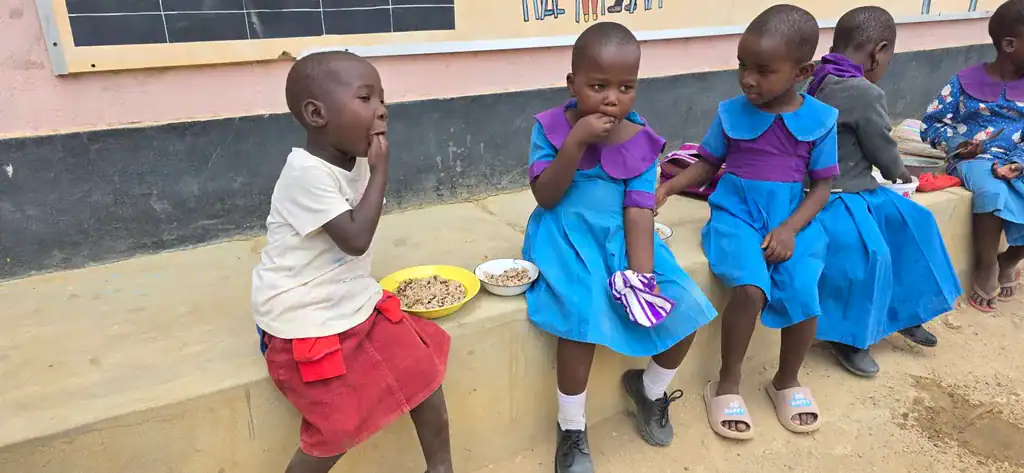
Primary school girls in Kilifi County, Kenya, seated outdoors eating a meal of rice, lentils and dried vegetables provided through Plan International's school feeding program.
Girls share a meal of rice, lentils and dried vegetables at school in Kilifi County, Kenya. For many, it is the only meal they will have that day. | © Plan International / Nzisa Kimilu

“Sometimes we don’t have any food at home. I am very happy to go to my school because we get food.”

Those are the words of a primary school student in Kilifi County, Kenya, and they carry the full weight of a crisis. Across the region, a prolonged drought has pushed families to eat just once a day. Food is scarce. Water is hard to find. And the effects are showing up in classrooms, in children too tired to concentrate, too hungry to make the long walk to school or too needed at home to stay.

Plan International launched a school feeding program as part of its drought response to keep children connected to their education during one of the hardest periods their communities have ever faced.

Why are children in Kilifi missing school?

The drought gripping coastal Kenya has stretched families to a breaking point. With little or no food at home, children face an impossible daily reality: walking to school in intense heat, sitting through lessons on an empty stomach and then making the same long walk back to find nothing waiting for them.

For many, staying in school was simply not possible.

"Before the school meal program, some students slept in class or lacked the energy to attend school. Others would rather stay at school for lunch than walk home to an empty house with no food."

Alice, primary school teacher, Kilifi County

Hunger and education are deeply connected. When children cannot meet their most basic need, learning becomes almost impossible, and dropping out becomes the only option that makes sense.

What does a school feeding program actually do?

The program provides six schools in Kilifi County with nutritious food packs that are easy to prepare and contain rice, lentils and dried vegetables. Every enrolled student receives at least one meal a day.

The goal is not only to feed children. It is to keep them in school long enough to learn.

For parents, the program has also eased an impossible burden.

"Many households have little or no food. Knowing their children will eat at school gives parents the confidence to leave them in class instead of walking home at lunchtime to find nothing."

Salma, chair of the Parents’ Association

Does school feeding actually get kids back in class?

The results were nearly immediate.

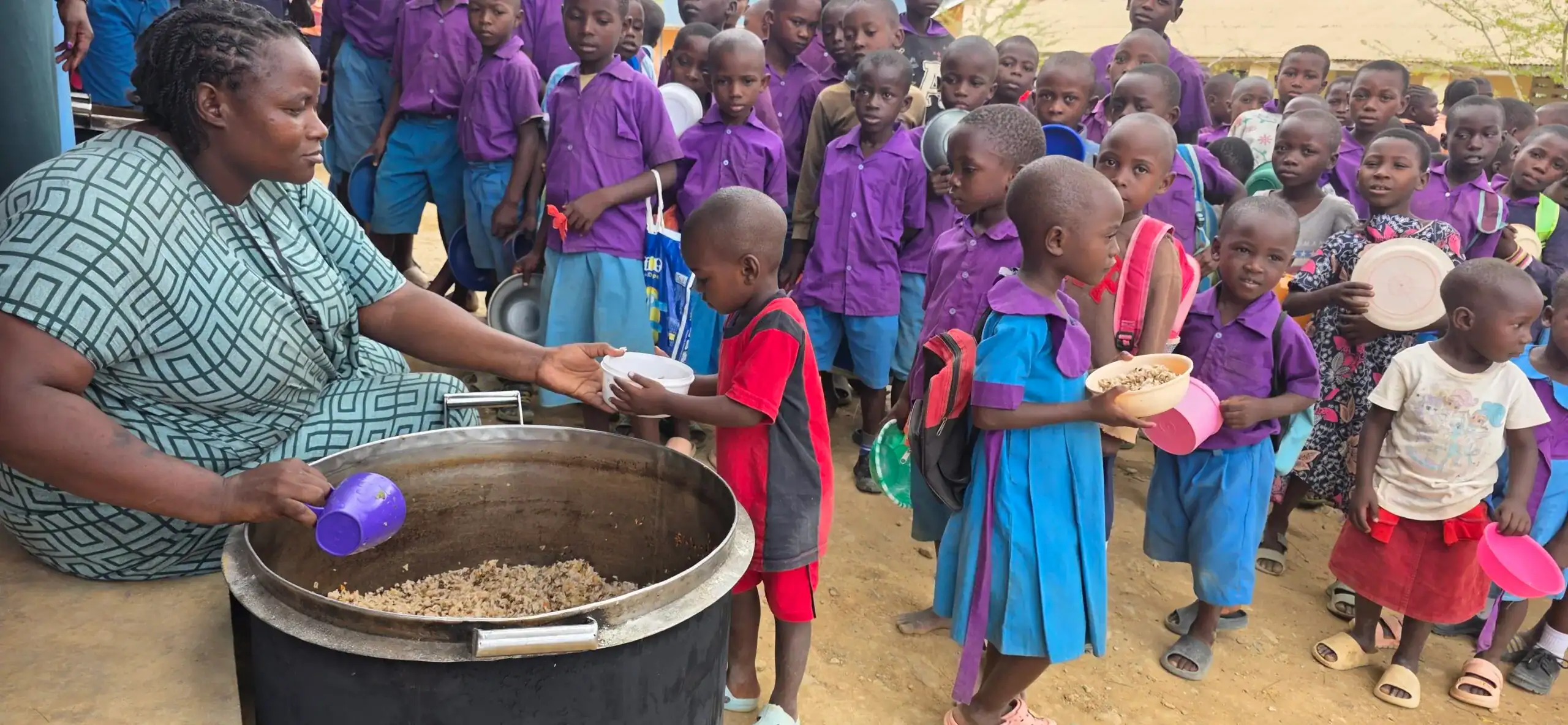
At one primary school, attendance jumped from 350 pupils on the first day of the feeding program to 459 by midweek. More than 100 children who had previously dropped out returned after learning that meals were available.

School meals Kilifi
Primary school children line up for their meal in Kilifi County, Kenya. Attendance at one school jumped from 350 to 459 pupils within days of the feeding program launching. | © Plan International

Children now look forward to Mondays. Teachers report renewed energy and enthusiasm in class. And parents, many of whom are going hungry themselves, have one less impossible choice to make each day.

Can a meal do more than ease hunger?

For children in Kilifi, the answer is yes. What began as an emergency response to drought has grown into something deeper: an anchor that keeps children connected to their education during one of the hardest periods their families have ever faced.

"Now, many look forward to going to school on Mondays because they know they will get a meal."

Alice, primary school teacher, Kilifi County
A daily meal is restoring hope, improving concentration and helping to safeguard children’s right to learn, even in times of crisis. That anticipation, a child counting down to Monday, is not a small thing. It is what keeping education alive looks like in a drought.

Read Next

Choices that create change: Saying no to FGM

In Ethiopia’s Afar region, some families are quietly choosing courage over conformity by saying no to FGM. This powerful photo story reveals the voices of parents and girls taking a stand against generations of harm, one decision at a time.
Read more