A crisis children can’t escape
For nearly two years, Gaza’s children have been living through the unthinkable. They have endured bombings, rapid displacements and the constant fear of losing everything. Homes and schools lie in rubble and entire neighborhoods have been erased. Families are starving. Hospitals are overwhelmed. Parents tell us their children go to bed hungry, and some whisper that they would rather die than endure another day without food.
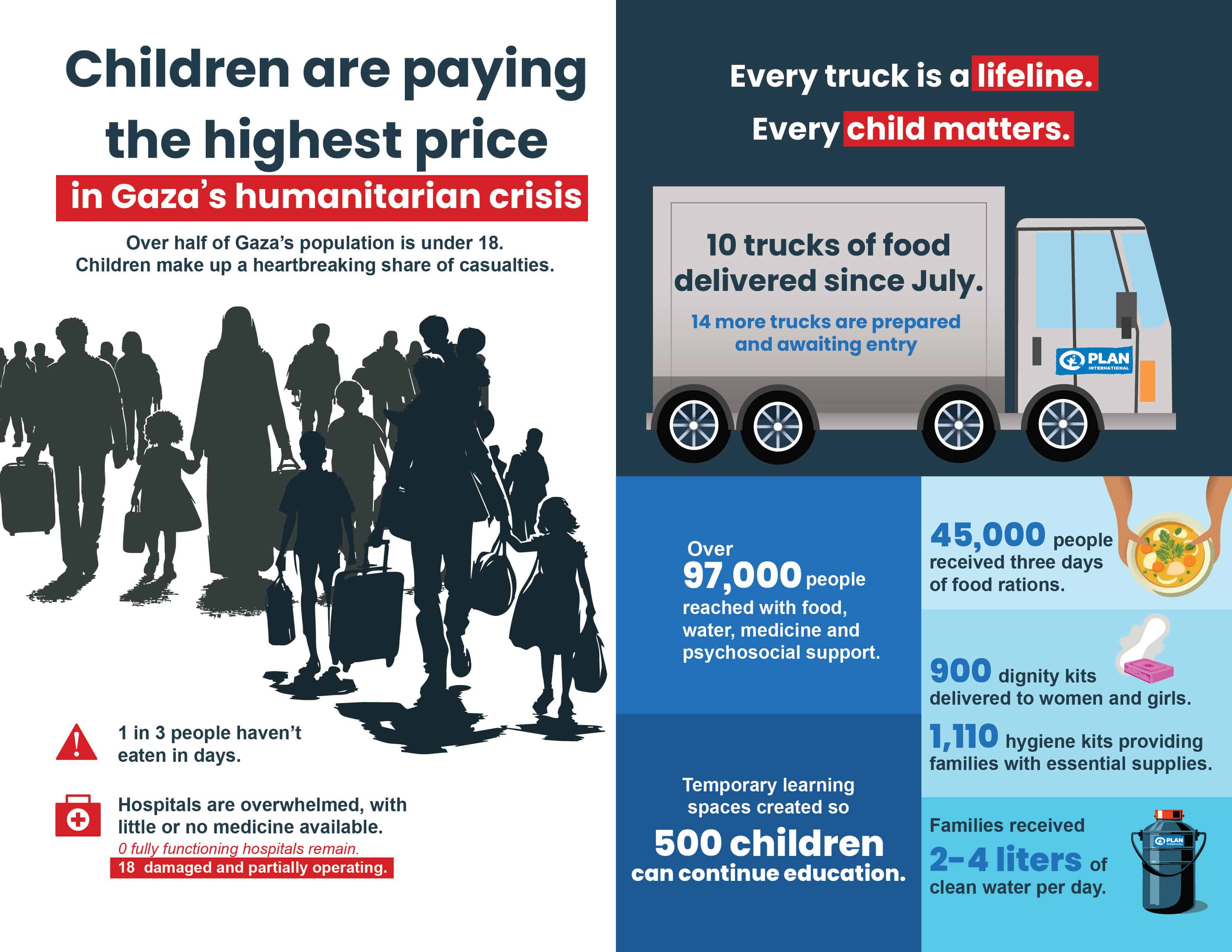
More than half of Gaza’s population is under 18. Children make up a heartbreaking share of the casualties, and those who survive face hunger, trauma and disease every single day.
Earlier this month, the Integrated Food Security Phase Classification, the global authority on hunger crises, officially declared that famine is now gripping Gaza City, affecting more than half a million people, with numbers expected to rise to over 640,000 by the end of September. It is a catastrophic, man-made crisis.
Why getting aid to children in Gaza is so difficult
The world has sent trucks filled with food, medicine and clean water, but many are stopped at the border or delayed for days. Restrictions, destroyed roads and ongoing airstrikes make it nearly impossible to get aid to families when they need it most. Parents tell us they risk their lives just to collect bread, as even aid distribution points have been struck, leaving people injured or killed. Even humanitarian offices have been bombed and aid workers themselves are among the casualties.
And yet, despite the danger and delays, Plan and our partners have managed to get life-saving supplies into Gaza, proving it can be done. With more resources, we could deliver much more, much faster.
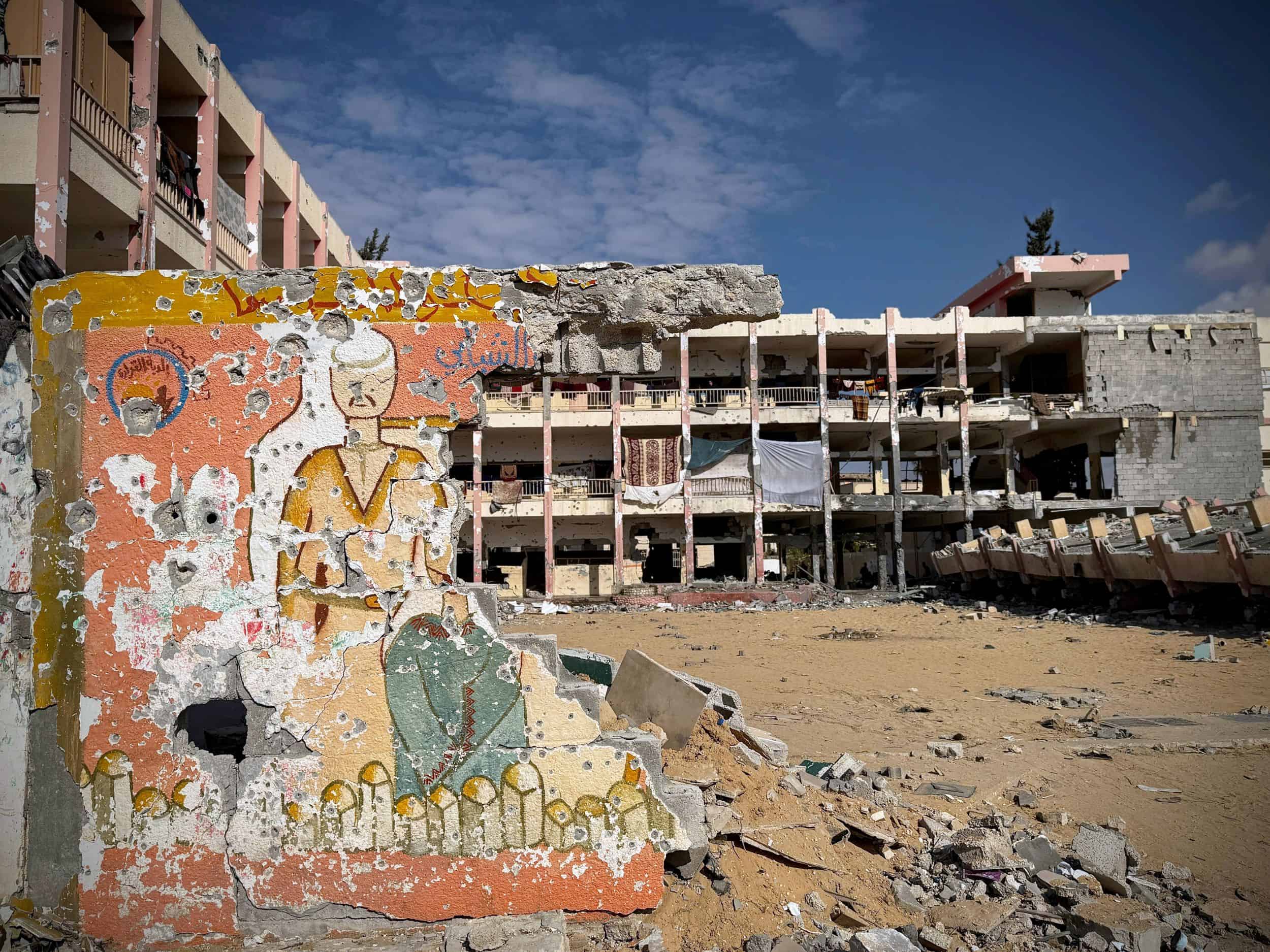
Education should never be a casualty of war. In Gaza, nine out of 10 schools have been damaged or destroyed, with many turned into shelters for displaced families. | © Plan International / Ahmed Salama
How Plan is responding to the humanitarian crisis in Gaza
Plan International is on the ground, working with trusted local partners. Despite the obstacles, we have reached nearly 98,000 people with food, water, medicine and psychosocial support in just three weeks. Working closely with our partners in Egypt and Jordan, we have been able to get trucks into Gaza and critically needed aid into the hands of children and families.
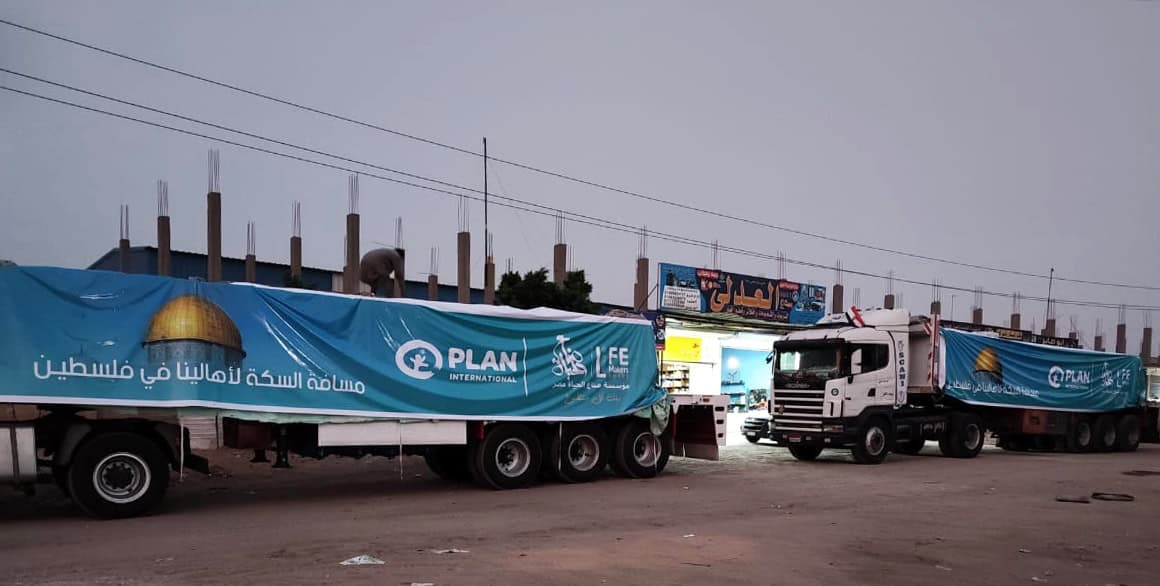
Ten trucks carrying 11,250 food baskets have crossed into Gaza, reaching 45,000 people with three days of rations. Another 14 trucks with thousands more baskets are prepared and awaiting entry. | © Plan International
We are also setting up temporary learning spaces so children can continue their education, even in tents. Education in emergencies is more than lessons, it is lifesaving. It provides children with safety, routine and hope in the middle of chaos. For girls especially, staying in school reduces the risk of early marriage, exploitation and gender-based violence. For every child, it builds resilience and protects their future.
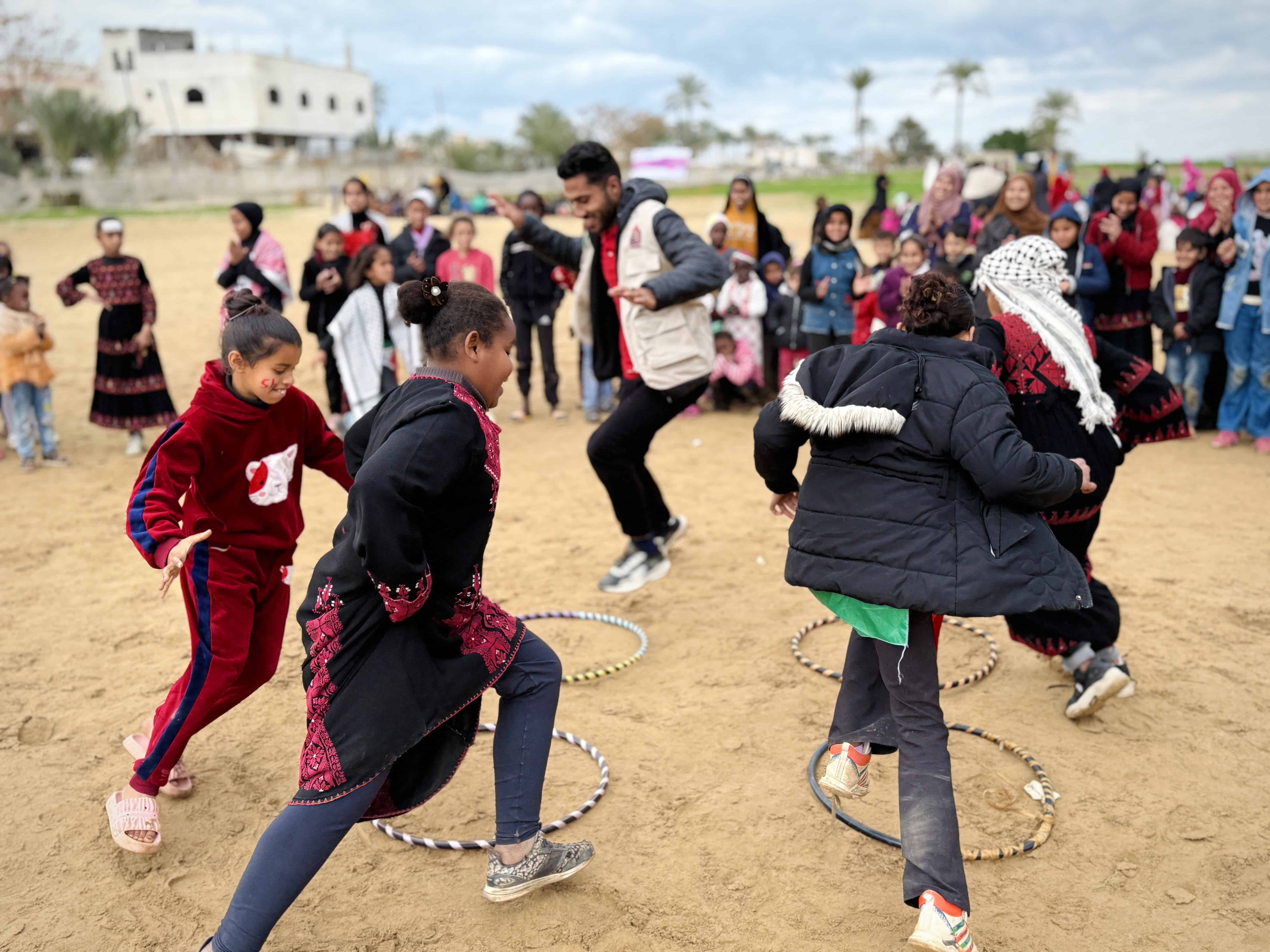
Children in Deir al-Balah, Gaza, take part in play-based activities in safe spaces created to help them cope with trauma and rebuild a sense of childhood. | © Plan International / Ahmed Salama
We are distributing dignity kits filled with essentials like soap, sanitary pads, toothbrushes, underwear and slippers. For women and girls who have lost everything, these kits offer safety, comfort and a small sense of normalcy in the chaos.
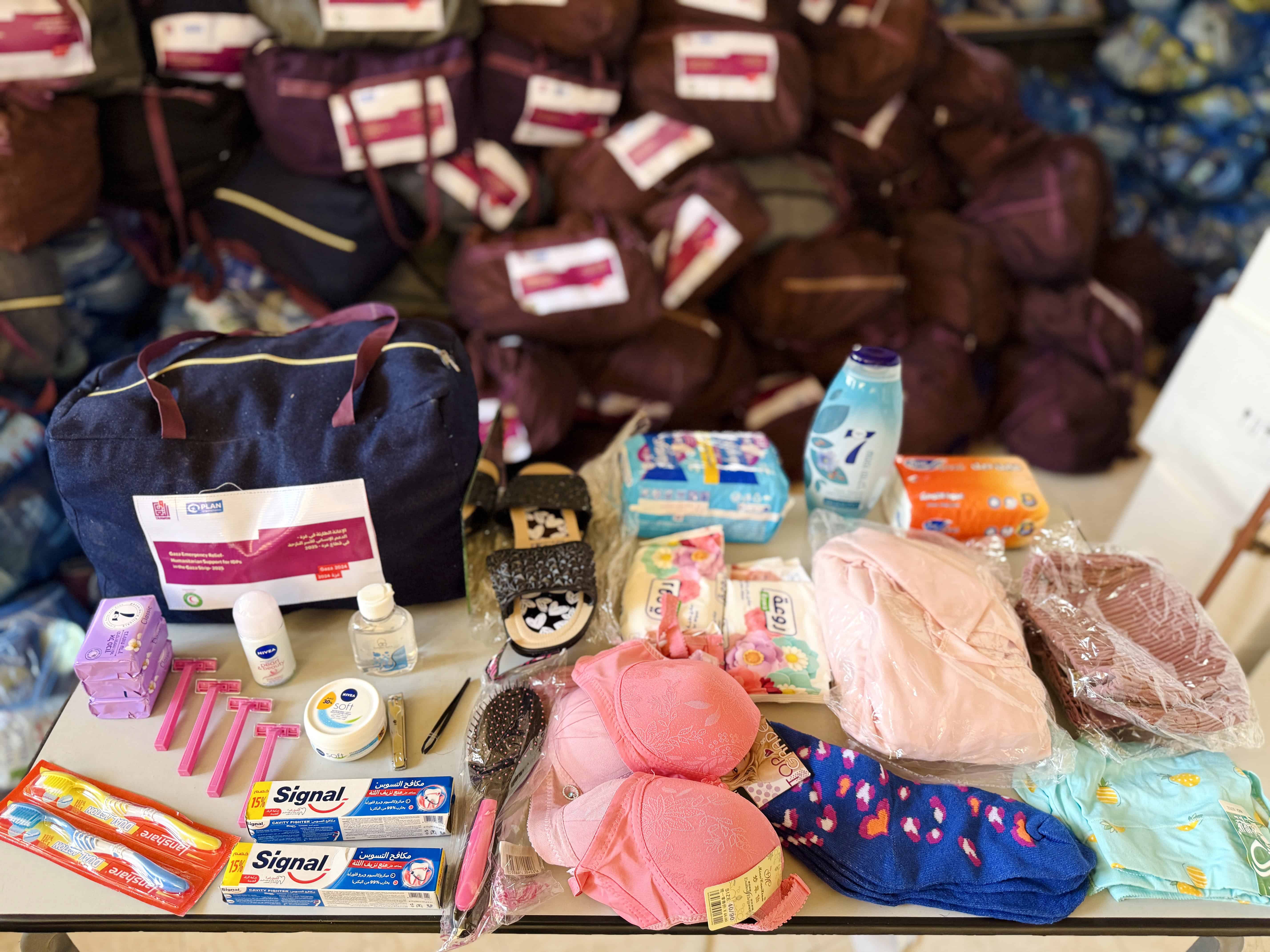
Plan distributes hygiene kits in Gaza, including soap, sanitary pads, toothpaste, clothing and other essentials for displaced families. | © Plan International / Ahmed Salama
Scaling up humanitarian aid in Gaza
Right now, Plan is one of the few organizations able to get trucks into Gaza. Even registered international NGOs have had their trucks denied, but through relentless negotiation, strong partnerships and creative problem-solving, we have managed to break through.
This access did not come easily. It took exhausting every avenue, exploring multiple alternatives and leveraging every humanitarian relationship we had. But it worked. In the last few weeks, we have delivered food, water and essential supplies to more than 100,000 people.
But survival is only the first step. To truly protect children, we also have to safeguard their futures. That is why we are preparing temporary learning spaces and planning to launch education in emergencies programs for 500 children by September 1. In Gaza, education is lifesaving. It gives children safety, structure and hope in the middle of chaos. For girls especially, staying in school reduces the risk of early marriage, exploitation and violence.
With enough resources, we could send dozens more trucks every day and expand education support to thousands more children. The window is open, but only as long as we can keep filling it.
Numbers can never capture the full pain of this crisis, but they help show just how deeply children are being affected.
How you can help families in Gaza
Every child matters. Every hour matters. Every truck matters.
Your gift today will mean more children have food to eat, medicine when they are sick, clean water to drink and dignity kits to protect their health and safety, and continued education so they do not fall too far behind and have the routine and sense of community they need to stay strong.
Every child deserves to learn, lead, decide and thrive. So, together, we will not stop until we are all equal.
Donate now to support children in Gaza