Four years into the full-scale war in Ukraine, children remain at the center of one of the world’s most urgent and prolonged humanitarian crises. An estimated 10.8 million people in Ukraine require humanitarian assistance. For some children, this has meant spending the equivalent of nearly seven months of their lives sheltering underground as air-raid sirens echo across cities and towns.
What began in 2022 as an emergency response has become a long-term protection crisis affecting children across Ukraine and neighboring countries including Poland, Romania and Moldova. For many young people, this war has lasted nearly half their lives.
Four years on, the question is no longer only how to respond to an emergency. It is how to prevent lasting harm to an entire generation.
So what do children affected by the war in Ukraine need now?
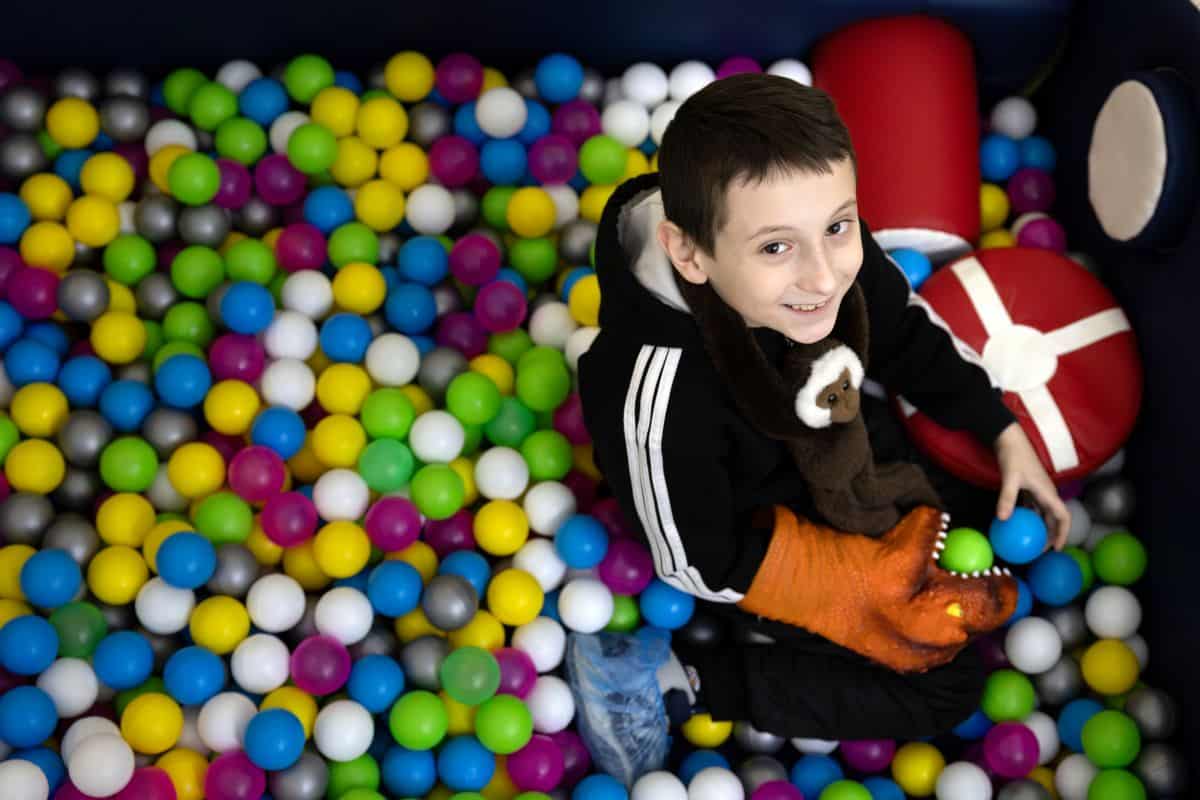
Damir, 8, plays in a ball pool at a child-friendly space in Kropyvnytskyi, Ukraine, supported by Plan International and local partner Slavic Heart. Weekly art therapy sessions help children manage fear and stress linked to the war. | © Plan International / Mirja Vogel
1. Mental health support is essential, not optional
Eight-year-old Damir has lived with night terrors for much of his childhood. He wakes suddenly, unsure whether the walls around him are his bedroom or the echoes of explosions from his dreams.
At a child-friendly space in central Ukraine, a crisis psychologist asked him to draw what fear looked like. Through weekly art therapy sessions, Damir began to understand what he was feeling. His sleep slowly improved. His anxiety eased. He started speaking more openly with his mother and reconnecting with other children.
“I’m really good at Karate,” he now says, steady and proud.
Damir’s story reflects a broader reality. After four years of war in Ukraine, many children are experiencing persistent fear, difficulty concentrating, withdrawal and memory challenges.
Many adolescents report that school exams now feel more stressful than air-raid sirens.
Without access to sustained mental health and psychosocial support, trauma does not simply fade. It affects how children learn, build relationships and imagine their futures.
Safe spaces where children can play, talk and process their experiences are critical to protecting their well-being.
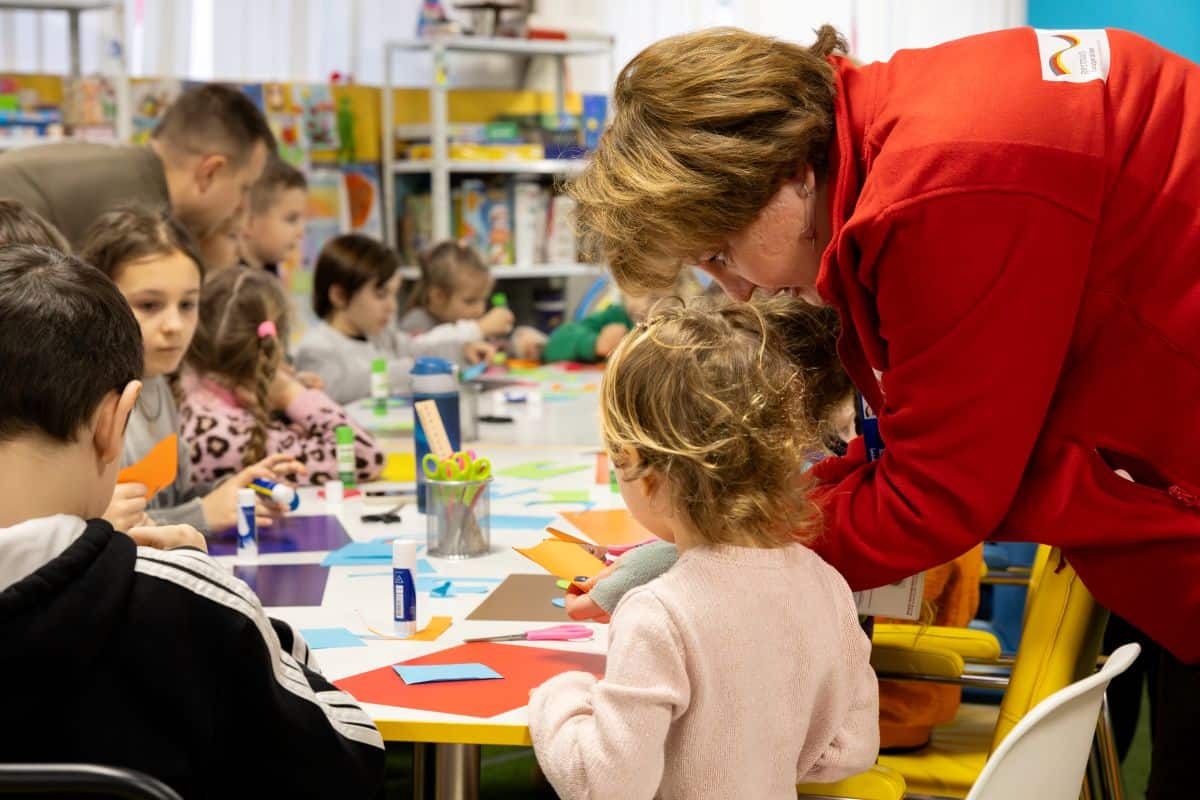
Children participate in arts and crafts activities at a child-friendly space in Kropyvnytskyi, Ukraine. The center provides daily programming, therapy sessions and learning support to help children cope with prolonged conflict. | © Plan International / Mirja Vogel
2. Education must continue, even in crisis
Children in Ukraine are still going to school, but not in the way most of us would recognize.
More than 10 percent of education infrastructure has been damaged or destroyed. Many classes take place underground. Others rely on online learning. Some young children have never experienced consistent early childhood education.
Education in emergencies is about more than academics. It provides routine. It offers stability. It connects children to trusted adults who can recognize early signs of distress. It creates safer environments that reduce risks of exploitation and violence.
Four years of disrupted learning have already widened educational gaps. Without sustained investment in safe learning spaces, teacher support and psychosocial services in schools, the consequences could last well beyond the current conflict.
For children affected by the war in Ukraine, education is a pathway to recovery and to the country’s future.
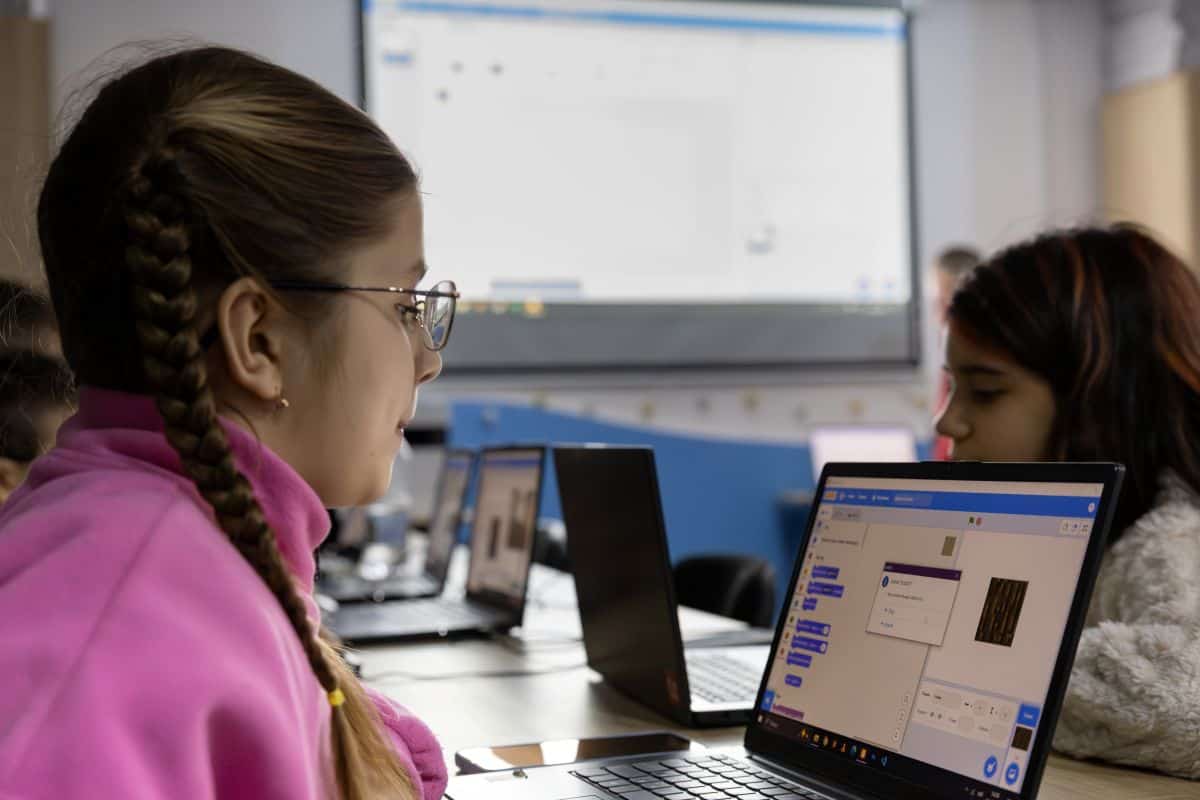
Girls participate in computer classes at a child-friendly space in Kropyvnytskyi, Ukraine. Access to safe learning environments helps children maintain routines and continue building skills during the war. | © Plan International / Mirja Vogel
3. Parents and caregivers need support, too
Children do not carry this crisis alone.
Parents and caregivers are living with displacement, economic instability, grief and uncertainty. One in three children has experienced a close friend or family member killed or injured.
When caregivers are overwhelmed, children feel it immediately. When caregivers are supported, children often mirror that resilience.
Parenting sessions, psychosocial support groups and community networks may not always make headlines. But they reduce stress within households, strengthen communication and help protect children from further harm.
Supporting children in Ukraine means strengthening the families around them.
4. Protection services must be sustained across Ukraine and Eastern Europe
The war in Ukraine has created ripple effects across Eastern Europe. Millions of refugees have sought safety in neighboring countries including Poland, Romania and Moldova.
Protection services including child protection, prevention of gender-based violence and access to health care remain essential across the region. As displacement continues and global funding pressures increase, protection risks grow.
Without sustained humanitarian engagement, children lose access to safe spaces. Survivors lose access to care. Gaps in protection widen.
The crisis has shifted from short-term emergency response to preventing long-term harm.
5. Continued funding is critical
Despite the scale of need, funding constraints and access challenges mean only a portion of those requiring assistance can be reached.
Global aid reductions have forced many humanitarian organizations to scale back services. Yet needs remain high.
Four years of war in Ukraine have meant displacement, interrupted education, unsafe shelter, family separation and sustained psychological stress.
Preventing further harm requires predictable, long-term investment in:
— Mental health and psychosocial support
— Education in emergencies
— Child protection systems
— Prevention of gender-based violence
— Support for caregivers and youth engagement
Children in Ukraine deserve more than survival. They deserve stability, dignity and the opportunity to heal.
How Plan International is responding
Since 2022, Plan International has worked alongside local partners in Ukraine and neighboring countries to support children and families affected by the war.
Through a partner-led model that prioritizes local leadership, Plan International has reached more than 1.7 million people across Ukraine, Poland, Romania and Moldova through programs focused on protection, mental health and psychosocial support, education in emergencies and prevention of gender-based violence.
The majority of funding has been directed to local organizations that understand their communities and can respond quickly and sustainably. Child-friendly spaces, parenting programs, youth initiatives and safe learning environments are part of a long-term effort to strengthen resilience and reduce harm.
As the war in Ukraine continues, the focus remains clear — protect children now while investing in their future.
Four years into the full-scale war in Ukraine, children are still adapting to a reality no child should have to navigate. But adaptation is not the same as recovery.
Without sustained investment, the impact will last far beyond the war.
Children in Ukraine and across Eastern Europe deserve the chance to grow, learn and rebuild their lives.