How school meals and safe spaces are helping Myanmar’s children rebuild after the earthquake
When the 7.7-magnitude earthquake struck Myanmar’s Mandalay region on March 28, 2025, it took only seconds for entire communities to be torn apart. Families lost loved ones. Homes collapsed. Schools crumbled. Then, just as the dust began to settle, a 6.9-magnitude aftershock hit causing even more destruction.
Three months later, the scars remain. More than 3,700 people have died. Over 200,000 were forced from their homes. In the hardest-hit areas of Mandalay and Sagaing, vital infrastructure — roads, bridges and classrooms — was destroyed.
For children — especially girls — the road to recovery is long. Schools were shut down. Families had to relocate. Routines that once provided safety and structure vanished overnight.
But even in the face of such loss, there is hope.
With support from organizations like The Rockefeller Foundation and by working closely with local communities and government, Plan International is helping children heal with food, education and care.
Education, safety and meals: A child-centered response
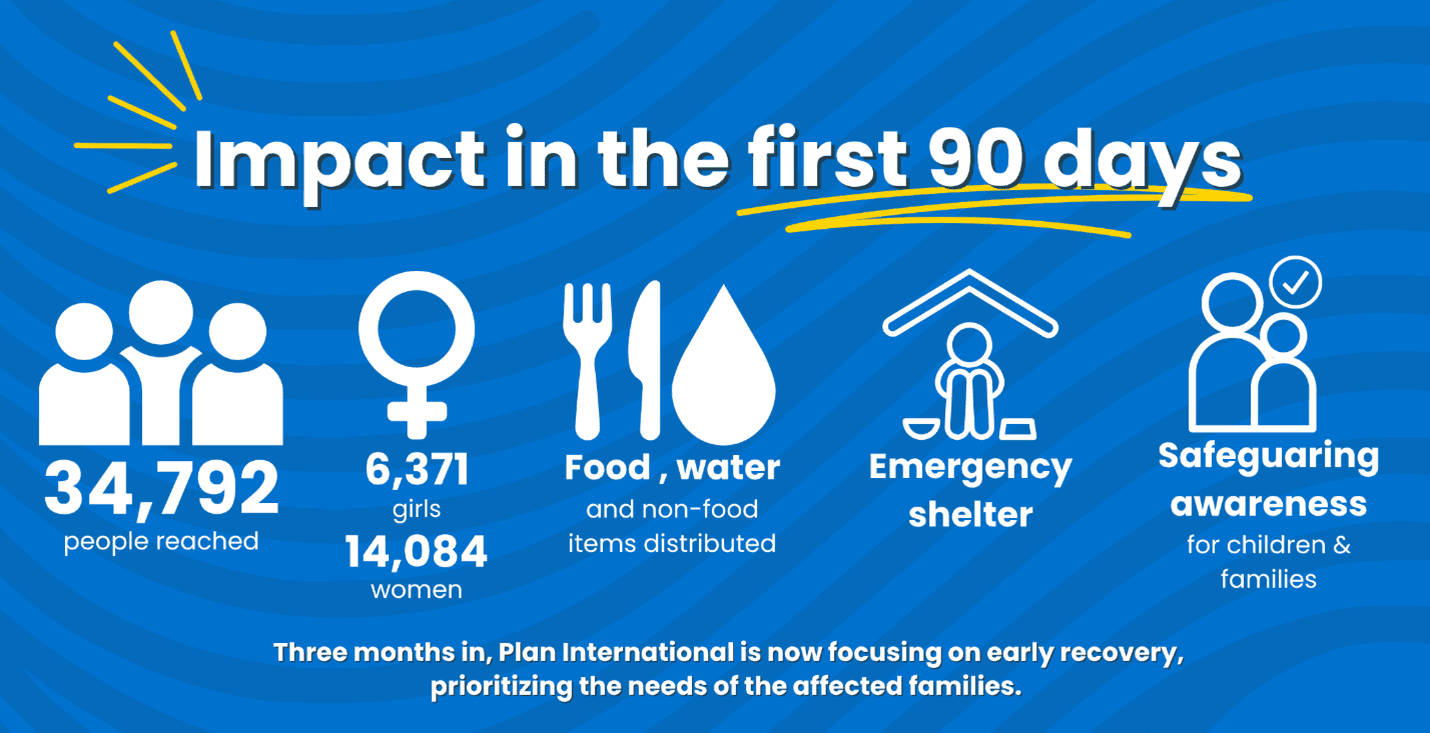
In partnership with local organizations and ministries, Plan International Myanmar quickly launched a response centered on children’s needs. With funding from The Rockefeller Foundation, we focused on creating stability through safe learning spaces, psychosocial support and nutritious meals.
Together, we are:
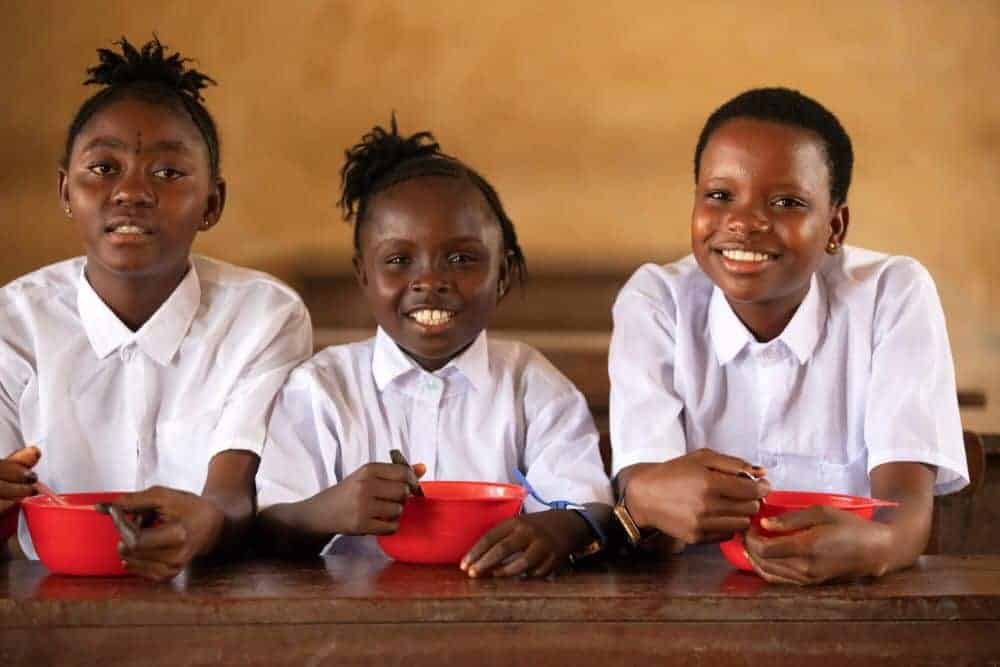
— Providing meals to 600 primary school students.
— Distributing “back to school” kits with basic school supplies.
— Setting up six safe spaces where children can learn, play and get support for their well-being.
— Training 35 teachers on how to care for students’ emotional well-being.
— Repairing two primary schools and two early childhood centers.
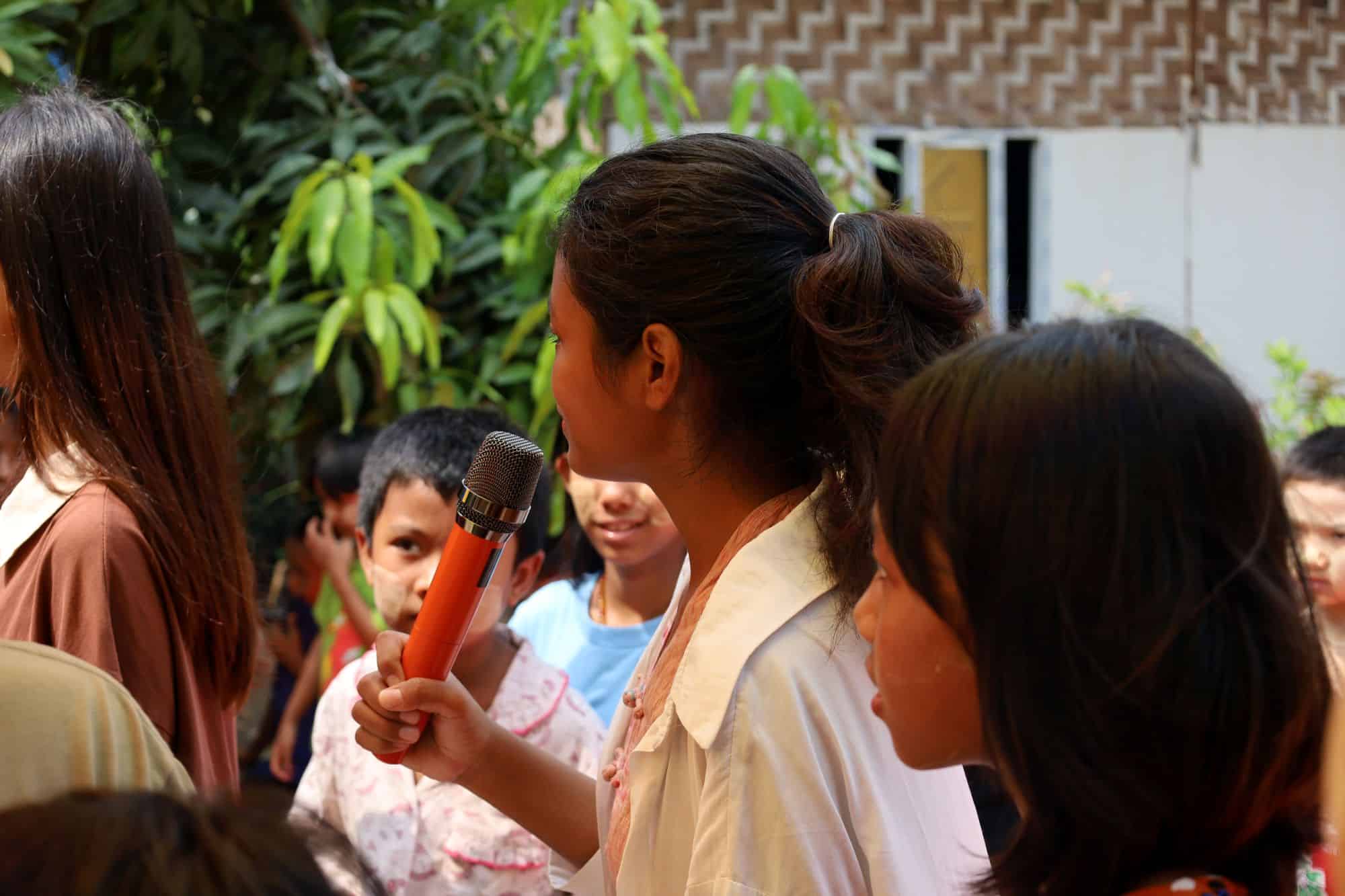
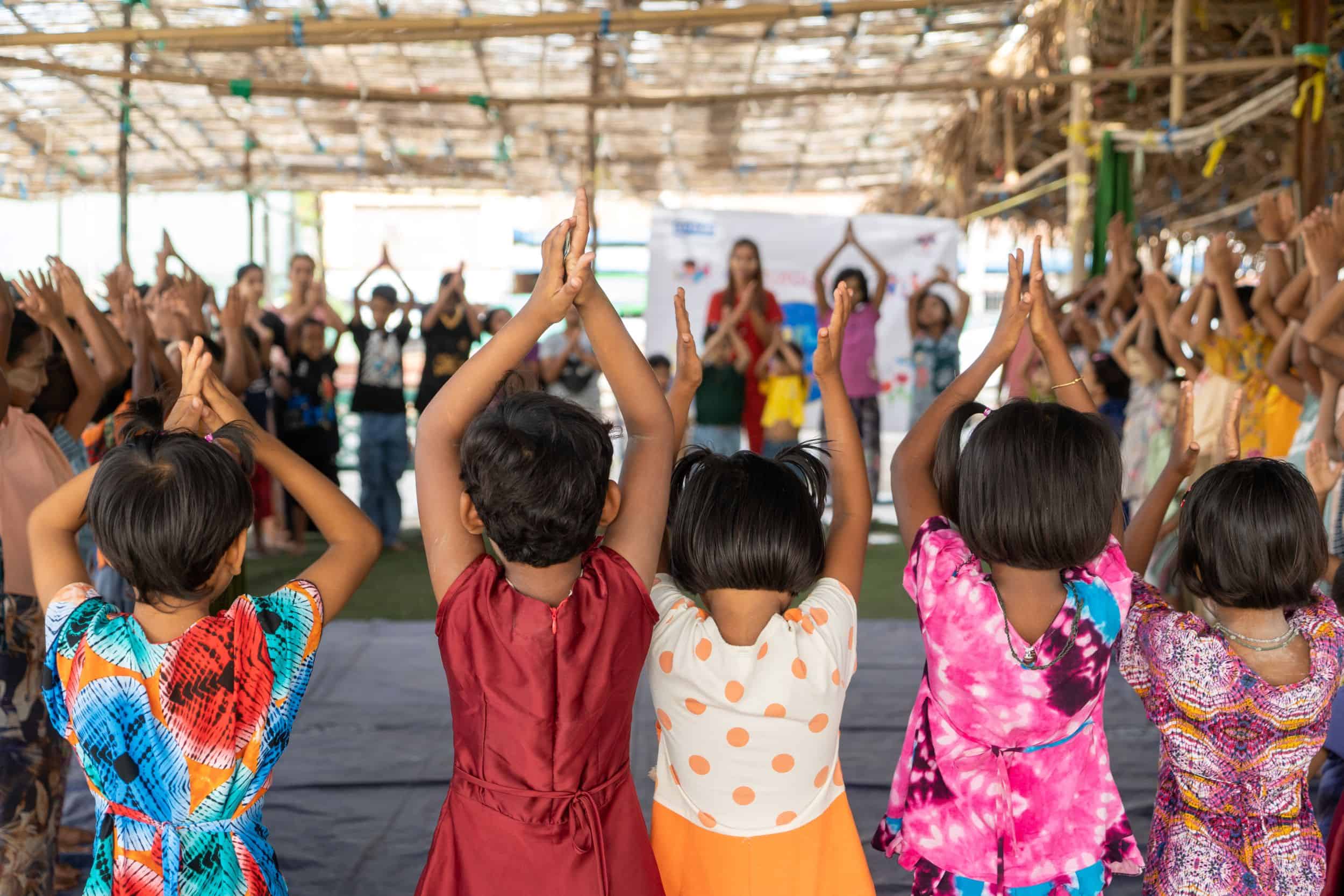
“Over 9-year-olds are in the older group, and they play games for the older children. Then, the children under 9 years old play with playdough. They draw. They do coloring. And they assemble construction toys.” — Nan, 23, a volunteer at a child-friendly space in Mandalay
These efforts are more than just short-term relief. They are investments in children’s futures — especially the youngest learners. They are also designed to be inclusive of girls, children with disabilities and others who are too often left behind in emergencies.
“For the older children, we let them play mostly the games that have to be played in groups. While in a group, one could help when the other is wrong. In this way, we teach the older children more about playing together in groups. Later most of the children learned to tolerate and work in teams.” — Nan
“In the aftermath of Myanmar’s devastating earthquake, the resilience and compassion of young people like Nan have been nothing short of inspiring. Despite uncertainty, Nan chose to stand with her community — bringing comfort to children, restoring hope and helping rebuild lives through her service in child-friendly spaces.” — Haider W. Yaqub, country director, Plan International Myanmar
Community-led and locally driven
Plan’s approach is grounded in community leadership. In Mandalay and Sagaing, we are working closely with the Mandalay City Development Committee, the Department of Social Welfare, national disaster coordination groups and local partners like FIN Myanmar, a social enterprise supporting women and youth through education and mental health services.
These partnerships ensure that support reaches the children who need it most — and that it can continue even after emergency funding ends. The six safe spaces are managed by trained local facilitators who receive regular coaching and stipends. School meals are prepared by community kitchens and school committees, creating ownership from the start.
Recovery, resilience and what’s next
Heavy monsoon rains are now rolling through the region, making the path to recovery even harder. Yet even under tarps or in temporary classrooms, children are showing up ready to learn, to belong and to dream again.
“Rebuilding lives in Myanmar means supporting both immediate relief and longer-term recovery, with locally driven efforts leading the way. The Rockefeller Foundation is proud to support the youth and communities of Myanmar, and to be part of the vital work being done by Plan International. Together, we can restore essential services for children, build resilience, and create lasting opportunities for future generations.” — Deepali Khanna, Head of Asia, The Rockefeller Foundation
Still, the need is great. Plan is calling for continued support to close a $3 million funding gap for education recovery. Without more resources, many children could fall behind or leave school for good.
But this story isn’t just about what was lost. It’s about what’s being rebuilt. Thanks to supporters like The Rockefeller Foundation and the leadership of local communities, hundreds of girls and boys are returning to school. They’re making friends. They’re receiving warm meals. And slowly, they’re reclaiming their childhoods.
Every school bell that rings in Mandalay is a sign of progress. Every child who walks into a classroom with a backpack and a smile is proof that recovery is already underway.
When we put children at the center of our response, recovery doesn’t just happen. It lasts.