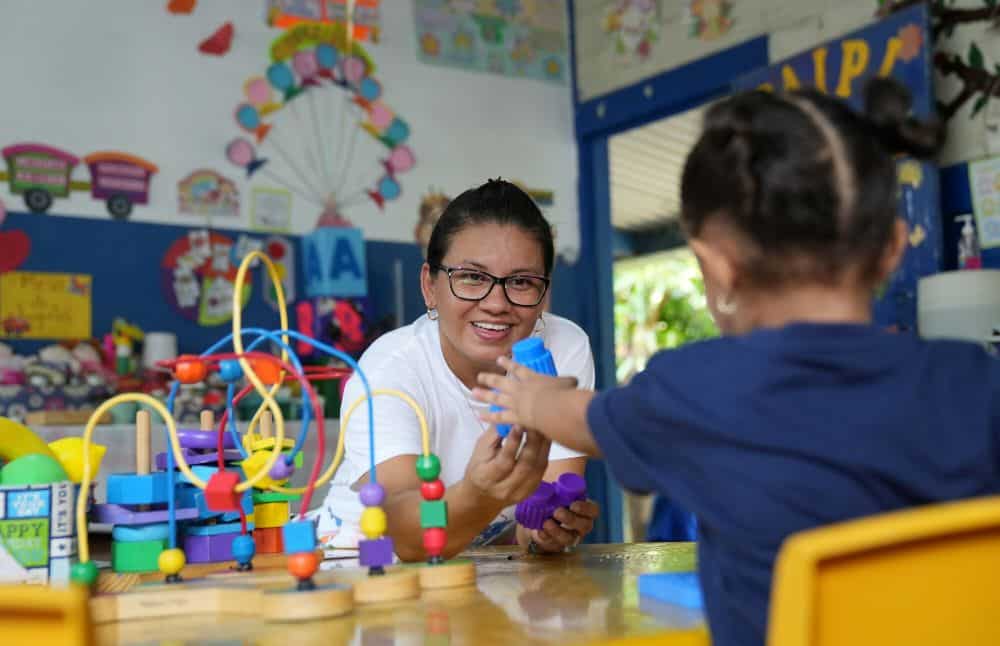
When disasters strike, the children most at risk are often the first overlooked. Among them are children with disabilities — an estimated 240 million worldwide, many in countries already vulnerable to crisis. In emergencies, inaccessible shelters, schools and services cut them off from safety, learning and care.
In Sudan, where ongoing conflict has displaced more than 10 million people, these barriers are magnified. Thousands of schools have been damaged or destroyed, and children with disabilities face even greater challenges accessing education and protection. Many have lost assistive devices during displacement — items like wheelchairs, crutches, hearing aids, white canes, Braille kits and adaptive learning tools that enable them to move, communicate and learn independently. Others are excluded simply because data systems don’t capture disability, leaving their needs invisible in emergency planning.
Plan International’s teams in Sudan are working to change that. Across our education in emergencies response, inclusion begins at the earliest stage — from identifying children with disabilities to ensuring that learning spaces, teaching materials and protection services are accessible for everyone.
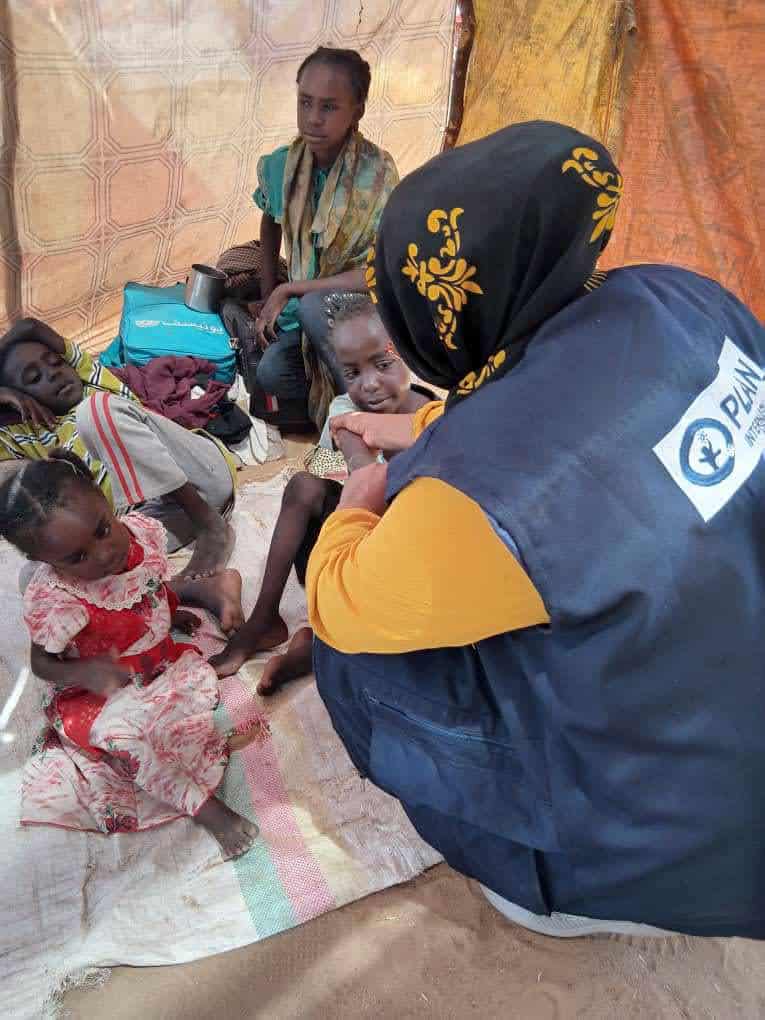
A Plan International staff member meets with displaced children and families in Tawila, North Darfur. | © Plan International
The challenge: Hidden exclusion
These barriers play out across education, water, sanitation and hygiene, and protection systems — and they become even more visible in crises like Sudan.
1. Education: Globally, 251 million children and youth are out of school. Children with disabilities are among those most affected, facing even greater barriers to learning — especially in times of conflict. In Sudan, damaged school buildings, overcrowded classrooms and the loss of assistive devices mean many children simply cannot return to learning.
2. Water, sanitation and hygiene: Only 31% of schools worldwide have trash cans for period products in girls’ toilets. For girls with disabilities, inadequate facilities multiply barriers. In displacement camps, basic WASH services are rarely accessible — latrines are too narrow for wheelchairs, and water points are far from reach.
3. Protection: In emergencies, children with disabilities face heightened risks of violence, neglect and exploitation, yet few protection systems are designed with their needs in mind. Without accessible facilities or trained caregivers, some are left alone in shelters, miss distributions of food or relief items or face abuse because they can’t communicate what’s happening. Families often lack information or support, leaving children isolated and unaccounted for.
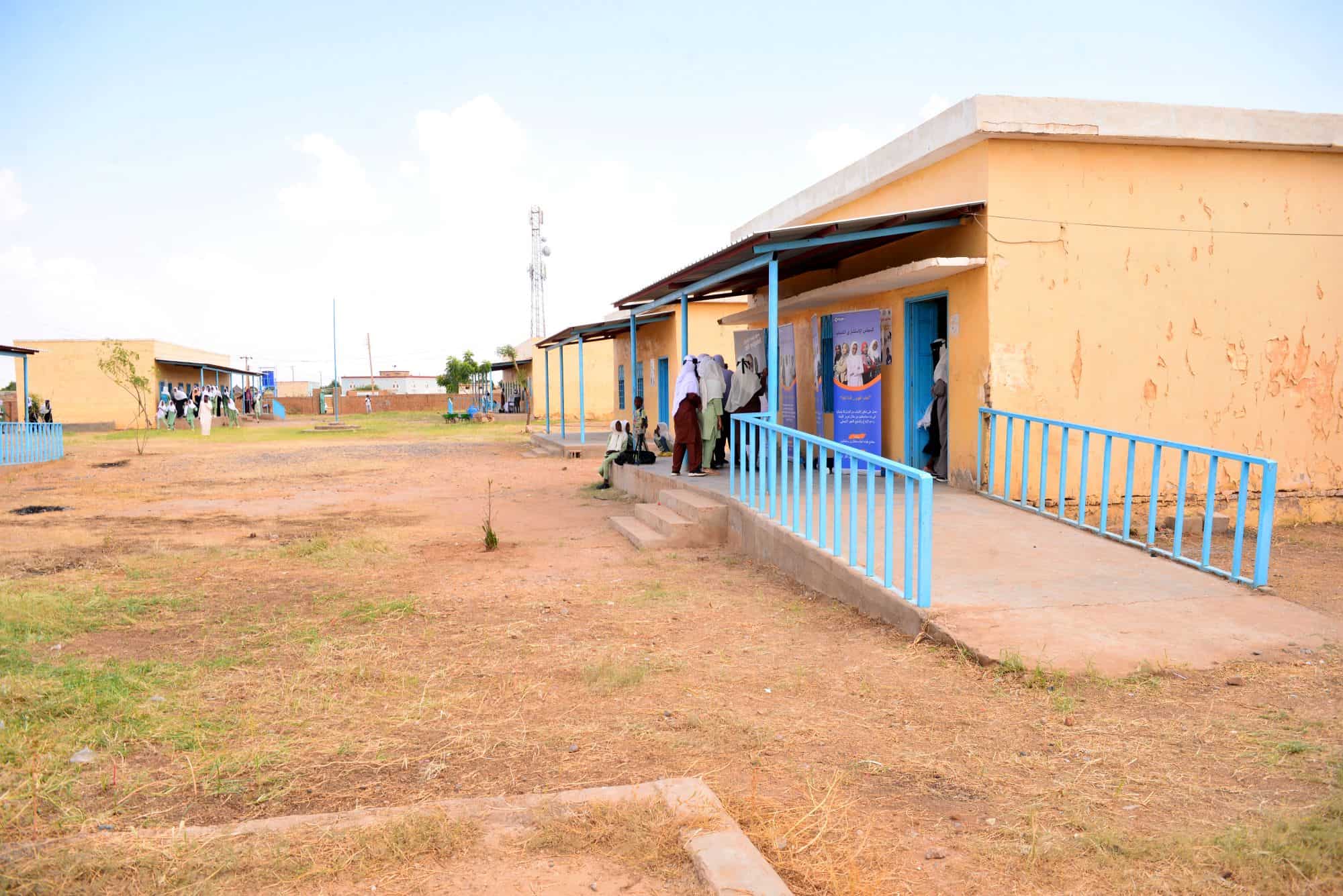
A ramp at a primary school in Sudan improves access for children using mobility aids. | © Plan International / Abdelazim Yousif
Sudan has made important policy commitments to disability inclusion. The National Strategy for Persons with Disabilities was introduced in 2005, followed by the Persons with Disabilities Rights Act in 2017 — a significant step aligned with the UN Convention on the Rights of Persons with Disabilities, which Sudan ratified in 2009. Yet, like many well-intentioned frameworks, it remains chronically underfunded and unevenly implemented, leaving children with disabilities still struggling to access basic services during crises.
Exclusion in emergencies is not only a rights issue. It undermines the effectiveness of the entire response. When systems aren’t designed for every child, they fail to protect those who need them most.
“A lot are arriving in the camps injured, with gunshot wounds and exhausted from carrying their loved ones for days. It’s been hardest for women, children and people with disabilities.” — Plan International staff member in Sudan.
What inclusion looks like in practice
1. Adapted learning: Plan trains teachers to identify and support children with different learning needs, and provides assistive devices and alternative materials — such as large-print books, Braille kits and visual learning aids — so children with disabilities can continue their education. In some camps, community volunteers help escort children to learning centers — a small act that makes a big difference in attendance.
2. Accessible safe spaces: Working with partners, Plan redesigned temporary learning and play spaces to ensure children with disabilities can participate safely. Ramps, wider doorways and low desks allowed children who use mobility aids — such as wheelchairs, crutches or walkers — to join their peers rather than watch from the sidelines.
3. Inclusive WASH: Emergency WASH facilities are adapted with handrails, accessible toilets and nearby water points so children with mobility challenges can use them with dignity. Feedback from families helps to refine these designs over time.
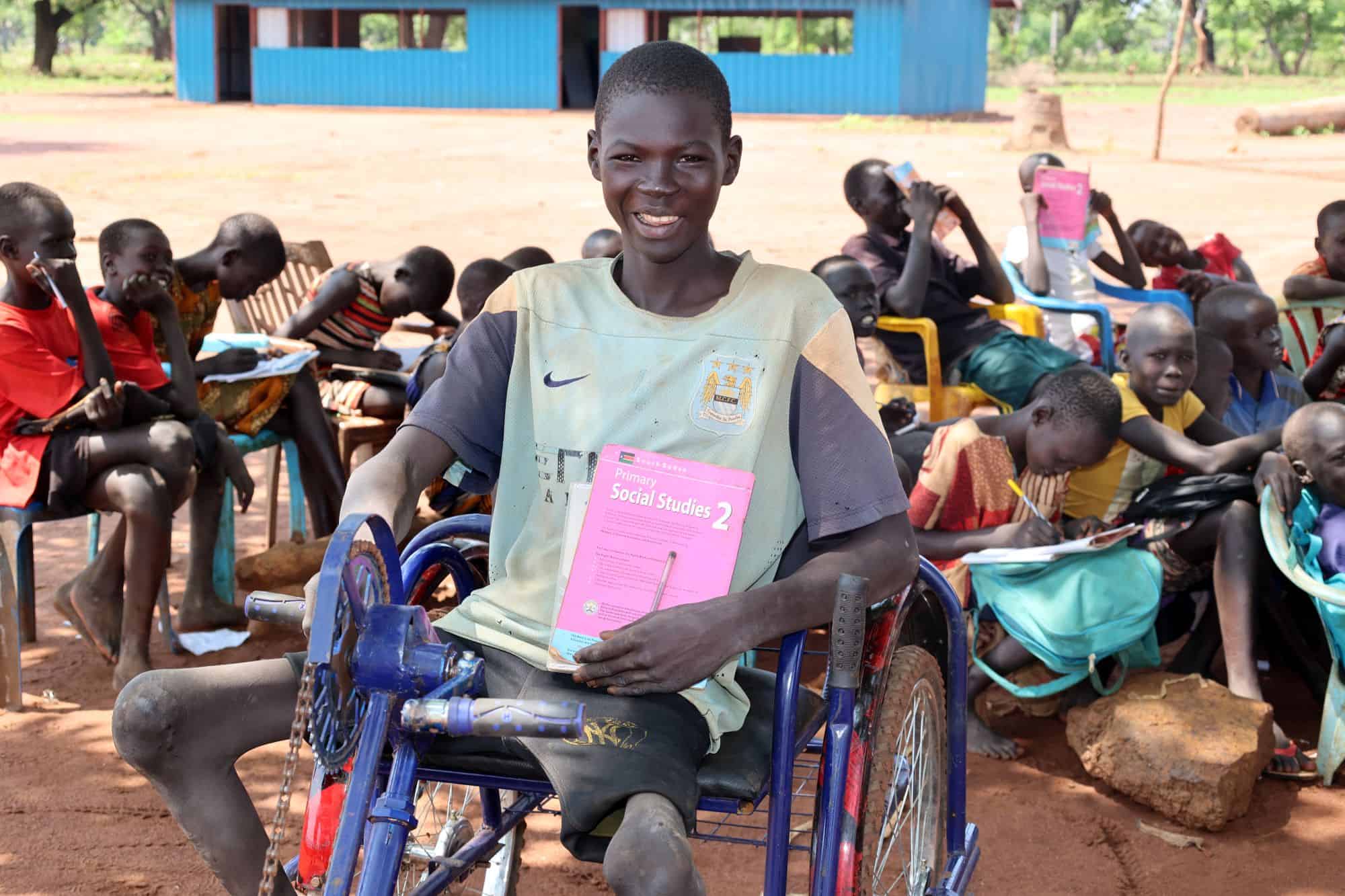
In South Sudan, 17-year-old Mamer uses a tricycle provided through Plan’s education program to attend school for the first time. | © Plan International
Listening to children with disabilities
Designing for inclusion is only part of the work. Listening to children with disabilities — and acting on what they share — makes programs truly effective. Plan’s Guidelines for Consulting with Children and Young People with Disabilities outline practical steps for meaningful participation:
- — Check accessibility: Ensure venues, materials and communications are usable (Braille, large print and sign language).
- — Adapt tools: Replace written surveys with drawing, role play, picture cards or visual scales.
- — Prioritize safety: Use age-appropriate consent processes, involve caregivers and avoid retraumatizing.
- — Close the loop: Share results back in accessible formats so children see their input reflected.
In Sudan, Plan’s education teams work with child clubs that include members with disabilities to review temporary learning spaces and flag accessibility issues. Their feedback shapes improvements like lowering whiteboards, rearranging seating and adjusting the layout of toilets for easier use.
These consultations often reveal issues practitioners miss. A child with cerebral palsy flagged that an “accessible” toilet door was too heavy to open. A child with hearing loss explained that emergency announcements were only oral. Listening directly to children makes systems stronger.
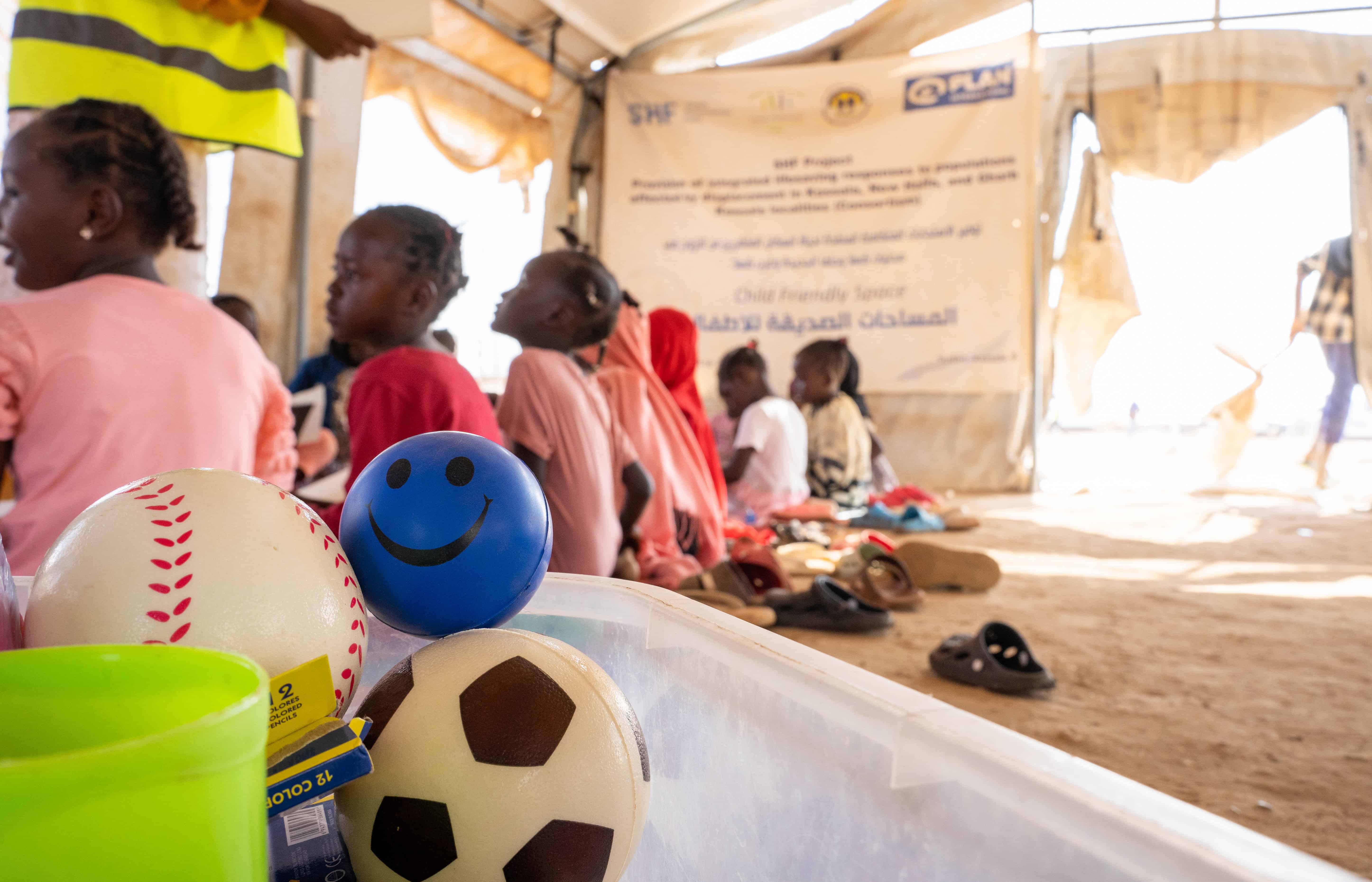
In Kassala State, Plan’s child-friendly spaces provide displaced children with safe places to learn, play and receive psychosocial support. | © Plan International / Abdalrhman Justen
Further resources for practitioners
- — IASC Guidelines on Inclusion of Persons with Disabilities in Humanitarian Action
- — UNICEF Disability Inclusive Programming Guidance
- — Humanity & Inclusion: Inclusive Humanitarian Action Tools
Closing thought
Disability inclusion in emergencies may not be a standalone portfolio for every organization, but it’s a test of whether we’re serious about leaving no one behind. For every child excluded from a classroom, unsafe in a shelter or silenced in consultation, the cost is not only personal — it’s systemic.
The experience of Plan’s teams in Sudan shows that inclusion is not a luxury or an afterthought. It’s the foundation of effective, equitable humanitarian action.
Emergencies cannot be inclusive after the fact. Disability inclusion must be built in from day one.
Which examples of disability inclusion in emergencies have inspired your work, and what lessons can we learn from them?
Hayder Hamadnalla wrote this article. Hayder is the project manager for female genital mutilation and child, early and forced marriage (FGM/CEFM) and head of the Gedarif sub-office at Plan International Sudan. For more information on Plan’s work in Sudan, please contact Hayder at hayder.hamadnalla@plan-international.org.
Stay updated on Plan’s technical work by signing up for From Plan to Action, our quarterly newsletter.