
“My hopes for tomorrow are to continue my studies, to have diplomas, to have a job and a better future.” — Catherine, age 16 (2023), Benin
Catherine is one of the girls who took part in the Real Choices, Real Lives study conducted by Plan International. As a qualitative, longitudinal study, it is the only research of its kind focused solely on the lives and experiences of girls. The study is composed of yearly interviews of the same group of girls and their caregivers from the girls’ births in 2006 until they turned 18 in 2024, documenting the social, economic, cultural and institutional factors that shape girls’ lives. The cohort of girls was selected from nine countries where Plan works: Benin, Brazil, Cambodia, Dominican Republic, El Salvador, the Philippines, Togo, Uganda and Vietnam.
This study shows that progress is not always linear, and at times the fight toward gender equality can feel like taking two steps forward and one step back. Plan has seen both victories and challenges throughout the 18 years of research. Real Choices, Real Lives puts girls’ voices at the forefront, inviting them to tell their stories in their own words.
A generation of progress, 18 years in the making
The most significant indicator of progress is the increased rate of education among the cohort of girls compared to their mothers. By the end of the study, 61% of the girls were on track to completing secondary school, 13% had graduated and 9% were enrolled in higher education. By contrast, only 28% of their mothers had secondary education, 47% had primary education and 25% had no education at all.
The barriers keeping girls out of school
The majority of the girls’ parents were supportive of their daughters’ schooling, at least in the beginning. The cohort’s level of education by the end of the study surpassed their mothers’, showing a positive trend across generations. However, several barriers still impede girls’ education from advancing:
— Financial constraints
— Household responsibilities
— Deeply rooted gender norms
— Lack of safety both in school and traveling to school
— Unplanned pregnancy and early marriage
Almost unanimously, mothers and daughters alike expressed the desire for the girls to stay in school and wait to get married. Even so, 13% of the cohort did end up getting married or entering informal unions before the age of 18, an example of a generational pattern that is difficult to break. That number is significantly lower, however, than that of their mothers at 46%.
Where progress is stalling
Girls who live in these communities stand at the intersection of poverty and gender discrimination. Regressive movements globally are being shaped by interconnected issues, such as climate change, food insecurity and conflicts. Poverty compounds these issues in a mutually enabling cycle.
Technology and the rise of gender-based violence
By age 11, 91% of the girls in the study had already experienced some form of violence. Gender-based violence is not a new threat, but the increasing prevalence of technology has presented a new avenue for violence to be perpetrated. While technology can be a useful tool to supplement education, it is also being used to expose girls to online harassment, exploitation and abuse. Deeply entrenched gender norms led many of the girls and their parents to believe that responsibility lies with girls to protect themselves.
How climate change is compounding inequality
Worsening climate change is not abstract or theoretical; it impacts the lives of girls globally and is presenting challenges more acutely than in previous generations. Six of the nine countries in the study are rated as having extremely high levels of environmental shocks and stress. Extreme weather can impede girls from getting to school, or worse, increase their risk of experiencing gender-based violence or sex trafficking. Climate disasters and extreme weather events damage and weaken infrastructure and devastate the livelihoods of agricultural and fishing families, exacerbating food insecurity.
“It should be taught in school how to adapt to the current situation. For example, during the dry season, there should be technologies that can help people know the appropriate method to not be affected by bad weather.” — Reyna, age 16 (2023), the Philippines
Many of the girls mentioned learning about climate change in school but felt abandoned beyond the classroom. Their communities lacked the resources and government support needed to adapt, leaving girls to absorb the consequences.
Adolescence: When progress is most at risk
The age when girls enter adolescence is one of the stages where progress is most at risk. Several girls in the study pushed back against unfair expectations as children, refusing to accept that their opportunities should be smaller than boys’. But as they grew older, many gradually came to accept those same expectations as simply the way things are. One of the clearest signs of this shift is housework. Girls are expected to contribute a disproportionate share of domestic labor compared to their brothers, and most families depend on it.
Ninety-five percent of the cohort girls reported doing unpaid care work as part of their daily routine, spending an average of five hours and 15 minutes per day on it. Families that lack resources depend on girls’ unpaid care work, leaving them less time and energy to focus on schoolwork. This dynamic makes it more difficult for girls to succeed in school, which reinforces the preexisting belief that a girl’s education is not worth the investment compared to a boy’s. Lack of belief in a girl’s future becomes a self-fulfilling prophecy.
While many of the girls’ parents wanted their daughters to get an education and avoid early marriage and pregnancy, these goals proved difficult to achieve due to external pressures. In the face of economic crisis, a long-term investment in a girl’s education can seem like a luxury, and an offer of early marriage promises immediate financial relief. In cases of early or unplanned pregnancy, lack of childcare, school policies and social stigma make it difficult or impossible for a girl to stay in school.
The few cohort girls who dropped out of school due to marriage or pregnancy expressed a desire to complete their studies, but their circumstances pose an almost insurmountable barrier. Girls who are married or in a union and have children carry nearly 14 and a half hours of unpaid care work per day, nearly one and a half times the burden of single mothers.
Investing in girls: What the evidence tells us
The Real Choices, Real Lives study makes one thing clear: progress is possible, but it is not guaranteed. Increased rates of education and decreased rates of child marriage and early pregnancy among the cohort girls compared to their mothers’ generation are promising.
But there is still a lot of work to be done.
Adequately funded education is essential, but the cohort girls are proof that access alone is not enough. It is impossible for a girl to thrive when her family is struggling to survive; community support, access to medical care and food security are fundamental.
Investing in resources to ensure a family’s basic needs are met lowers the risk of girls dropping out of school or being forced into early marriage. At the government level, girls are calling for concrete action:
— Funding for safe school infrastructure and transport
— Financial grants to help families cover the cost of keeping girls in school
— Clear pathways for girls to return to education after leaving due to pregnancy, caregiving or stigma
— Stronger climate change curricula
— More comprehensive education on sexual and reproductive health and rights
But reduced funding for and diminishing political interest in development and girls’ rights present significant challenges to girls achieving their dreams.
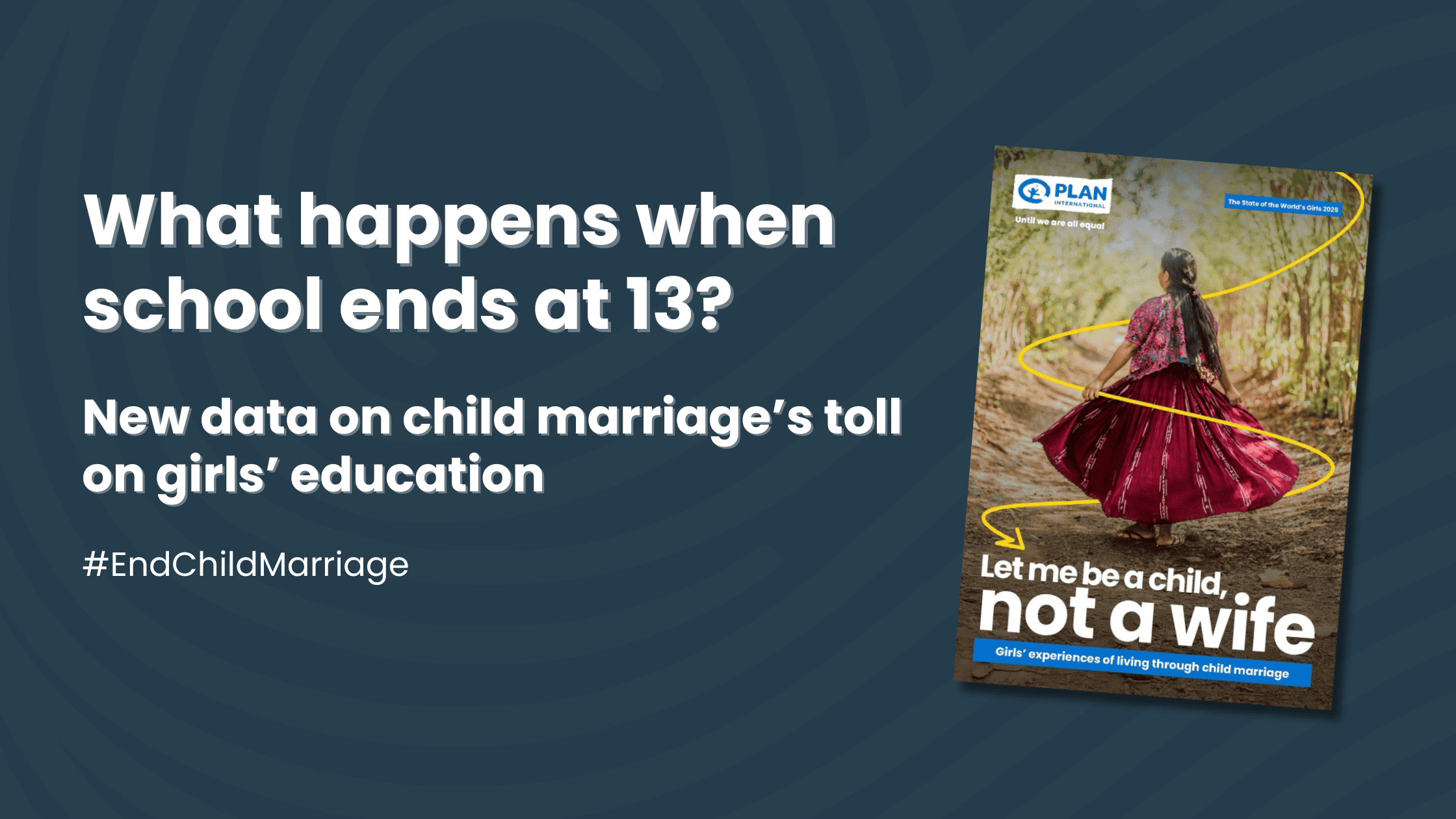
Plan is committed to safeguarding the progress already made and continuing to work toward sustainable solutions alongside girls and their communities. To learn more about the Real Choices, Real Lives study and Plan’s work advancing girls’ rights, read the full report.
The girls in this study have spent 18 years telling us exactly what they need to thrive. The least we can do is listen.
“Girls have to live their lives the way they want to, not because someone wants them to live a certain way.” — Gabriela, age 18 (2024), Brazil
This blog was written by Hanako Gregory, Philanthropy Coordinator at Plan International USA. To learn more, get in touch at Hanako.Gregory@planusa.org.
Stay updated on Plan’s technical work by signing up for From Plan to Action, our quarterly newsletter.