Every three seconds, a girl is married. Her education often ends that very day.
The impact of child marriage on girls’ education is immediate and long-lasting. It’s especially severe in regions like Sub-Saharan Africa, South Asia and Latin America, where the practice remains common and deeply rooted in tradition and poverty.
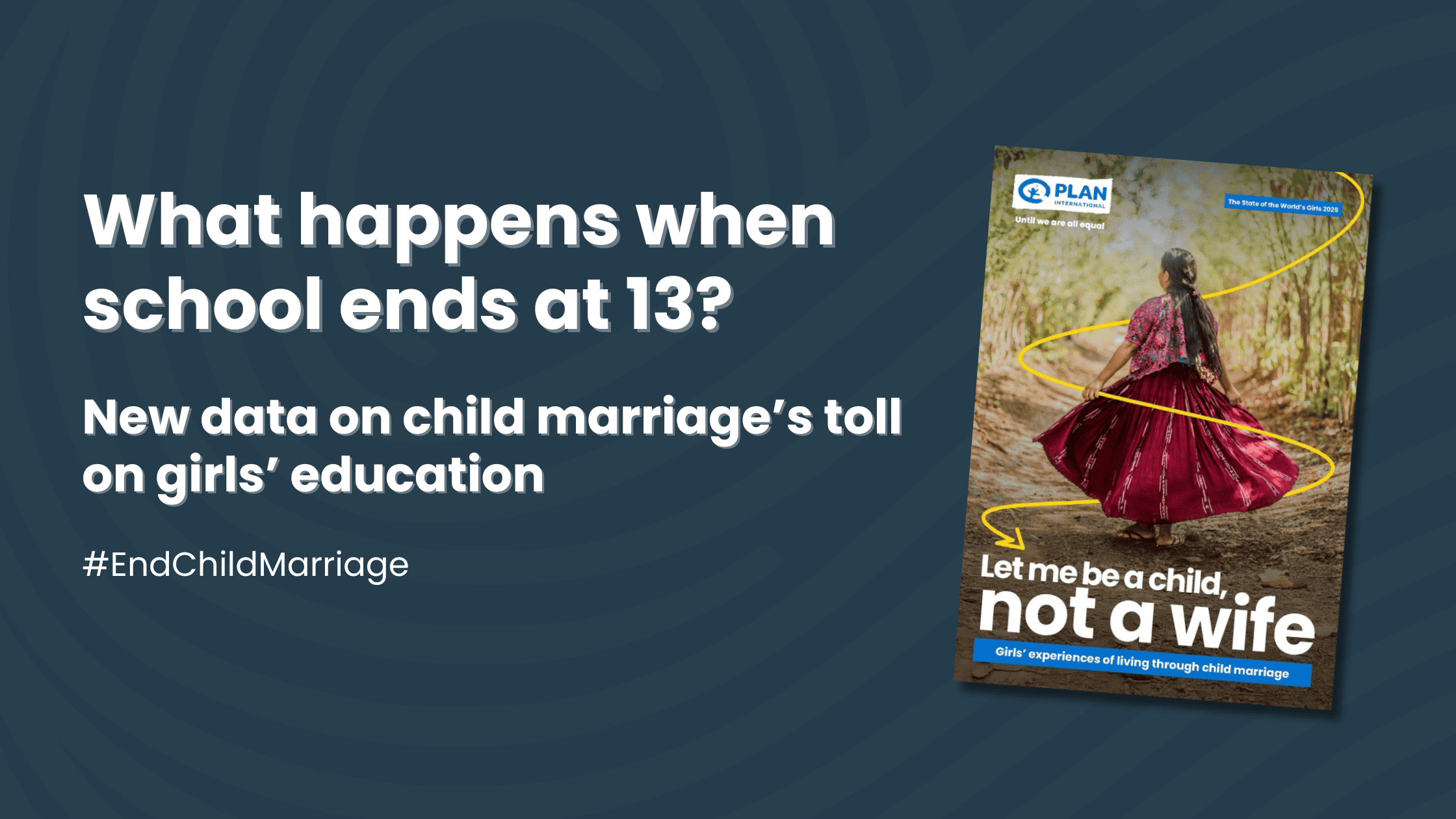
Plan International’s 2025 State of the World’s Girls report, Let Me Be a Child, Not a Wife, offers one of the most comprehensive global examinations of how marriage before age 18 disrupts learning, limits opportunity and reinforces cycles of inequality.
The report draws on interviews with over 250 girls who were married as children across 15 countries. It also includes a survey of 244 youth activists and an analysis of national legal systems. This creates a rare and powerful look at what happens when child marriage shuts the door on education — and how policy and programs can open those doors back up.
What happens to girls’ education after marriage?
The numbers are staggering: 251 million children and youth are out of school worldwide, and nearly half are girls. In countries like Bangladesh, Nepal, Ethiopia, Nigeria, Guatemala and Togo, the link between child marriage and school dropout is not only clear — it’s urgent.
Findings from the report, echoed in CNN’s As Equals series, confirm what youth advocates have long warned: child marriage is one of the primary reasons girls leave school prematurely.
These effects aren’t limited to formal marriages. Informal unions can carry the same educational and social consequences, including early pregnancy, stigma and pressure to drop out of school — even though they’re rarely documented in official statistics.
Consider this:
- 1. 63% of married girls are not in school, working or enrolled in skills training.
- 2. 35% dropped out of school specifically because of marriage.
- 3. Fewer than 1 in 5 married girls remained in school. Many of them faced stigma or pressure from family members to stay at home.
“Most community members don’t support married girls to attend school. They think if girls are getting married, they have to stay home, give birth and care for their husband and children.”
— Guedi, 24, Ethiopia
The consequences go far beyond academics. Without education, girls lose access to meaningful jobs, leadership roles and decision-making power. Over time, entire families and communities bear the cost of that loss.
Three systemic reasons married girls drop out of school
While each story is unique, three recurring structural issues explain why child marriage so often cuts education short:
1. Loopholes in the law
In nearly two-thirds of the countries studied, the law sets 18 as the minimum age for marriage. Yet exceptions — based on parental or judicial consent — create legal grey areas that enable the practice to continue. These loopholes undermine enforcement and weaken the systems meant to protect girls.
2. Poverty as pressure
For many families, the decision is financial. Informal unions — where girls live with a partner without legal recognition — can carry the same educational and social consequences, including early pregnancy, stigma and pressure to drop out of school.
Nearly half of the girls interviewed said poverty played a central role in their marriage. Without scholarships, stipends or financial incentives to keep girls in school, marriage may seem like the only path to survival.
3. Social norms that erase futures
Cultural expectations also play a role. Once a girl is married, education is often seen as irrelevant — or worse, inappropriate. One youth activist put it plainly:
“Once a girl is married, her future is seen as closed, even if she still wants to learn.”
— Youth Activist
These social pressures are often magnified by the school environment. Only 39% of schools provide menstrual health education. Just 31% offer safe, private sanitation facilities. For adolescent girls — especially those who are married or parenting — these missing services make staying in school even harder.
And even where laws are strong, families bypass them through informal unions — non-legally recognized partnerships where girls live with a spouse-like partner. These arrangements offer no legal protection, are harder to monitor and are becoming more common in regions where marriage laws have tightened.
Girls speak out: What they lose and what they demand
The voices in the report are sobering — and galvanizing.
“Getting married before the age of 18 is not right. It disrupts education. Within a year or two of marriage, a child is born. At that time, I am still a child myself. How can I, being a child, raise another child?”
— Farhana, 21, Bangladesh
“I wasn’t allowed to study or progress in life. I was deprived of everything. But I won’t let that happen to my daughter.”
— Juna, 24, Nepal
“If you are married, you can no longer continue school unless your husband tells you to continue. And you have to wake up and do the housework before going to school.”
— Dagan, 17, Togo
These girls are not just recounting personal hardship. They’re also advocating for systems to change. They remind us why education isn’t just a right — it’s a lever for reclaiming futures that others tried to close off.
Beyond the classroom: What child marriage costs us all
The loss of education due to child marriage is not just a personal tragedy. It’s a development crisis.
Plan’s research confirms what economists have long known: girls see education as a route to income, independence and security. Global studies suggest that each additional year of schooling can boost future earnings by around 10%.
If all girls completed secondary school, global child marriage rates could drop by two-thirds.
The economic cost of lost education runs into the billions. The social cost — lost leadership, weaker development and deepened inequality — is just as profound.
What works: Lessons for program and policy design
Access to education must be built into child marriage prevention strategies
Stopping child marriage is not enough. Programs must help married girls return to school — with flexible schedules, accelerated learning, and tailored support for parenting girls.
Reach the most vulnerable first
Girls in rural, low-income or displaced communities face the highest risks. Interventions must include child care, safe transport, mobile schools and community-based education centers.
Legal change must come with investment
Changing the law is only part of the solution. Without real investment in schools and systems, girls will not have true choices.
Five ways technical peers can act now
Here’s how professionals across sectors can contribute to change:
- 1. Build re-entry programs with flexible schedules, child care and mental health support.
- 2. Offer financial incentives like stipends, school meals and transportation.
- 3. Train educators to support married and parenting girls with care, not judgment.
- 4. Track not just enrollment, but also attendance, progression and re-entry.
- 5. Fund and elevate girl-led organizations working to shift harmful norms.
Protect education, protect futures
The message from the 2025 report is clear and urgent: Every three seconds, a girl is married. Each time it happens, her chance to learn, earn and lead may be lost.
But this isn’t inevitable.
For practitioners in education, gender equity or youth development, this is a rallying cry — not only to prevent child marriage, but to rebuild opportunity for girls who’ve already been impacted.
Education is the strongest defense against child marriage and the most powerful tool for reclaiming a future.
Frequently asked questions
Why is child marriage linked to school dropout?
Child marriage often results in girls being pulled out of school due to family expectations, pregnancy and societal norms that discourage married girls from continuing education.
Can married girls return to school?
Yes, but they face many barriers including stigma, lack of child care, inflexible school systems and unsupportive environments.
What legal gaps enable child marriage to continue?
Many countries set 18 as the minimum marriage age but allow exceptions with parental or judicial consent, undermining the law’s effectiveness.
What are informal unions, and how do they affect girls’ education?
Informal unions are relationships where girls live with a partner without legal marriage. They typically result in similar outcomes as child marriage — including school dropout, limited legal protection and reduced opportunities.
What role does poverty play in early marriage?
Poverty is a major factor. Families may see marriage as a way to reduce costs or gain security.
How does child marriage affect economic development?
It reduces girls’ education and future earnings, weakening overall productivity and reinforcing poverty cycles.
What can policymakers do to reduce child marriage?
Close legal loopholes, fund education re-entry programs, support families financially, and promote gender equity in schools.