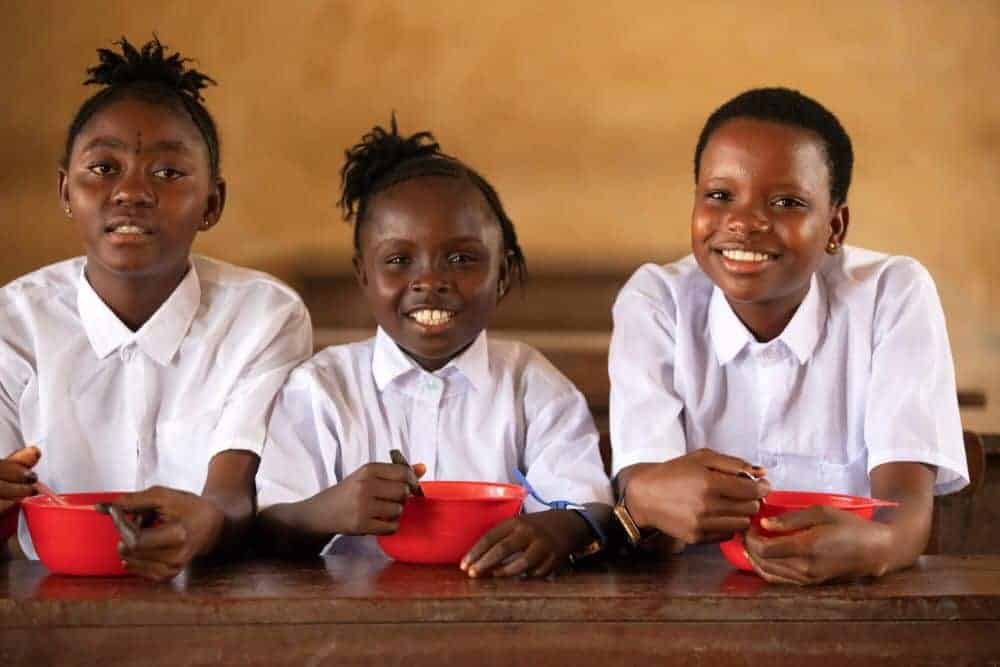
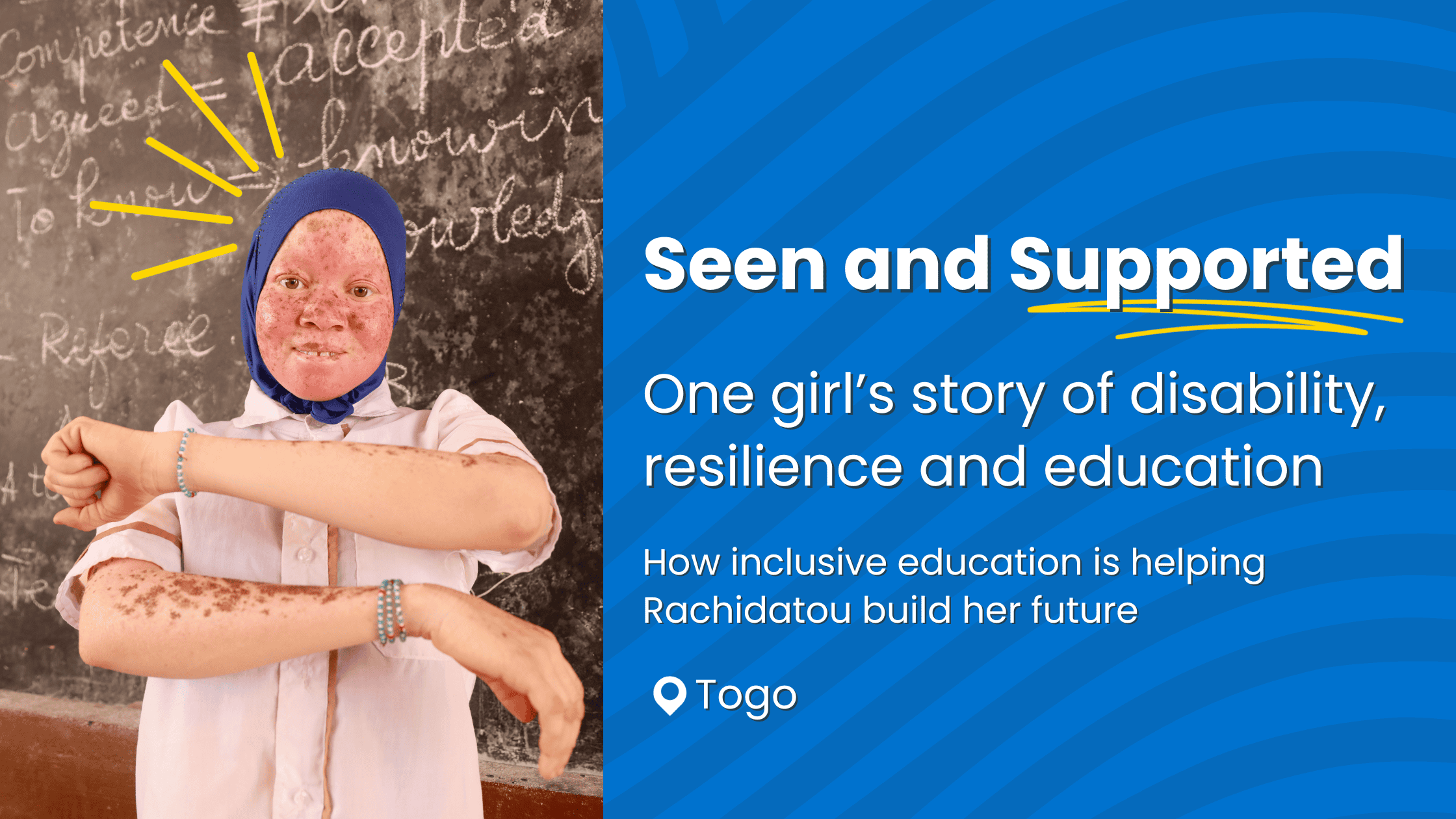
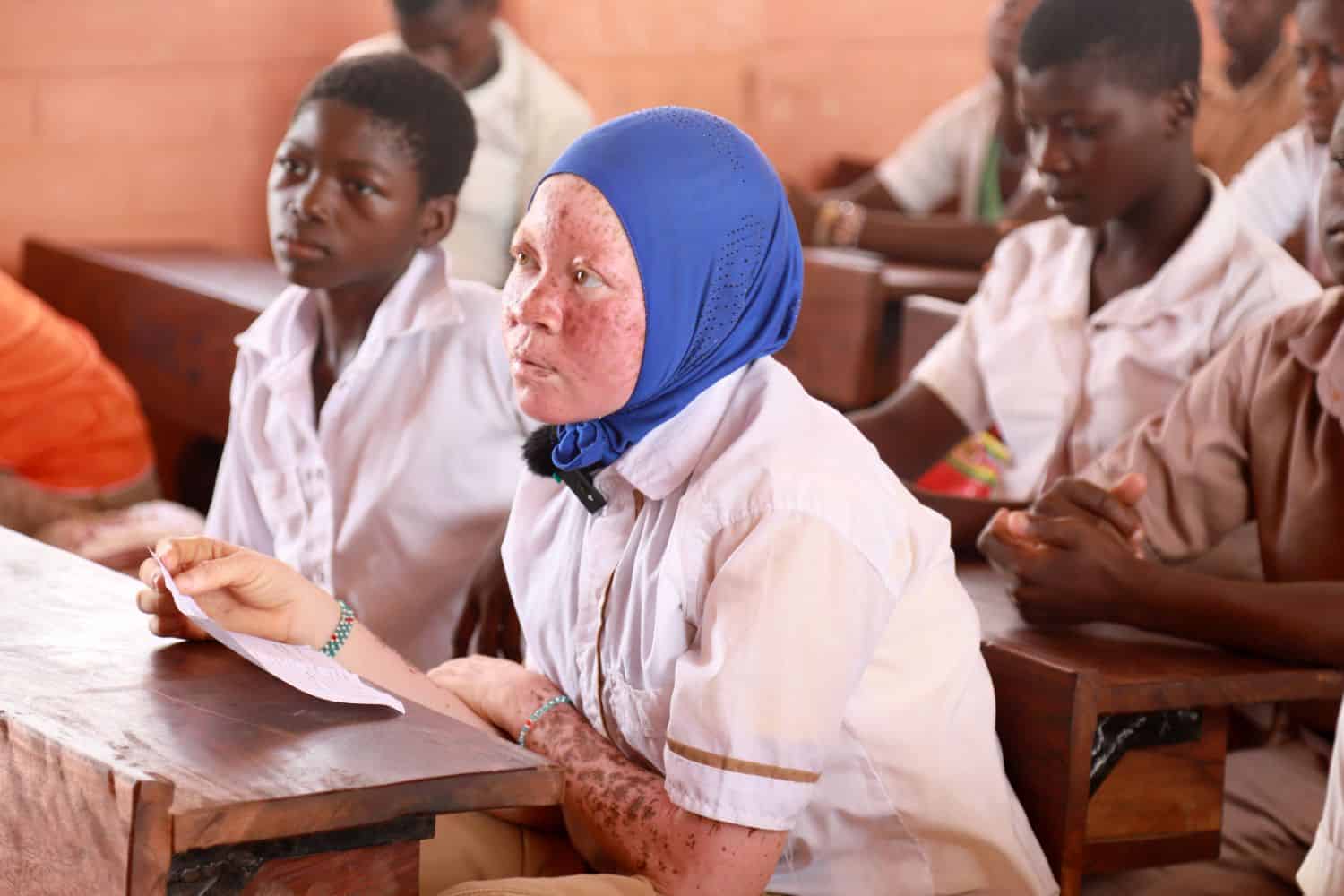
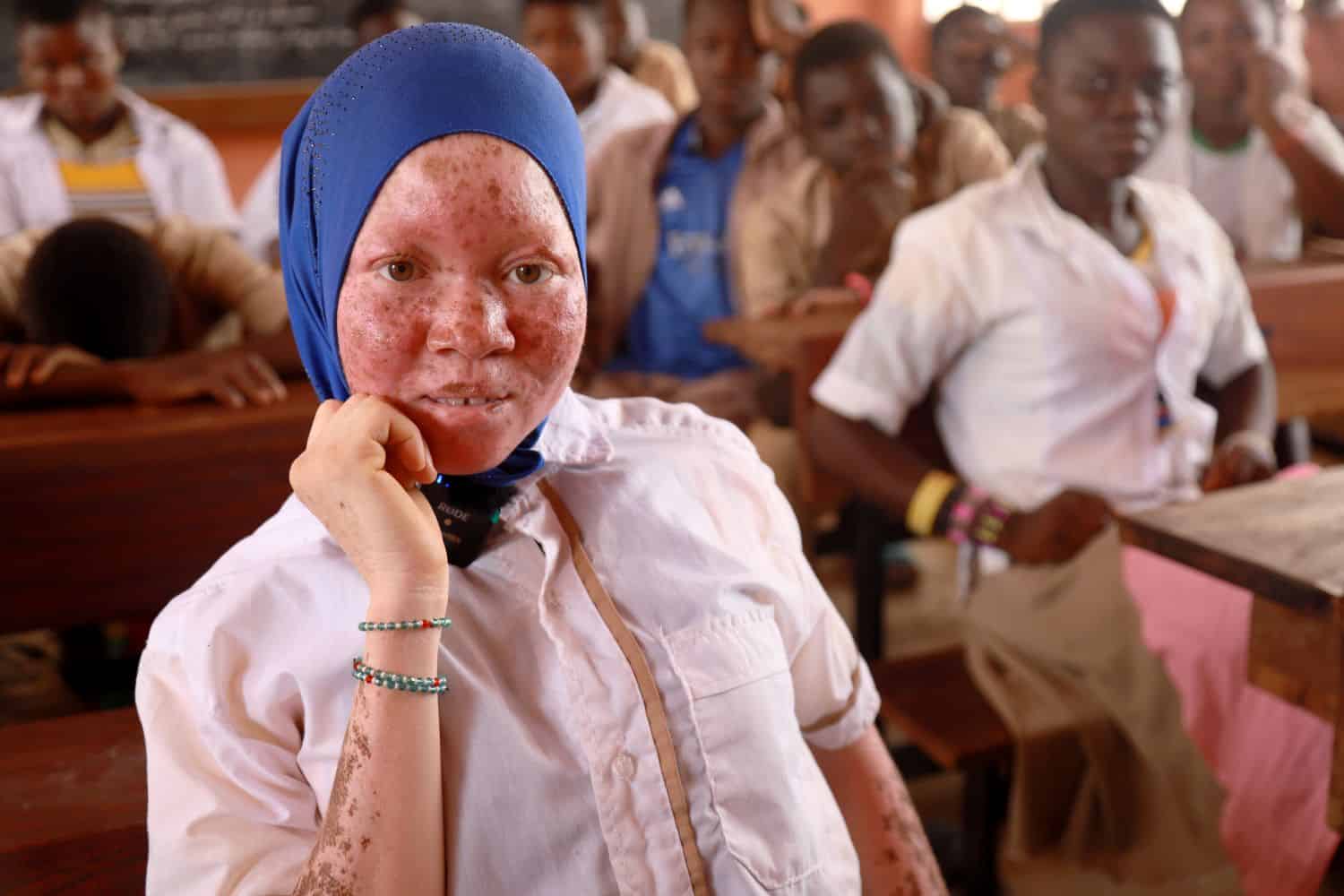
In the Savanes region of northern Togo, 18-year-old Rachidatou sits at a wooden desk with her notebook open, waiting for the end of class. She can’t see what the teacher writes on the blackboard — not clearly. So she borrows her friend’s notes and copies them down, line by line.
“In class, when teachers write on the board, I struggle to see clearly because of my eye condition,” she says. “So I wait until the end of the class to borrow my friend’s notebooks and copy the lessons.”
Rachidatou lives with albinism, a genetic condition that affects her eyesight and makes her skin sensitive to the sun. She also lives with determination, driven by a clear goal: to become a doctor.
This Disability Pride Month, we’re honoring young people like Rachidatou who are often overlooked or excluded but continue to lead, speak out and show us what’s possible when education is inclusive and accessible to all.
From fear to belonging
In 2023, Rachidatou and her mother fled Burkina Faso because of attacks by armed groups. They crossed the border into Togo's Savanes region, seeking safety and a chance to rebuild their lives.
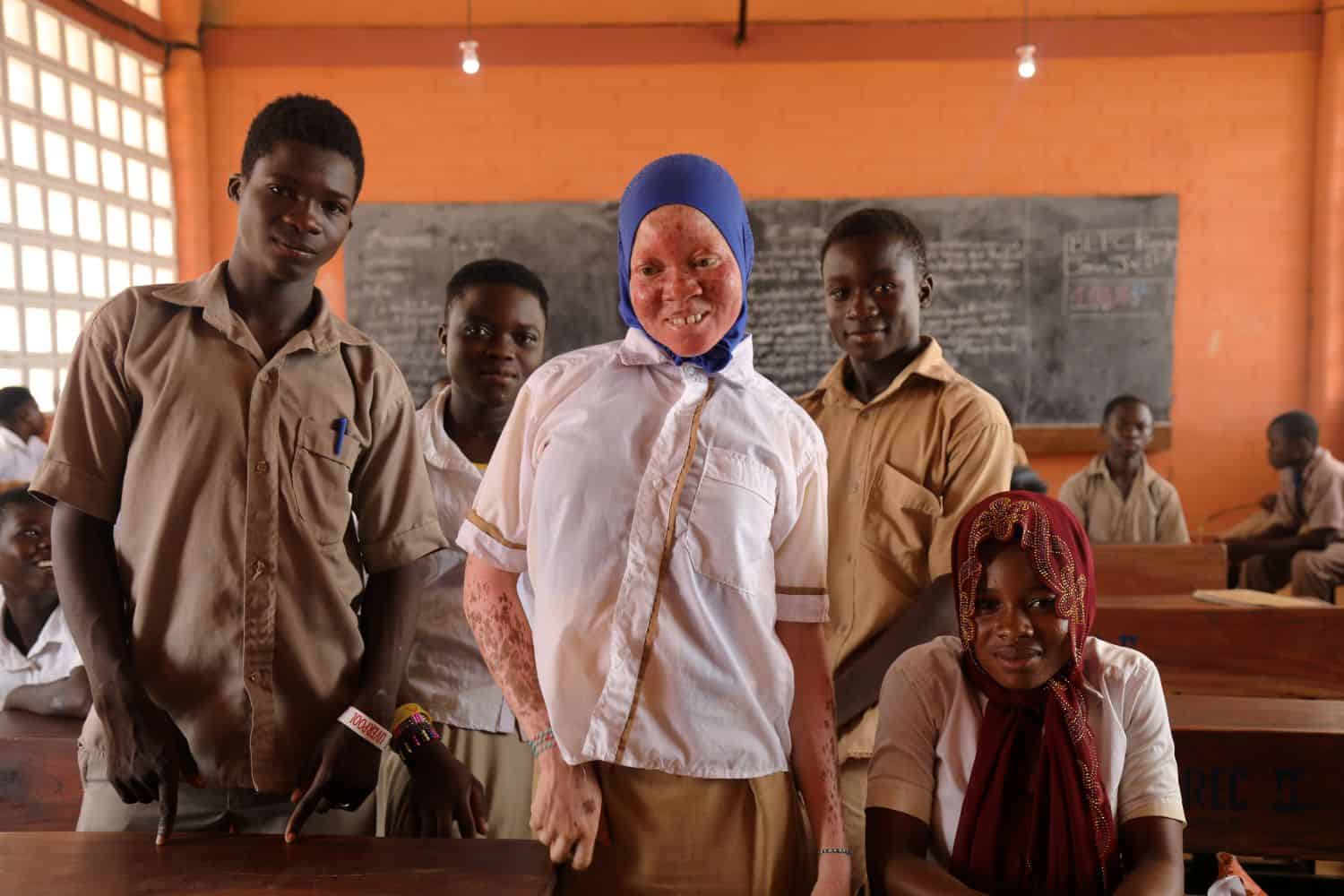
“When I arrived, my classmates treated me with kindness. At first, I was scared. It was my first time going to school in Togo,” she says. “I didn’t know how the school system worked here compared to my country. Thanks to the support of my friends, I adapted quickly. Now I am proud to be a student here in Togo.”
She had lost contact with her friends in Burkina Faso — a quiet heartbreak. But in her new school, kindness replaced fear. Community replaced isolation.
“Here, I made new friends who treat me just like the ones back home did,” she says.
Her words reflect something powerful: not just resilience but belonging.
What inclusion really looks like
Today, Rachidatou is in her third year of secondary school. She’s one of thousands of students benefiting from PAREC II, a national education initiative supported by Plan and Action Education, and funded by the Agence Française de Développement.
The program focuses on increasing access to quality secondary education in underserved regions like Savanes, with special attention to girls and children with disabilities.
PAREC II supports:
- Inclusive teaching practices that adapt to students’ diverse learning needs.
- Improved infrastructure so schools are accessible for students with disabilities.
- Community awareness campaigns that encourage gender equity and student retention.
- Safe learning environments that promote social cohesion between refugees and host communities.
“Inclusive education isn’t just about getting students through the door,” said Meghan Mattern, inclusive quality education advisor at Plan International USA. “It’s about creating classrooms where every learner feels safe, valued and supported to thrive — including girls and students with disabilities.”
Globally, children with disabilities are 10 times less likely to attend school than their peers without disabilities. Girls with disabilities face even more barriers due to gender norms, caregiving roles and higher risk of discrimination or violence. But when they are included, they thrive.
Rachidatou’s experience shows us that inclusion isn’t an abstract goal. It’s a student who can’t see the board, but is seen by her peers. It’s a classroom that doesn’t push her out but pulls her in.
A future filled with hope
Even after all she’s faced, Rachidatou speaks with calm certainty about what will come next.
“My dream is to become a doctor, so I can help my family and others in need,” she says.
“My message to other refugees is to be strong. This situation won’t last forever. When I came to Togo, I found peace. And one day, peace will return to Burkina Faso too.”
Her words carry more than hope. They carry direction, for herself and for others like her.
At Plan, we believe that every child deserves the chance to learn, no matter who they are or what barriers they face. Through inclusive education, we’re supporting girls like Rachidatou to lead, heal and shape the world they want to live in.
We won’t stop until we are all equal.