What 18 years of listening to girls taught us about progress
“My hopes for tomorrow are to continue my studies, to have diplomas, to have a job and a better future.” — Catherine, age 16

Every child has the right to grow up safe from violence, exploitation and harm. Yet for millions of girls and young people around the world, that right is violated every day — at home, in school, in their communities and increasingly online. We work to protect girls and young people from violence in all its forms, and to provide support to families, communities and systems that keep them safe.
Girls face distinct and serious risks throughout their lives — and those risks are shaped by more than just gender. Age, disability, ethnicity, and displacement all affect how vulnerable a girl is and what kind of support she can access. Too many girls experience violence at the hands of people they know and trust. Too many are forced into marriage before they are ready or subjected to harmful practices that damage their health and strip away their choices. And as climate change drives displacement and economic stress, the risks facing girls and women are growing.
Our protection work focuses on preventing violence before it happens and supporting survivors when it does. We work with families, communities, service providers and governments to challenge the harmful norms and attitudes that allow violence to persist — and to make sure that girls who have experienced violence can access the support and care they need.
This includes work to end child marriage and female genital mutilation, prevent gender-based violence and intimate partner violence, tackle human trafficking and keep children safe online as well as offline. We don’t treat protection as a separate program — it runs through everything we do. Safe schools, access to mental health support, economic independence, and the ability to participate in community life are all part of what it means for a girl to truly be protected.
Young people are not just the people we work to protect — they are also agents of change in their own communities. Through programs that engage young men and boys as allies, empower girls as advocates and build community-led solutions, we work to create environments where girls are not just safe today, but where safety becomes the norm for future generations. Because protecting girls means changing the world they grow up in — not just responding to the harm they experience.
Our global programs are made possible by donors who believe in building a world where we are all equal. Explore ways to join our mission as a donor.

“My hopes for tomorrow are to continue my studies, to have diplomas, to have a job and a better future.” — Catherine, age 16
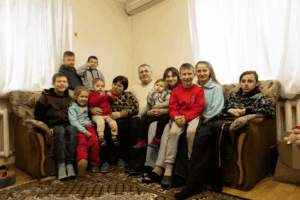
Yuri, 54, and Nadia, 49, with their foster children. | © Plan International / Mirja Vogel In a small, rural village 50km outside the central
A drone attack hit a school in Shukeiri village on Wednesday, killing 17 people — mostly schoolgirls. Other civilian infrastructure, including a health centre, has
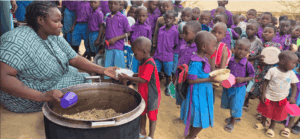
Girls share a meal of rice, lentils and dried vegetables at school in Kilifi County, Kenya. For many, it is the only meal they will
Plan International is deeply alarmed by the escalating military conflict in Iran and the Middle East, which puts children at grave risk. Of particular concern
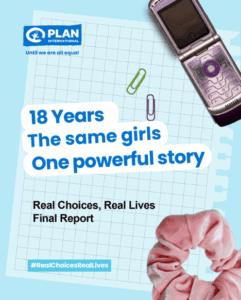
The Real Choices, Real Lives study followed the same group of girls from birth to adulthood across nine countries. Washington, DC, Feb. 26, 2026 —
Four years into the war in Ukraine, children continue to face trauma, disrupted education, and displacement across Ukraine and Eastern Europe. As the crisis shifts from emergency response to long-term recovery, sustained investment in mental health, protection, and education is critical to prevent irreversible harm.
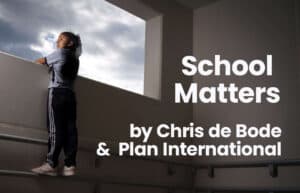
Children across Ecuador, Peru and Bolivia face daily risks just to get to school. Part 2 of School Matters explores how safety, distance and economic pressure shape who can keep learning.
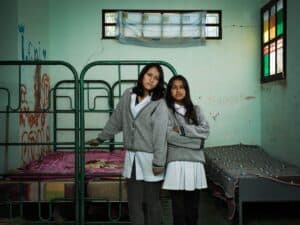
Children across Bolivia and Peru are traveling farther and facing greater risks just to stay in school. This photo essay explores what access to education looks like when safety, distance and resources are not guaranteed.
In Ethiopia’s Afar region, some families are quietly choosing courage over conformity by saying no to FGM. This powerful photo story reveals the voices of parents and girls taking a stand against generations of harm, one decision at a time.