This post is part of Plan’s blog series, “Periods through the ages,” highlighting girls and the women in their families as they share period stories and break stigma in their communities.
In central Togo, 16-year-old Denise has had many conversations with her mother and grandmother about their period stories. For Denise’s grandmother, Inna, getting her period wasn’t something she could talk about openly.
“On the first day of our period, we had to hide and call our mother or one of our sisters to help in secret,” Inna says. “It was forbidden to enter the house. The family had to find a room on the roadside where the menstruating girl had to spend her entire period.”
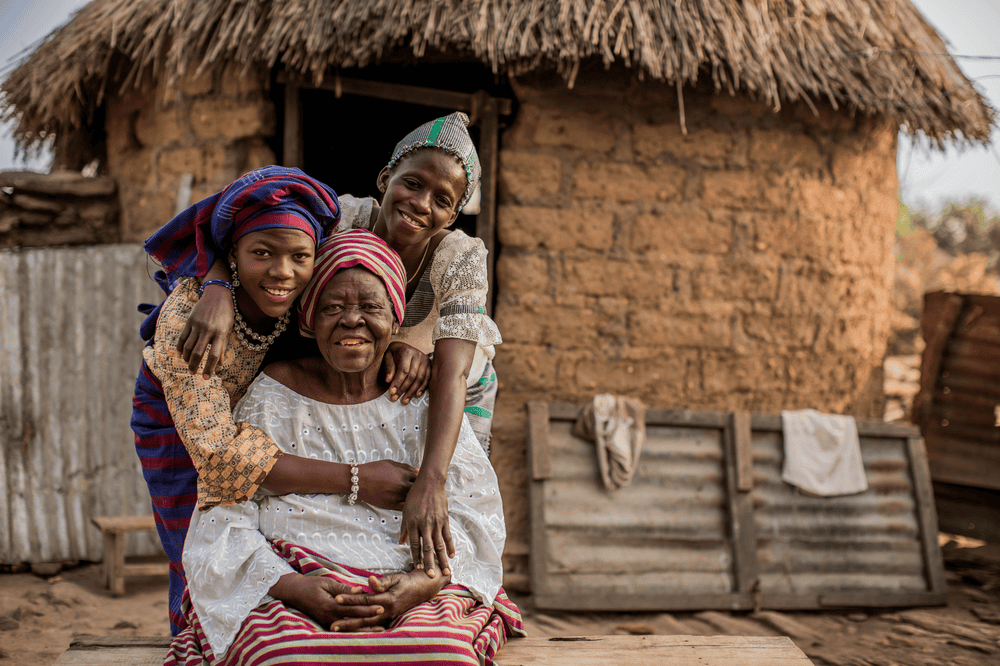
Denise (left) with her mother Esther (right) and grandmother Inna (center). © Plan International | Izla Bethdavid
According to Inna, when a girl finished her period and returned from isolation, she would cover herself and her friends with white talcum powder to re-enter the village. Girls also had special clothes and beaded jewelry that they would wear to celebrate the end of their periods.
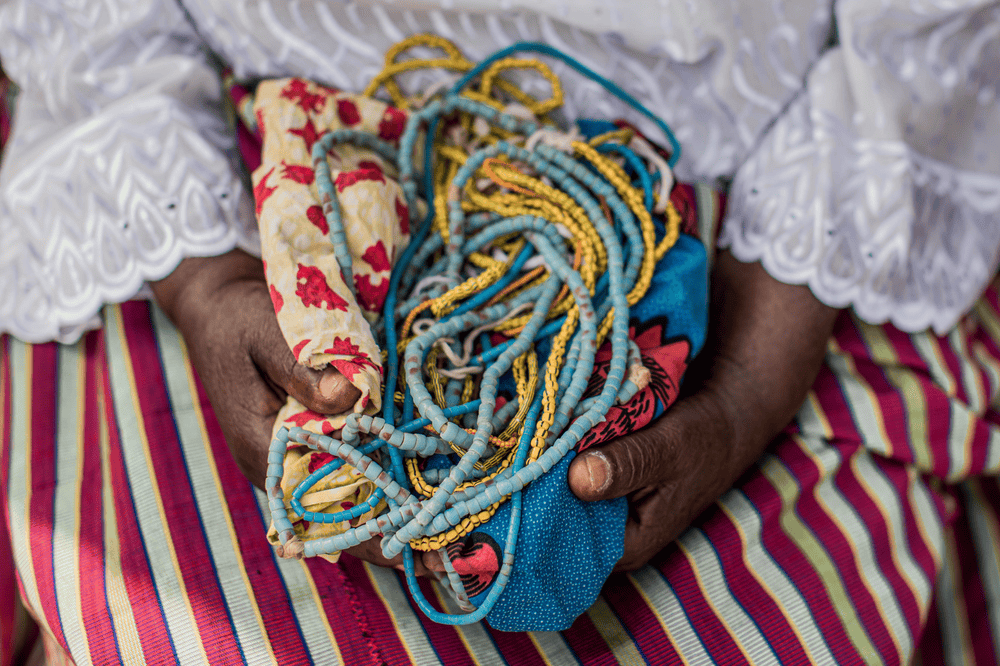
In the past, girls would wear cloth hung on beads around their waist during their periods. © Plan International | Izla Bethdavid
“Men and boys, even if they were your brothers, were not supposed to see menstruation cloths,” Inna says. “It was forbidden, and we carefully hid them. Really, it was a great burden. I pray that [my granddaughter’s] generation will no longer experience the suffering of our time.”
With the support of a Plan project in her community, Denise learned more about menstrual health and how to dispel myths about it. Now, she’s advocating for access to cheaper products so girls can manage their periods with confidence.
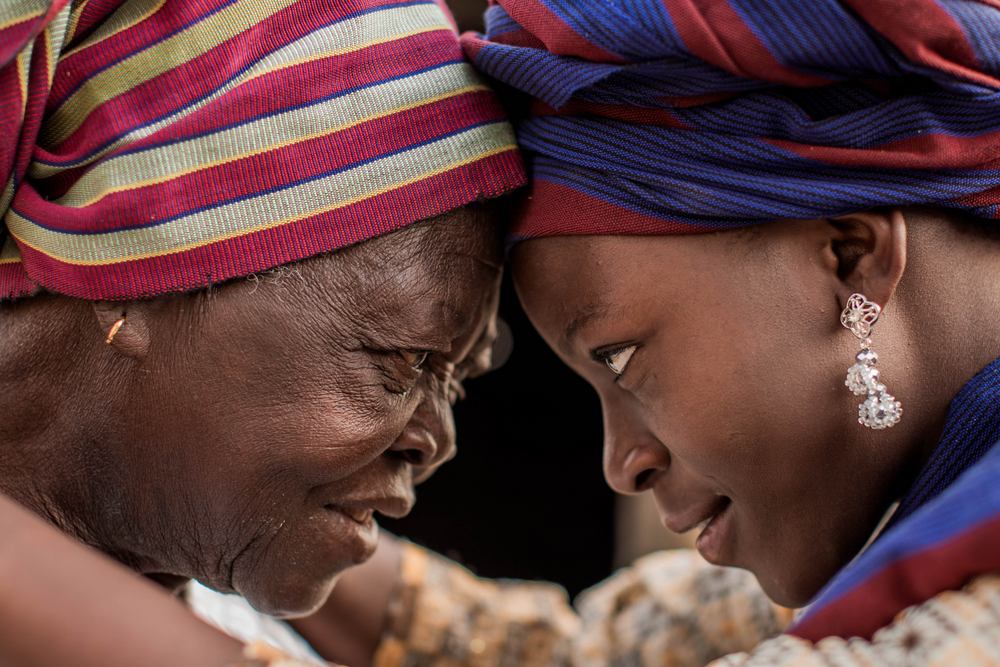
Inna and Denise both struggled to manage their periods in unique ways growing up, but Denise is determined to change things for future generations of girls. © Plan International | Izla Bethdavid
“I understand that my mother’s generation also suffered a lot,” Denise says. ‘To my fellow girls all over the world, including those living in remote communities, I encourage you to stop being ashamed about menstruation. It’s a matter of rights!”